Category Archives: In Our Time

‘The power of Zeus,’ in the president’s hands

The teaser headline at the bottom of a Slatest email said, “New Drones in Libya Will Give Obama the Power of Zeus.”

The item it links to says, in part:

After the attack on American diplomats in Benghazi last month, President Obama vowed to hunt down the killers and bring them to justice. There is a good chance that this means that they will be incinerated by missiles fired from drones. If so, the United States will have used drones to kill members of al-Qaida and affiliated groups in Afghanistan, Iraq, Pakistan, Somalia, Yemen, and Libya—six countries in just a few years. Mali may take its turn as the seventh. This startlingly fast spread of drone warfare signifies a revolution in foreign affairs. And, for good or for ill, in an unprecedented way it has transformed the U.S. presidency into the most powerful national office in at least half a century.

A MQ-9 Reaper flies above Creech AFB during a local training mission. (from Wikipedia)

In the past, presidents faced two major obstacles when trying to use force abroad. The first was technological. The available options—troops, naval vessels, or air power—posed significant risks to American military personnel, cost a lot of money, proved effective only under limited conditions, or all of the above. Dead and maimed soldiers, hostages, the massive expense of a large-scale military operation, and backlash from civilian casualties can destroy a presidency, as Vietnam and Iraq showed.

The second obstacle was constitutional. The Constitution includes a clause that gives Congress the power to declare war. Presidents have been able to evade this clause for small wars—those involving only naval or air power, or a small number of troops for a limited period of time. They have mostly felt compelled to seek congressional authorization for large wars, no doubt in part so that they could spread the blame if something went awry.

But drones have changed the calculus. Because they are cheap and do not risk the lives of American soldiers, these weapons remove the technological obstacle to the use of force. And because drone strikes resemble limited air attacks, they seem to fall into the de facto “small wars” exception to the Constitution’s declare-war requirement. Unlike large wars, drone actions do not provoke congressional attention or even much political debate…

The thing is, this isn’t theoretical. This is power that this president is regularly using (in keeping with my thesis that Bush was Sonny Corleone, Obama is Michael).

When was the last time we killed people in six or seven different countries in one year? WWII? Then, even?

And now it’s with no muss, no fuss. Seriously, how many of you could even have named, without prompting, all those countries where we’ve engaged in this kind of warfare? Sort of makes our continuing arguments over the Iraq invasion and Vietnam seem quaint, doesn’t it? Maybe it’s good I look like someone out of the Regency Period while I address such subjects…

Death of a newsmagazine

Newsweek covers on the iPad, via The Daily Beast.

Now we have the news that Newsweek will cease publication as of Dec. 31. (Yeah, I know technically, they’re going to continue to publish on the Web, but yet another light content provider on the Web is ho-hum news compared to the end of a print institution. Get back to me when a major, serious newspaper goes all-digital. That will seem like a bold step forward.) From The Daily Beast:

We are announcing this morning an important development at Newsweek and The Daily Beast. Newsweek will transition to an all-digital format in early 2013. As part of this transition, the last print edition in the United States will be our Dec. 31 issue.

Meanwhile, Newsweek will expand its rapidly growing tablet and online presence, as well as its successful global partnerships and events business.

Newsweek Global, as the all-digital publication will be named, will be a single, worldwide edition targeted for a highly mobile, opinion-leading audience who want to learn about world events in a sophisticated context. Newsweek Global will be supported by paid subscription and will be available through e-readers for both tablet and the Web, with select content available on The Daily Beast.

Four years ago we launched The Daily Beast. Two years later, we merged our business with the iconic Newsweek magazine—which The Washington Post Company had sold to Dr. Sidney Harman. Since the merger, both The Daily Beast and Newsweek have continued to post and publish distinctive journalism and have demonstrated explosive online growth in the process. The Daily Beast now attracts more than 15 million unique visitors a month, a 70 percent increase in the past year alone—a healthy portion of this traffic generated each week by Newsweek’s strong original journalism…

I’m not going to be mourning over this one. As you may recall, I referred to the folks in charge of that publication as “the superficial, pandering twits editing Newsweek,” after they had run Nikki Haley on their cover for the second time during her campaign against what’s-his-name, which is the way Newsweek and all national media treated Vincent Sheheen. (Actually, they didn’t even treat him that well; it was like he didn’t exist.) As I said further at the time:

And do they have any serious, substantive reason to do this? Of course not. The putative reason for putting Nikki’s smiling mug on the cover again is to discuss the burning issue of “mama grizzlies.” I am not making this up.

I hope Dave Barry will excuse me using his line there. It just fit so perfectly.

The sad truth is, the American “newsmagazine” is an animal that long ago ceased to be anything of substance. Of course, the genre always had its dismissive critics, but I took TIME from when I was in high school in to my 20s, and there was a lot of serious stuff to read back then, to my young eye.

But in recent years, I’ve only seen these publications in doctor’s offices in recent years, and am unimpressed, generally deciding to put them down and pick up a copy of Smithsonian or something. They look like manic collages, with scarcely a full, sustained thought to be found anywhere in their few pages.

Why can’t this country produce anything like The Economist? Of course, The Economist calls itself a “newspaper” for some quirky Brit reason or other. Maybe that’s the trick to it …

Last night’s debate news (or part of it) this morning — another problem for what’s left of newspapers

OK, so I’m behind the curve today. I got home from final dress rehearsal last night at about 11:30, heated up some dinner, watched a few minutes of both the beginning and the end of the debate (having heard a BBC assessment of it on the radio on the drive home) then watched some of the PBS commentary after the debate, then hit the sack.

But I’m not as far behind the curve as most daily newspapers were in today’s print editions.

Slate calls our attention to today’s front pages (all taken from the Newseum, where you can see plenty of others), which have a sameness about them: They pretty much all say the same thing in their headlines, and most run photos of the same moment, with the candidates’ fingers pointed at each other. Sure, you might find some “analysis” in there somewhere, and the more enterprising (and better-staffed) opinion pages will have some sketchy opinions expressed. As Slate’s Josh Voorhees writes:

As we explained late last night, the insta-polls and the pundits saw a tight contest on the Long Island stage on Tuesday, but one that was won narrowly by President Obama. Given the lack of a clear-cut win, however, it should come as little surprise that a quick scan of the morning’s front pages show the nation’s headline writers and art teams focused on the on-stage clash and largely left the who-won question to the domain of the cable news talking heads (as most papers had likewise done following the previous two debates).

Once, this sameness, this lack of personality or individualized expression was the glory of newspapers. If 10 different journalists from 10 different papers covered the same event, they would all write pretty much the same thing. It was a measure of their professionalism, and the self-effacement that news writing demanded of them. It was about giving it to you straight, unadorned, plain, and God forbid there should be any hint of opinion in it. Who, what, where, when, maybe how, and, if you put an “Analysis” sig on it, why.

The monotony of it didn’t strike the reading public because unless they lived near an urban newsstand, most people only saw one daily newspaper.

But here’s the problem with that today: What newspapers put in those lede headlines today, and what they conveyed in those pictures, was all old news by the time I was driving home from rehearsal last night.

I hadn’t driven more than a few blocks when I knew the conventional wisdom on what had happened. It went something like this: Obama did all the things he failed to do in the first debate, particularly having a strong finish. Romney did fine, although was maybe not quite as sharp as in the first debate. If you’re declaring a winner, it’s Obama, although I didn’t get the sense that he dominated in this debate the way Romney did in the first one, so if you’re going on cumulative totals, Romney’s probably still ahead in this debate series. How this affects the polls remains to be seen.

I had even heard about “binders full of women,” but I was mostly confused by that.

In the post-debate analysis I watched after I got home, I heard David Brooks and Mark Shields give their assessments. Brooks said Obama won because he was able to exploit Romney’s biggest weakness better than Romney was able to press Obama on his biggest weakness. He said Romney’s biggest weakness is that his numbers don’t add up, and Obama’s problem is that he never provides a vision of what the next four years will be like if he is re-elected. Shields said it might surprise everyone, but he agreed with Brooks on all those points.

Since then, on the radio this morning, I’ve heard that “Obama hasn’t sketched a vision going forward” meme several more times.

I was also interested in what a young woman (didn’t catch her name) who analyses Twitter during debates for PBS had to say. I didn’t get as much of an overview of the Twitter take as I wanted because she decided to zero in on the reactions of women. But I’ve found her assessments interesting in the past: What was trending? What were the memes people were obsessing over? What caught on? I’ve become more and more interested in the instant reactions of Tweeters in the aggregate during events like this. It has something to do with the wisdom of crowds. It’s like having sensors attached to the brains of millions of highly engaged, clever voters — which is what the most-followed people on Twitter tend to be.

And I felt left out because I wasn’t on Twitter myself during the debate. Increasingly, that’s where I like to be during these kinds of real-time shared events, sifting through the flood of reaction as it washes over me.

And in a Twitter world, seeing these front pages feels like reading ancient history. No, it’s worse than that. Historians look at the whole of a thing after it’s over and draw conclusions. There’s a wholeness to historical accounts. These reports — and I’m just reacting to the headlines, mind you — don’t do that. They give only the most noncommital account, essentially just telling you that the candidates came together and vied against one another, and there the account ends. The Des Moines Register headline (“Stakes higher in 2nd face-off”) could have been, and possibly was, written before the debate started. (And pre-Gannett, that was one of the best papers in the country for political coverage.)

And I was already so far beyond that, without even trying hard to be, last night — without even having seen the debate.

I’m not saying these papers aren’t doing their jobs well. What I’m saying is that the job they’re doing, within two kinds of constraints — the convention of not drawing conclusions in a news account, and the severe time problem of the debate ending as they have to get those pages to the press room (depending on the edition we’re talking about, a lot of editions went to bed BEFORE that) — fails to satisfy in a Twitter world.

Again, there might be all kinds of good stuff in the stories, but the presentation — the quick impression that a glance at the front page provides — is deeply lacking. It makes you not want to read more deeply. It causes me to want to go read those papers’ websites today, and see what good stuff didn’t make it into the paper. (And the better papers will have something for me when I go there.) Because the conversation has moved, by the time the paper hits your stoop, so very far beyond what’s in those headlines.

What does a ‘like’ mean, as we slouch toward post-verbalism (if that’s what we’re doing)?

The top of my main Pinterest page.

Some years ago — it could have been 20 — I read an article by Umberto Eco that seems appropriate to this topic. I don’t remember all the particulars of the piece, or even in which magazine it appeared. But I seem to recall that the semiotician and novelist set forth the notion that we might be moving, beyond a post-literate society, to becoming post-verbal, returning to means of communication common in medieval days when, say, a pub called the Rose and Crown would be identified by a hanging sign showing pictures of those things, rather than words.

The premise would seem excessively alarmist, or at least premature, since the decades since I read that have seen an explosion of the written word on the Web. More people are writing, and reading, a greater profusion of words than at any time in the history of this planet.

But sometimes, we are faced with images alone, and words fail us. On friends’ Facebook pages, I’m occasionally confronted with images that just beg for accompanying text to explain them, but nary a word is offered.

And recently, I found myself in a world that brought the Eco piece back powerfully.

I was going to (and eventually did) write a light item for the ADCO blog about the addictiveness of Pinterest, which has hooked a couple of my co-workers. The spark was a study indicating that 20 percent of women who are online were into the site.

At first, I supposed that only women could possibly get into it, for as I perused the boards created by my female co-workers, I was overwhelmed by all the images of food and housewares and decorating ideas. As I said in that ADCO blog post, those screens looked like “the result of Edward Scissorhands going to town on a 10-foot-high stack of old copies of Better Homes and Gardens and Southern Living.”

But as I went through the little signup ritual for creating my own account, I saw how quickly the screen would morph into something that more interested me.

Here’s what happens: You sign in to the site. You are offered a screen full of slightly-bigger-than-thumbnail images. You are asked to “like” the ones that appeal to you. What you “like” affects what you see as you continue to scroll down. It’s rather fascinating to watch as the algorithm does its work. For a time, for a long time, the wave of images coming at you seems never-ending. The scroll bar on the right will seem to be approaching the bottom, then suddenly it will glide back up toward the middle as a new load of images arrives.

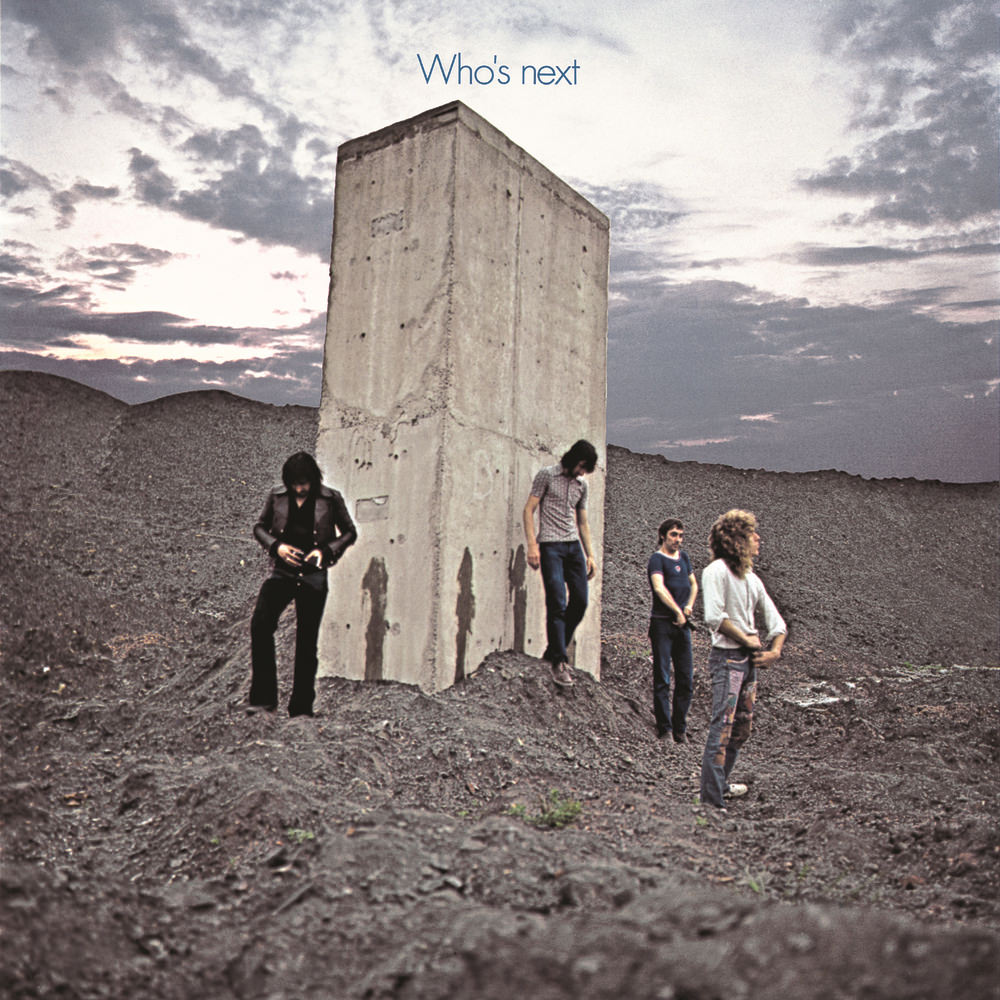
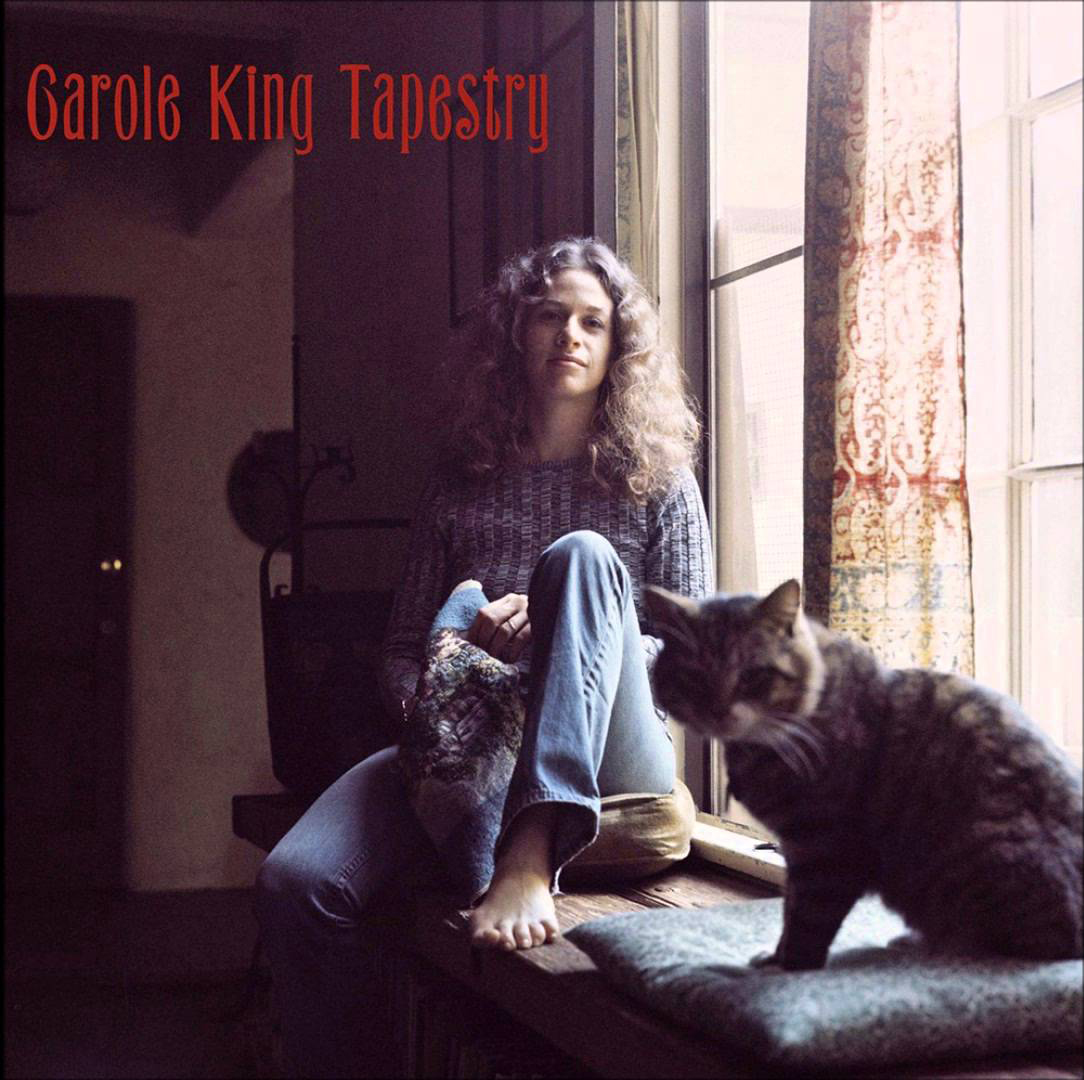
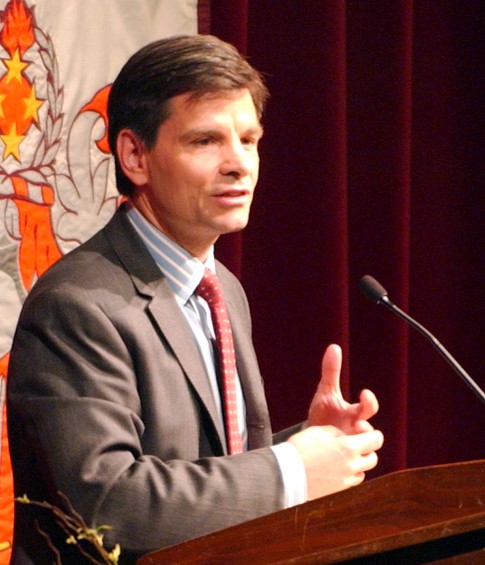
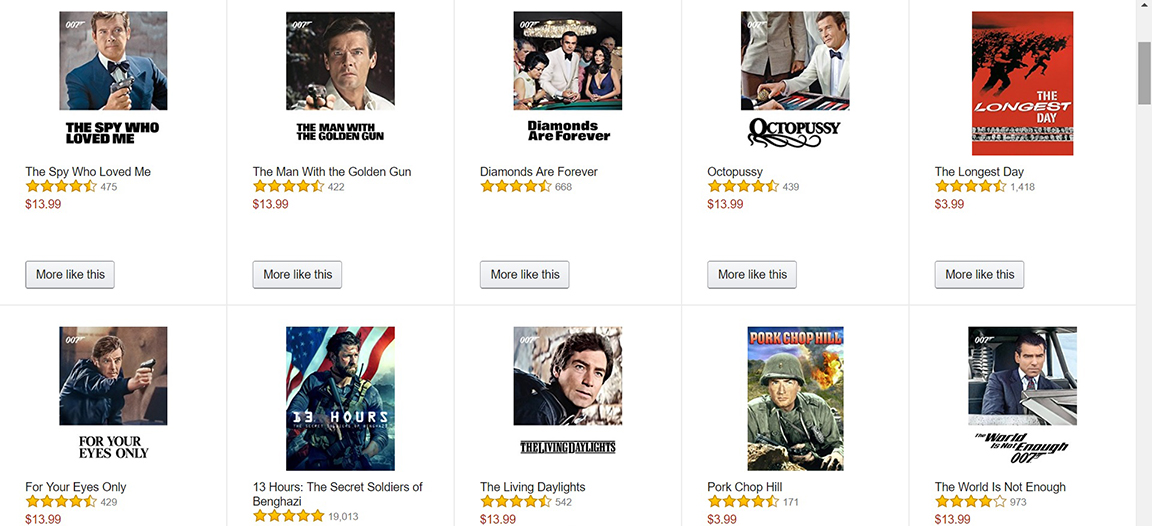
I saw a lot of images that interested me a great deal, but I couldn’t decide whether to “like” them or not. I mean, what does it say if you click “like” on a picture of a B-26 going down in flames? I don’t like that it’s going down, with American airmen dying in it. But I do want the program to know that I find images of WWII warplanes interesting.

Or what about a picture of Michael Caine as spy Harry Palmer? Will it think I like the raincoat, or “The Ipcress File?” This is a place where words would help.

And what does it mean when I “like” a picture of Marilyn Monroe? I mean, have you ever seen a picture of her you didn’t like, on some level or other? I haven’t. And yet, after I liked one or two of them, they kept coming in a profusion that suggested that Pinterest thought I had some kind of Elton-John-like celebrity fetish centered on her. I continued to “like” them, because that was my honest and uncomplicated answer. But I didn’t want it to offer me nothing but movie-star pictures going forward.

Just because I like Sean Connery doesn’t mean I want to see pictures of Rock Hudson (not that there’s anything wrong with that). And my liking a picture of Natalie Wood doesn’t mean I want to see Robert Wagner. And what’s with these Jody Foster pictures you keep throwing at me? I haven’t liked a single one, and they keep coming. Who do you think I am, John Hinckley? And just because I click on an interesting diagram of old military headgear doesn’t mean I want to look at one Confederate kepi after another!

So here’s where you end up, or where I ended up anyway: Pinterest now “knows” me well enough that one out of 10 or 12 things it throws at me will be mildly interesting. Which I guess is an achievement for a computer program.

But the language of social media — “like” and “friend” and other terms that so often don’t exactly describe the relationship in a given case — still needs work. Let’s not give up on words just yet.

Below are some of the pictures I “liked” as they were thrown at me. But really: What does it mean to “like” a picture of Bonnie and Clyde?

How they opened windows in olden times

OK, so this is a re-enactment -- I asked her to point to the mysterious lever again.

Ever since they were babies, the Twins have loved my beat-up 2000 Ford Ranger. When they were smaller, they’d get excited every time they saw a pickup truck, of any color, thinking it was mine.

But neither ever had a chance to ride in it, until today. And that only happened because of an unforeseen circumstances.

I was running out of the office thinking to go to Starbucks and get something to fortify me through rehearsal tonight. But as I got into the truck, I had another thought: I called my wife to find out where she and the kids — the Twins, both 4 and a half, my son’s daughter who is two years younger, and her baby brother — were. They were at the park. So I went there instead.

When I got there, they were getting ready to leave, but had a problem. My wife asked which vehicle I had brought, and was disappointed to learn it was the truck — which has no back seat, and no child seat in any case, which is why the little ones have never ridden in it.

But one of the Twins had developed a bad blister and couldn’t put on  her shoes to walk back to the house. So I strapped her into the seat and drove her back the four residential blocks or so very, very slowly, making sure not to get anywhere near any other vehicle. At one point, she cried, “Your truck goes really fast!” I looked at the speedometer. I was doing 15 mph. I slowed down anyway.

Safely back in the driveway, I reached across my passenger to roll down her window, to keep the cab cool while we waited for those who were walking back. Then, as I was rolling down mine to get some cross-ventilation, she said, “That’s a funny thing.”

“What?” I asked.

“That thing,” she said, pointing to the manual window crank.

She had never seen one before.

Where’s Warthen? A Facebook tagging game

So today I get another one of those ubiquitous Facebook messages:

Chris Sullivan tagged a photo of you.

And I follow the link to the picture, and it’s the one you see above. The caption says:

Henri Baskins (Executive Director for CRC), Moryah Jackson, Ike McLeese (President of the Greater Columbia Chamber of Commerce) — with Moryah Jackson and Brad Warthen at Columbia Metropolitan Convention Center.

And yes, I am technically in the picture. But I’m nearly as well-hidden as Waldo. A hint: This picture is at least several weeks old, because I’m beardless.

You just never know when someone has a camera pointed at you. Or sorta, kinda at you. Remember that, Mr. Romney.

Eleven years on

This morning, I passed a couple of American flags at half-mast, and for about 10 seconds went through the usual frustrating exercise of trying to remember who died. Then I realized that it was the 11th already.

OK. I can see that we would mourn. Unfortunately, 11 years later, that seems to be the only part of our national response that we’re able to agree on in the public sphere, in terms of shorthand, easily understood responses.

As I look at the cartoon commemorations by Robert Ariail and Bill Day, above and below, I don’t see either as capturing what seems to me the proper response — although Robert comes closer. The idea that we’re simply marking another year is true enough. But the implication that we are prisoners of something (who marks time by scratching on a wall? prisoners do) seems off to me. As for the cascade of tears in Bill’s cartoon — well, that was a common cartoon response in 2001, but 11 years later, Lady Liberty needs to have pulled herself together enough to figure out what to do next.

I say this not to criticize my friends the cartoonists. The problem is that they feel obligated to do something to mark the day, and yet there IS no clear, shared, national response that is better defined than what they did. If you’re a cartoonist, you know what to do on the Fourth of July. There is a whole vocabulary of clearly understood images and shared values through which you can communicate to a reader. On 9/11, not so much. There’s sadness, and there’s the passage of time.

For my part, right after the attacks, I had a pretty clear idea of how we ought to respond. Yes, there would be a military response — that seemed obvious to everyone at the time — but I saw the need to go far beyond that, in terms of broad engagement with the world, economically, diplomatically and in humanitarian terms. You can read the editorial I wrote for Sunday, Sept. 16, 2001, on this old blog post.

While I would change a word here and there with the benefit of hindsight, the general thrust of what I believe should be the proper response would be the same.

The bad news is that as a nation, we have practically torn ourselves apart arguing over proper responses since then. On the other hand, the good news is that among our nation’s leaders, there is more of a consensus on what to do. Back to bad news, that doesn’t really extend much beyond aggressive military actions (for Bush, it was invasions; for Obama, a pattern of assassinations). Our leaders’ responses tend to be ad hoc, rather than arising from a coherent vision of the United States playing a constructive role on all fronts in the world.

I’ll be interested to see what speeches our presidential candidates give today, to see what their visions are. Because as a nation, I still think we need a coherent, common vision of the proper way to react to 9/11.

On the other hand, parents may occasionally want to FREAK OUT!

At the start of the week, Lenore Skenazy had another commonsense op-ed in The Wall Street Journal, marking (belatedly, in these parts) the start of the school year.

Ms. Skenazy is the nation’s premiere advocate of what she calls “Free-Range Kids,” a lone voice of sanity in a world of helicopter parents. An excerpt from her column this week:

As yellow buses start heading back to school, you might notice some of them being trailed by a little line of cars. Predators? Pervs?

Nope. Parents.

“I was talking to a bunch of parents and found out they all follow the bus for the first week or so,” one mother told me the other day. “I sat there thinking that I was a really bad mom because that thought had never even occurred to me!”

Although I am officially the World’s Worst Mom—I even have a TV show with that name—the thought had never occurred to me, either. But apparently it’s becoming par for the course as the line gradually blurs between shipping a child off to school and shipping a child off to ‘Nam.

“They can’t seem to let go,” says Natascha Santos, a school psychologist in Great Neck, N.Y., on Long Island—and she’s not talking about the kids. This could be because everywhere parents turn, the advice-o-sphere keeps harping on how incredibly hard they must work to ease their child’s incredibly harrowing adjustment to school…

I generally find her columns reassuring, a small sign that the world hasn’t gone entirely mad. Indeed, parents should chill and let their kids be kids.

But then… this was brought to my attention today:

In a tale that will soon pass into Mom Urban Legend, a 7-year-old girl in Colorado, a 7-year-old girl not so very different from you, in fact, in a Colorado much like your own state, played near a dead squirrel after her mom told her to leave it alone. And do you know what happened to that little girl?

She contracted the Bubonic Plague now TAKE THAT CEREAL OUT OF THE CART AND STOP TOUCHING THINGS.

Yikes. Nothing like a little Black Death to cure parents inclined toward a sanguine outlook. Obviously, there are times to chill, and times to TOTALLY FREAK OUT.

The key, for wise parents, lies in knowing when to do which…

That Invisible Obama certainly gets around

My friend Cheryl Levenbrown, an editor at The New York Times, posted the above picture on Facebook with this caption:

OMG, Invisible Obama and Invisible First Lady on my block!!!

That Invisible Obama certainly gets around, ever since his creation just after 10 p.m. last night.

The Twitter account was created while Clint Eastwood was still talking, and by this morning had 30,000 followers. Oh, excuse me — now it’s almost 50,000…

A typical Tweet:

It was too loose; now it’s too tight

This morning, we closed on a mortgage refinance, which we did partly because of the lower rates, but mainly to consolidate the initial mortgage and a credit line that we opened a number of years back to do some work on our house (hardwood floors, new HVAC, other stuff).

Anyway, the attorney helping us does this sort of thing all the time. (Over the years, we’ve been through this process with him — closing on a house or refinancing — at least three times.) My wife asked whether he’s keeping busy with these low rates.

Not really, he said. Oh, the demand is way up, all right. The thing is, though, about half of the loans aren’t getting approved.

Before, credit was too loose, which got us into trouble. Now, it’s too tight, which makes it harder to get out of the trouble. He said there are those who hoped real estate would lead us out of these hard times. But not at this rate, he suggested.

Just a little glimpse at the economy from a window other than my own, which I thought I’d pass on.

By the way, we had no trouble getting our refinance, through Palmetto Citizens Federal Credit Union. See the ad at right.

Product placement, baby.

Kids are savvy: They find their music on YouTube

The video is often secondary (here, a still photo displays throughout the song). YouTube's just the easiest place to hear what you want for free.

Remember when I wondered where kids were hearing current music enough to get to like it? Actually, to explain: I initially wrote a post that rated recent music at the low end of a zero-to-five scale, but after listening to the same music over and over for awhile, came back and upgraded some of the tracks. Then I realized that I loved the older music because I heard it everywhere I went back in the day. And I was wondering where kids were hearing music so much today that it was becoming an acquired taste, because it was generally out of my hearing.

Yes, I know, they’re listening on earbuds, but from what sources? MP3 players? Stuff passed to them by friends via social media? Where?

Part of an answer comes from this piece the other day in the WSJ:

Among the issues dividing teenagers and their parents, add whether to listen to music on YouTube or on CD.

Nearly two-thirds of U.S. teenagers under the age of 18 say they use Google Inc.’sGOOG +0.65% video-sharing site to listen to music, more than any other medium, according to a new consumer survey from Nielsen Co., one of many challenges facing record companies as they transition into the digital world.

In addition to treating YouTube as a de facto free music service, young people said they are less inclined than those 18 years old and up to listen to CDs or the radio.

Neither age group reported making much use of Spotify AB, Rhapsody International Inc. or other on-demand streaming music services, though Pandora Media Inc.’s P -3.60%custom online radio service was among the five most-popular methods for both groups.

My first reaction was, who’s listening to CDs at all — aside from those burned to listen to in the car? And I see it’s clueless old people. In fact, older generations — from whom I’m disassociating myself as much as possible in my wording here — are more out of it than that:

In fact, among adults, cassette tapes remain more popular than many online music services, or even vinyl records, despite the latter medium’s purported comeback in recent years.

Just to make an excuse for adults here: I think that might be because so many of us these days are driving older cars. For instance, my wife drives a Volvo that she inherited from her father, and it has a cassette player but no CD player or MP3 jack. If our cars had turntables for vinyl, I suppose we’d sound cooler, but it would be rough on our record collections.

But back to the kids: Turns out they’re pretty smart. I discovered sometime back that YouTube is the quickest, easiest way to listen to almost any song, from any genre, for free. It’s not as easy as turning on one of your Pandora stations and letting it run, but at least you get to listen to exactly what you want to hear.

... but the video can add something.

Good thinking, kids.

Where do kids listen to their pop music today? (All I know is, it better not be on my lawn…)

Spotify informs me that Darla Moore has subscribed to “my” playlist, “NPR Songs of Summer.” Of course, it’s not “my” playlist. It’s NPR’s.

For a moment I thought I’d discovered what Darla had been up to since Nikki bumped her from the USC board of trustees — listening to Adele, LMFAO, Taio Cruz, Gnarls Barkley, Simon and Garfunkel and the Stones. But then I realized it was another Darla Moore altogether – but one, it should be said, with pretty good taste, who also listens to Emeli Sandé, Kate Bush, R.E.M., Loudon Wainwright III, Beck, the Velvet Underground and the Psychedelic Furs, among many others, according to her public profile.

Which is aside from my point. The point is, I have a confession to share.

After having played them over a bunch more times, I realize I was wrong about some of those songs on the NPR list. Some of the recent songs I rated really low on my zero-to-five-stars scale are a lot better than I thought they were when I first rated them.

For instance… I wake up in the morning with LMFAO’s “Party Rock Anthem,” which has really grown on me, in my head.

And more dramatically, I originally rated Adele’s “Rolling in the Deep” at two stars, which was ridiculous. I now consider it to be worth at least four, if not five. It’s amazing. I didn’t come to this decision because of seeing two of my older (male, amazingly enough) cousins dancing to it with abandon at a wedding a couple of weeks back — doing something that looked very like an Indian rain or war dance, which the song’s driving rhythm tends to abet.

No, I’ve come to that conclusion from listening to it over and over. And eventually going, wow. You know how I posed the question of what, exactly, makes Leonard Cohen’s “Hallelujah” so mysteriously stirring? What, I asked, is the music doing to the ear, the brain, the soul in that part that “goes like this, the fourth, the fifth/ The minor fall and the major lift…?”

Well, something comparably awesome happens, building irresistibly, and then exploding, every time, when Adele sings this part:

The scars of your love remind me of us
They keep me thinking that we almost had it all
The scars of your love, they leave me breathless
I can’t help feeling

We could have had it ALLLLLLL…

It’s just amazing.

But it took time for me to fully realize it.

And it occurs to me that that is a large part of the difference, in terms of my appreciation, between recent songs and something like, for instance, “Honky Tonk Women,” with which I was saturated during the summer of 1969. (When I hear it, it brings one particular memory specifically to mind… driving down Highway 17 between Myrtle Beach and Surfside, passing by right where Tad’s used to be, telling my Uncle Woody — who’s just a little older than I am, and therefore sort of like an older brother — that that was just the best driving song ever. This was possibly influenced by the fact that I had just started driving.)

It’s not that I’m an old fogy — although I’m sure some of you will have your own opinions as to that. The thing is, I react to music much the same as I did in my youth. I certainly feel the same inside when I hear it.

But back in the day, we heard the songs so often, and they had a much better chance of growing on us. On TV, on the radio, walking down the street, coming from a juke box. Music was so common, and shared, and unavoidable. Grownups were able to mock The Beatles’ “yeah, yeah, yeah” because they heard it, everywhere.

There was one Top 40, and everybody was exposed to it. Now… music is more diverse, and specialized, and broken down. And I have the sense that you have to go out and seek it more than you do today. Even if it’s only clicking on a link from a friend via social media, you sort of have to seek it out.

Yeah, maybe it’s just because I’m not invited to those kinds of parties, but music just doesn’t seem as public and as ubiquitous as it once did. Is that a misperception? I don’t know.

I do know that music took a shift toward the private and esoteric and fragmented in the 70s, as we all became “album-oriented.” But then it came back together, became more democratic, in the 80s with MTV, to where most of us have a shared soundtrack for that era.

Now, just as people can choose highly specialized TV channels to watch — rather than having to be satisfied with three networks — they are more empowered to choose a specific musical direction, and have it be private, through their ear buds. Yes, it’s shared, but more person-to-person, rather than communally.

Or so it seems. As I say, I don’t go to parties where current pop music is being played, assuming such parties still exist. But then, I was a pretty antisocial kid, and didn’t go to all that many parties.

So what’s different? How do y’all see, or rather hear, the music scene today?

The music used to be so public, and unavoidable.

People are hiding from me! On purpose! In 2012, when all info is supposed to be easily accessible!

Yes, we live in amazing times, even though we still don’t have flying cars.

Michael Rodgers is NOT hiding.

Just one example, from today, of the sort of miracle we take for granted, but which would have sounded like the wildest sort of science fiction back in, say, 1987 — the year I came to Columbia to become governmental affairs editor.

We were kicking around an idea for a TV commercial for a potential client, and suddenly I had a sort of half-memory of having seen an ad, long ago, that did something familiar. I whipped my iPhone from its holster (and if I wanted so see Cleavon Little say, “Just let me whip dis out” in “Blazing Saddles” within a few seconds, I’d do the same), and found a reference to the ad I was thinking of within 30 seconds. Within another 30 — still using my phone (my own  personal phone that goes everywhere I go, which was conceivable in 1987 but still fantastic) — I was watching that ad on YouTube. An ad that last ran in — get ready for it — 1987.

If, in 1987, I had wanted to find out about an ad from 1962, I would have had to spend half the day or more at the library, and whether I even found a reference to it would depend on some pretty tedious guesswork with a periodicals index, and I would have to cross my fingers for a miracle hoping that the library stocked that particular publication, and kept them going back 25 years.

Kathryn Fenner is NOT hiding.

As for actually seeing the ad, without a trip to New York or L.A. and a pretty tedious search once I got there — well, I would have been s__t out of luck, to use the technical term. Oh, maybe if I reached the right person on the phone in one of those places, and they were willing to make me a VHS tape and mail it to me, I might get to see it within a week. But it would have been iffy at best.

Anyway, I say all this to express my appreciation for all the things we can so easily find and experience now, right at our fingertips.

But this post is about the things we can’t, and how frustrating that is.

Phillip Bush is NOT hiding.

Today, the very day of the 1987 ad miracle, I was looking for a mug shot for my contacts list. You know how Google Contacts and iPhones and even Blackberries and Palms allow you to attach a picture of a person to their contact info? Well, I try to take advantage of that whenever I create a new contact. It usually only takes a few seconds. (It took me maybe a minute total to find the four mugs you see here, using Google Images.) I do this because I’m terrible at keeping names and faces straight — I know, or sorta know, too many people for that. By having this feature in widely used software, we are encouraged to do this. It’s normal. (If you had tried it in 1962 — the way the dwarf character did to Mel Gibson’s character in “The Year of Living Dangerously,” keeping a dossier on him and other friends — it would have creeped people out.)

For instance, if you Google me, you get a lot of pictures that are not me, but just people associated with me, but in the first couple of pages of results, there are about 17 images of yours truly. That’s high, on account of my blog and my long association with the newspaper, but not all that high. I get similar results with a lot of people on my contacts list.

But then… every once in a while… there’s someone I can’t find. Sometimes it’s understandable. They are quiet people who work in some private business that doesn’t require a lot of public interaction. But sometimes… it’s like Winston Smith and the gang in 1984 have expunged the person from existence.

Today, it was someone who actually leads a very public organization that advocates on behalf of a very hot local political issue. I had that person’s contact info, from an email, and while I could sort of picture the person in my mind from past interactions, I wanted the crutch of having the mug shot there in case memory failed me at a critical moment.

Doug Ross is NOT hiding.

And I could not find this person anywhere. Eventually, I set my pride aside and tried her Facebook page, which for me is really last-ditch (and feels, even in 2012, even for an unreconstructed journalist, a bit like prying sometimes). And discovered that this was one of those people who not only doesn’t have her own face as her profile picture, but doesn’t have a single image in which she appears among any of her Facebook photos.

At which point I started hearing that little dee-dee-DEE-dee music from “The Twilight Zone.”

Yeah, I realize, some people are just private, as anachronistic as that is in 2012. But I don’t see how a person who is heavily involved in the community manages to disappear so completely.

Thoughts about this? Does this happen to you? Does it drive you nuts? It does me. Maybe it shouldn’t, but it does. Information is normally so extremely accessible, that when it isn’t, it just seems wrong

Could (should) Big Brother have stopped Holmes?

Fascinating piece in the WSJ today, posing the following question:

Would Total Information Awareness have stopped James Eagan Holmes?

You perhaps remember the fuss. That program by the Defense Department was curtailed when the Senate voted to revoke funding amid a privacy furor in 2003. The project had been aimed partly at automatically collecting vast amounts of data and looking for patterns detectable only by computers.

It was originated by Adm. John Poindexter—yes, the same one prosecuted in the Reagan-era Iran-Contra scandal—who said the key to stopping terrorism was “transaction” data. For terrorists to carry out attacks, he explained in a 2002 speech, “their people must engage in transactions and they will leave signatures in this information space.”

The Colorado shooter Mr. Holmes dropped out of school via email. He tried to join a shooting range with phone calls and emails going back and forth. He bought weapons and bomb-making equipment. He placed orders at various websites for a large quantity of ammunition. Aside from privacy considerations, is there anything in principle to stop government computers, assuming they have access to the data, from algorithmically detecting the patterns of a mass shooting in the planning stages?…

This not only evokes 1984, but the department of “pre-crime” envisioned in “Minority Report.” Which should send all sorts of shivers down the sensitive spines of libertarians.

But a legitimate question is being posed here. Since such data is being mined, should not someone be on the lookout for transactional patterns such as those Holmes engaged in? Guy suddenly isolates himself from society (a step leading to what I call the Raskolnikov syndrome), buys several rapid-fire weapons and lots and lots of ammunition? If it’s possible for such patterns to raise red flags, then shouldn’t it, if it can prevent the deaths of innocents?

In passing on this question, I’m not thinking in terms of having the cops bust down doors and file charges against people for having raised red flags. But I do think it might be worthwhile to have a chat with someone displaying such signs, to ascertain what is going on — or perhaps making the people in that person’s life aware of what’s happening, to empower them to intervene if they see fit. That could go a long way toward snapping some potential killers out of their trip down the rabbit hole.

As the columnist asks of the NSA: “Did it, or could it have, picked up on Mr. Holmes’s activities?” And if not, why not? And if it did, what should it have done?

The real problem with the U.S. Olympic uniforms

After noting that failing to have the U.S. Olympic team’s uniforms made in this country was a serious missed opportunity, Peggy Noonan raises the other problem, which has occurred to me whenever I’ve seen photos of these ridiculous togs:

But that isn’t the biggest problem. That would be the uniforms themselves. They don’t really look all that American. Have you seen them? Do they say “America” to you? Berets with little stripes? Double breasted tuxedo-like jackets with white pants? Funny rounded collars on the shirts? Huge Polo logos? They look like some European bureaucrat’s idea of a secret militia, like Brussels’s idea of a chic new army. They’re like the international community Steven Spielberg lined up to put on the spaceship at the end of “Close Encounters of the Third Kind.”

Americans wear baseball caps, trucker hats, cowboy hats, watch caps, Stetsons, golf caps, even Panama hats and fedoras. They wear jeans and suits and khakis and shorts and workout clothes. The Americans in the now-famous uniform picture look like something out of a Vogue spread where the models arrayed on the yacht look like perfect representatives of the new global elite.

Our athletes aren’t supposed to look like people who’d march under a flag with statues and harps and musical notes. Also, the women’s uniforms make them look like stewardesses from the 777 fleet on Singapore Airlines.

The failure of the uniforms is that they don’t communicate: “Here comes America.”

They communicate: “Chic global Martians coming your way.”

Amen to that, Peggy.

I saw a photo in the WSJ the other day showing the uniforms, and at first I thought sure they were on male fashion models — you know, the kind who are distinguishable from the female models only by slightly larger jaws, with neither gender looking entirely like normal, healthy humans? The effect was heightened by the fact that they were wearing clothing no normal person would wear.

I was shocked to learn they were actual American athletes. I’m still not sure the cutline was right. So maybe it was entirely the uniforms that made them look so unreal.

Cindi’s just KILLING me with that ratio of hers

Haunted by his own rep, always having to look over his shoulder...

You’ve seen the Westerns in which the canny, world-weary, legendary gunslinger is hounded constantly by young punk wannabes, and haunted by the knowledge that sooner or later, one of them will come along who’s a little faster, and that’ll be that.

It’s like that in the Twitterverse.

Here I am, one of the Twitterati, with a follower-to-following ratio of better than 3-to-1 (1,807 to 589), but I can’t just relax. I’ve got to stay on deck and attend to duty, and keep firing them out. You’ve got to keep wowing them, as I did this morning with @absolom, a.k.a. “cgi-bin laden,” who was kind enough to write:

But I still have to keep looking over my shoulder.

There’s this kid out there, this Cindi Scoppe. We used to ride together back in the day, stole a lot of horses together, as they say. But now she’s gunnin’ for me. The kid only started on Twitter a couple of months ago. And she only has 187 followers. Yes, let’s all snort in derision!

But here’s the thing — she’s only following 25! Yes, like movie star follow numbers! Numbers that say, “I don’t have to follow anybody to get followers.” That’s a ratio of almost 7-and-a-half to one! It’s like she’s saying, “I can sweep past you any time I want!”

I had thought these MSM types were washed up. After all, my blog gets five times the traffic of the one I had at the paper — something I attribute in large part to my social media prowess.

But still. I’m hearing footsteps…

Onion gets the scoop on The Daily Planet

This was a mildly amusing piece in The Onion yesterday:

NEW YORK—Frustrated fans of the Superman comic book said Monday the continued financial stability and cultural relevance of the series’ Daily Planet newspaper is now the most unrealistic part of its universe and an annoying distraction that has ruined their reading experience.

While they acknowledged that enjoying the adventures of a superhero who can fly, lift a bus over his head, and shoot beams of intense heat from his eyes requires some suspension of disbelief, longtime fans told reporters they simply could not accept a daily metropolitan newspaper still thriving in the media landscape of 2012.

“I can play along with Superman using a steel girder to swat someone into outer space, but I just can’t get past the idea that The Daily Planet still occupies one of the largest skyscrapers in all of Metropolis and is totally impervious to newsroom layoffs or dwindling home subscriptions,” said comics blogger Marc Daigle, adding that it was impossible for him to even look at Superman’s alter ego, Clark Kent, without immediately thinking he would have been replaced long ago by a freelancer who gets paid nine cents a word and receives no health benefits. “Every time The Daily Planetshows up, I just get taken out of the story completely. I usually flip ahead to Superman freezing a volcano with his breath or something.”…

I say “mildly” because the idea of a health Daily Planet was sufficiently absurd that it was hard to make fun of effectively.

One last excerpt:

“The least they could do is have [Daily Planet editor-in-chief] Perry White be forced into retirement by an MBA 25 years his junior,” Taft continued. “It’d be a start.”

See? Too real, too true, too matter-of-fact to be funny.

Perry! Great Caesar’s Ghost!

Is Spotify worth the price? (Hold on a second… THAT’s not Paul Simon!)

Wait a second... THAT'S not Paul Simon...

Recently, I’ve been listening to Spotify instead of Pandora. And at first, it seems an incredibly good deal. Pandora (at least in the free version) won’t let you directly pick a particular track, whereas Spotify not only lets me go to the track I have in mind (if it’s in its database — I’ve hit a couple of misses so far), but plays the whole album for me. Which is awesome.

And the price — having to listen to ads — is inconsequential. I’ve listened to radio ads my whole life — only with this, I can hear songs on demand. For free (so far).

But today, Spotify exacted a terrible price on me.

I was happily listening to Paul Simon’s first solo album — I had sought out “Everything Put Together Falls Apart,” with which Pandora had failed to connect me in the past — and then, suddenly and without warning, right between “Run that Body Down” and “Armistice Day,” I started hearing this awful, trite, saccharine bubble gum voice singing something like, “If I was your boyfriend… never let you go.”

Alarmed, I ALT-TABbed over to the application, and saw that it was… Justin Bieber. Fortunately, the ad — for that’s what it was — was quickly over, and I was back to stuff worth listening to. Stuff with, you know, at least a modicum of wit and creativity.

I suppose I can stand this if it happens again. But I’ve just had another reminder (shudder), as if I needed it, that nothing is really free.

Will you lose access to the Internet today?

Let’s hope not, because that could put a serious crimp in your enjoyment of bradwarthen.com. Which would be awful.

Fortunately, The Washington Post has provided a handy guide to the threatening virus, and what to do about it if it you have it.

You should probably go check now, since it’s harder to cure after it strikes than before:

To see if you have the virus, you can head to any number of checker Web sites such as the DNS Changer Working Group or theFBI itself to either enter your IP address or simply click a button to run a check against addresses known to have problems. With any luck, you’ll be free and clear and won’t have to worry about the problem any further.

If you are infected with the virus, then you’ve got a longer — but not impossible — process ahead of you. According to the DCWG, those infected with the virus should first back up any important files. You can do that fairly easily with an external hard drive or even a thumb drive.

From there, you can run one of several trusted tools to get rid of the virus. Again, the DCWG has a list of them on its site, which includes programs such as Microsoft Windows Defender Off line, Norton Power Eraser and MacScan, all of which have updated their definitions to include this particular virus.

Here’s hoping you, and I, enjoy a virtual disease-free Monday.

So is fishin’. And eatin’. And watchin’ TV…

This morning, I saw something that made me feel good, in advance, about any tag lines or campaign themes I might come up with for ADCO this week.

“Huntin’ is good!” it insisted. Not just hunting, but huntin’, which I suppose is meant to convey a certain deep and informal intimacy with this particular activity.

What really grabbed me was the registered trademark symbol, which seemed to assume that this phrase was just so darned clever that it was inevitable that some unscrupulous varmint would be tempted to try to steal it…

But I declare, I don’t believe I’ve ever run across anything as vanilla as that in my life. There was no indication why huntin’ was good, or why anyone might think it wasn’t. It didn’t say it was particularly good in this or that locality, or at any particular time. Nor did it bother to reach for any adjective more descriptive or precise or evocative than good.

It was a marvel, and I had to look it up on my phone during the morning meeting at work. That’s where I found this website, huntinisgood.com, which offers all sorts of merchandise, such as the very decal I had seen.

The website seems dedicated to perpetuating the art or hobby or whatever of hunting at a time when the number of hunters is dwindling in our once rugged, intrepid nation of pioneers. I had known that. I had read before about how the industry was worried about how few children of hunters were taking up their forefathers’ outdoorsiness, and how marketers were trying to entice the kids, as well as women, to the pasttime with such innovations as pink rifles.

But I had never seen such a full litany of threats to hunting as what were detailed on this site:

Hunting Industry Under Attack

Tracking Down An Industry-Wide Problem. Across the United States, and for well over three decades, the population of hunters in our country has been on the decline. Since 1975 alone, the number of hunters in the field has been reduced by over one third.

Since the issue of attrition within the hunting community has only recently become a cause for serious concern, usable research is still limited. But just as writers, industry experts and retailers all speculate on the causes, we have developed our own list of suspects which have created a negative impact on the hunting culture.

Erosion Of The Family Unit. With divorce rates and single parent families on the rise, the number of Dads and Grandfathers in a position to mentor our youth, and pass on an appreciation for the hunting culture, are dwindling fast.

The Anti-Hunting Community. Highly organized, with seemingly unlimited budgets, their goal, simply put, is the elimination of the hunting industry.

The Lure Of Technology. These days, our children are “jacked-in” to video games, hunting only in Cyber Space. They’ve become masters of Wi-Fi and pixels, not the way of the woods.

Industry Fragmentation. We have evolved into a highly fragmented industry… bow hunters, turkey hunters, rifle hunters, safari hunters, duck hunters, muzzle-loaders, gator hunters, low-fence, no-fence, high-fence… it’s all become a lot of nonsense!

One thing we can all agree on 100% is that:
Huntin’ Is Good!®

The day is fast approaching when we all must decide a course of action, or face the reality that our industry, and the way of life it represents, may become extinct.

It’s time we draw the line! The Hunting Tradition, and its’ Way of Life, needs your help! Please wear your HIG gear soon and often. This will let other’s know, what you already know, Huntin’ Is Good!

Whoa. Huntin’ may or may not be good — I’m neutral on that point — but it certainly seems endangered. Either that, or paranoid. (Of course, if some outfit as ominously named as the Anti-Hunting Community got after you, you’d be paranoid, too!)

I’ve never gotten into it myself. I like to go out shooting now and then with my uncle in Bennettsville, who does hunt, but I prefer to shoot at tin cans and pine cones to living things. On account of the fact that pine cones don’t have to be skinned and dressed and butchered and put up in some freezer bigger than the one I have at home. They’re just a lot less trouble.