Category Archives: Strategic

Full engagement, the only viable, effective and moral stance for the U.S. to take toward the world

Posting that column last night — the one from 9/23/01 — I realized that I had forgotten to post something else a week earlier.

When I shared with you the hasty column I wrote for the “extra” we put out on 9/11, and the one I turned around immediately and wrote for the next day, I had fully intended also to share a more important piece from several days later — the editorial I wrote for that following Sunday. But the 16th of this month came and went, and I failed to do that.

So I share it now. Being an editorial (an institutional, rather than personal opinion) and being a Sunday piece (when newspapers take a step back from immediate events, and also when they tend to express the views they regard as being of greatest import), it’s different from the other pieces. Less of my voice and style, more formalized. But at the same time, for the purposes of this blog, it also has perhaps greater value as a clear expression of my own views of what the nation should do going forward.

In it, I expressed views I had long held, and still hold, but they were sharpened and set into relief by the events of that week.

Spoiler alert: Basically, this piece is about a couple of things. The first is the need for re-engagement in the world, after a growing isolationism that had worried me all through the 90s. With notable exceptions — our involvement in the Balkans, for instance — we had become more insular, more preoccupied with our own amusements as a fat, happy nation. Up to that point, I had objected on the basis that when you are the world’s richest and most powerful nation (indisputable after the fall of the USSR), it is morally wrong to turn your back on the world, like a rich man behind the walls of his gated community. What 9/11 did was add to that the fact that such disengagement was positively dangerous.

The other main point is something I later learned an interesting term for: DIME, for “Diplomatic,” “Information,” “Military” and “Economic.” Actually, that’s not quite it, either. The DIME term refers to ways of exerting power, and that it certainly part of it, but not all of it. Another piece of the concept I was talking about was what you often hear referred to as “soft power.” Unfortunately, that is often mistakenly expressed as an alternative to “hard power.” But they complement each other. A unipolar power trying to achieve all of its goals through either alone is doomed to fail, ultimately.

No, I have to go back to the earlier, vaguer term: Engagement. On every level you can think of — diplomatic, cultural, mercantile, humanitarian, and yes, military.

Much of this piece, given the moment in which it was written, is occupied with the military part. That’s natural. That’s the hardest to persuade people of in our peaceful times (if you doubt we live in peaceful times, I plan a post after this one to address that). The rest, people just nod about and say, yes, of course we should do those things. (OK, perhaps I’m being a bit sanguine about that. I’ll just say that the people who need convincing on the military part are likely to say that — others are likely to say ‘Hell, no — let them fend for themselves.” And thus we have the two sides of isolationism.) They take more convincing on the tough stuff. (Some of you will object, “Not after 9/11! People’s blood was boiling!” But that’s not what I’m talking about. I’m not talking about passions of the moment. I was talking about long-term policy. I’m talking about what happens after people calm down and say, Never mind; let’s just withdraw.)

Reading it now, I wish the piece had been longer, with far more explication of the other elements, and how they were integrated. The following years, we saw constant argument between two views, neither of which saw the value of the whole concept. On the one hand, you had the Bushian — really, more the Rumsfeldian — notion that all you had to do was topple a tyrant and things would be fine. On the other, there was the myopic view that soft power was the only kind that was moral and effective.

These ideas are as relevant now as ever. Now that we have employed hard power to topple a tyrant in Libya, will we engage fully on other fronts to help Libya have a better future, one in which it has a chance of being a long-term friend, ally and trading partner? Or will we turn our attention away now that the loud noises have stopped going off?

Anyway, I’ve explained it enough. Here it is:

IN THE LONG TERM, U.S. MUST FULLY ENGAGE THE WORLD

State, The (Columbia, SC) – Sunday, September 16, 2001

IF YOU HAD MENTIONED the words “missile defense shield” to the terrorists who took over those planes last Tuesday, they would have laughed so hard they might have missed their targets.

That’s about the only way it might have helped.

Obviously, America is going to have to rethink the way it relates to the rest of the world in the 21st century. Pulling a high-tech defensive blanket over our heads while wishing the rest of the world would go away and leave us alone simply isn’t going to work.

We are going to have to drop our recent tendencies toward isolationism and fully engage the rest of the world on every possible term – military, diplomatic, economic and humanitarian.

Essentially, we have wasted a decade.

After the Berlin Wall fell and the Soviet Union crumbled, there was a vacuum in our increasingly interconnected world, a vacuum only the United States could fill. But we weren’t interested. After half a century of intense engagement in world affairs, we turned inward. Oh, we assembled and led an extraordinary coalition in the Gulf War – then let it fall apart. We tried to help in Somalia, but backed out when we saw the cost. After much shameful procrastination, we did what we should have done in the Balkans, and continue to do so. We tried to promote peace in the Mideast, then sort of gave up. But by and large, we tended our own little garden, and let the rest of the world drift.

We twice elected a man whose reading of the national mood was “It’s the economy, stupid.” Republicans took over Congress and started insisting that America would not be the world’s “policeman.”

Beyond overtures to Mexico and establishing a close, personal relationship with Vladimir Putin, President Bush initially showed little interest in foreign affairs.

Meanwhile, Russia and China worked to expand their own spheres of influence, Europe started looking to its own defenses, and much of the rest of the world seethed over our wealth, power and complacency.

Well, the rest of the world isn’t going to simply leave us alone. We know that now. On Tuesday, we woke up.

In the short term, our new engagement will be dominated by military action, and diplomacy that is closely related to military aims. It won’t just end with the death or apprehension of Osama bin Laden. Secretary of State Colin Powell served notice of what will be required when he said, “When we’re through with that network, we will continue with a global assault against terrorism in general.” That will likely mean a sustained, broad- front military effort unlike anything this nation has seen since 1945. Congress should get behind that.

At the moment, much of the world is with us in this effort. Our diplomacy must be aimed at maintaining that support, which will not be easy in many cases.

Beyond this war, we must continue to maintain the world’s most powerful military, and keep it deployed in forward areas. Our borders will be secure only to the extent that the world is secure. We must engage the help of other advanced nations in this effort. We must invest our defense dollars first and foremost in the basics – in keeping our planes in the air, our ships at sea and our soldiers deployed and well supported.

We must always be prepared to face an advanced foe. Satellite intelligence and, yes, theater missile defenses will play roles. But the greatest threat we currently face is not from advanced nations, but from the kinds of enemies who are so primitive that they don’t even have airplanes; they have to steal ours in order to attack us. For that reason, we must beef up our intelligence capabilities. We need spies in every corner of the world, collecting the kind of low-tech information that espiocrats call “humint” – human intelligence. More of that might have prevented what happened last week, in ways that a missile shield never could.

But we are going to have to do far more than simply project military power. We must help the rest of the world be more free, more affluent and more democratic. Advancing global trade is only the start.

We must cease to regard “nation-building” as a dirty word. If the people of the Mideast didn’t live under oligarchs and brutal tyrants, if they enjoyed the same freedoms and rights and broad prosperity that we do – if, in other words, they had all of those things the sponsors of terror hate and fear most about us – they would understand us more and resent us less. And they would, by and large, cease to be such a threat to us, to Israel and to themselves.

This may sound like an awful lot to contemplate for a nation digging its dead out of the rubble. But it’s the kind of challenge that this nation took on once before, after we had defeated other enemies that had struck us without warning or mercy. Look at Germany and Japan today, and you will see what America can do.

We must have a vision beyond vengeance, beyond the immediate guilty parties. And we must embrace and fulfill that vision, if we are ever again to enjoy the collective peace of mind that was so completely shattered on Sept. 11, 2001.

Another snapshot of what we were thinking 10 years ago — what I was thinking, anyway

I almost forgot that today was the 23rd. Weeks ago, when I was digging up columns from 9/11/01 and the days after, I also hunted for this one, which ran 9/23/01.

It was unusual, because I was trying — rather indirectly, as I look back — to express something about the way I had reacted to the attacks earlier in the month, on a personal level.

I  knew there was a lot of emotion in our country — shock, grief, anger, fear. And I realized that I wasn’t feeling those things as sharply as a lot of other people seemed to be. Part of that is my personality, and my habit. When something huge happens in the world, rather than internalizing it, I tend to think, Here’s something to be figured out, and commented on. This causes me to be out of sync with a lot of readers sometimes.

But there was more to it than that. Several months before, my wife was diagnosed with breast cancer. It had already spread to her liver. Pretty much all the emotions I had to deploy were devoted to that, and to what our whole family was going through. I was interacting with the larger world, but in a muted sort of way. (Maybe “muted” isn’t the right word. I just knew my reaction was different from what it otherwise would have been.)

Within our family, we didn’t know what was going to happen, and we were taking it a day at a time. Now, 10 years later, she’s doing great, except for having a nasty cold in the moment. I can hear her in the other room as I type this, talking to her brother on the phone. Thank God, again and again.

Anyway, here is my attempt at the time to wrestle with both that, and what was happening in the wider world. You’ll see emotion in it — some anger, for instance. But also detachment, even with echoes of fatalism, that you might find it hard to relate to. Here it is:

THOUSANDS OF PEOPLE WERE KILLED BY HOPE – THE WRONG KIND

The State – Sunday, September 23, 2001

YOU KNOW WHAT killed those thousands of innocent people in the World Trade Center, and on the planes that plowed into them?

Hope.

Oh, I know what you’ll say, and you’ll be right: They were killed by murderous, merciless fanatics who hate Americans. But those fanatics couldn’t have succeeded if the crew and passengers aboard those two planes hadn’t been clinging to hope.

There is, of course, no way to know exactly what they were thinking. But it’s reasonable to assume that it’s pretty much what you or I would have thought under similar circumstances:

If I just sit still and do what the hijackers say, maybe they won’t hurt me or anyone else. We outnumber them, and they’re armed only with knives, but there’s no sense in trying to overpower them; somebody could get hurt. They’ll land somewhere, and make their demands, and once we’re on the ground, maybe they’ll let us go.

Their hope was in vain. They had no way of knowing that. And so they, and thousands of others, died – the victims of hope.

I find that thought repugnant. After all, life is nothing without hope. The absence of hope is despair. Isn’t it?

But then I realized there are different kinds of hope. There’s the passive kind, in which you do nothing and hope everything will be all right. Then there’s the active kind, in which you have the courage to do something, even when taking action can be difficult, painful and risky, in the hope that you can make things better – for others if not for yourself. That’s the kind of hope that is more likely to be paired with faith and love. It’s real hope, not the false kind.

The people on those planes that were turned into guided missiles clung to that false hope because they lacked critical information. By contrast, the folks on Flight 93 knew that if they sat still, hoping things would turn out all right, they would die for sure. They knew that because they had heard, via cell phone, what had happened in New York. So they tried to stop the hijackers.

They all died anyway. But not in vain. They prevented the deaths of untold others.

They acted because they had information that helped them understand something soldiers learn in the bitter crucible of combat. The key is to give up the false hope that if you do nothing, you and those around you will be safe. It’s a hard thing to do in combat. It’s a hard thing to do under any circumstances.

When my wife discovered she had breast cancer several months ago, and within three weeks learned it had spread to her liver, we lost that old, familiar false hope – the kind that makes you live your life blithely, thinking you’ve got all the time in the world, as long as you don’t take unnecessary chances.

Now, we know that each day is a gift from God, not some right that we’re entitled to because we’re middle-class Americans. We know that we have to make the most of it, for the sake of others as well as for ourselves. We know that we have to fight. And we have fought. That is, my wife has. She’s the combat soldier here; I’m just support services.

She has held back nothing in this battle. All weapons have been thrown into the fight – chemotherapy, surgery, chemo again. We’re not sure what else will be necessary, but we’re assuming radiation. We have collected invaluable intelligence through a wearying series of tests. And she has terrible scars, most of them hidden.

But the fight has gone well. The cancer is at this point on the run. We rejoice in this, and continue to live our lives – hopefully. But we don’t slide back into the old, deceptive kind of hope. We can’t afford that now. We know there will never be a time when we can be complacent again.

The world has a cancer , and it has struck at the vital organs of this nation. Even when we root out the visible tumors, we’ll know that microscopic bits of it can live on to strike at us again.

A lot of Americans haven’t undergone the necessary change in attitude to fight this cancer. They want guarantees that action won’t lead to further pain. They want to know there’s an exit strategy. They want to cling to false hope, or none at all.

But there are no guarantees. The nation will just have to do the best it can, acting in as decent and humane a manner as possible while doing everything within our power to root out the disease – even when it causes pain and has sickening side effects.

That’s a huge challenge, but we’re going to have to find a way to meet it.

The alternative is to cling to the old, false hope that if we just do nothing, the terrorists won’t hurt us. We now know where that kind of hope leads.

Some of you will notice themes that we would later argue over a great deal on this blog. But I didn’t post this to have another argument.

And I didn’t just post it to reminisce about personal matters. I see it as a sort of artifact, not only of what I was thinking at the time, but to provide a snapshot in time, a time of limbo between the attacks and the beginning of our war in Afghanistan. Before the Patriot Act. Before the anthrax scare.

I was reminded to post this tonight by a documentary my wife was watching about what happened on the actual day of the attacks. We’ve gone over and over that ground in recent weeks. Something I think a lot of us have forgotten is what it was like to be living through the time — the weeks, the months, even the next year or two — after that. The mind naturally amends, in light of facts learned subsequently. I know that when I went looking for this column, I remembered it a little differently from what I actually found when I read it. I found that interesting. I thought you might, too.

Our nation’s strength just lost more than 31 men

I probably shouldn’t have had this awful thought, because the loss of 31 soldiers is 31 individual tragedies that radiate throughout our countries, breaking the hearts of their families and friends, and all those who did or ever would depend upon them.

But the thought I had when I heard of the U.S. helicopter shot down in Afghanistan was, “I hope it wasn’t Special Ops people.” I said that because, having so recently read the account of the raid on Abbottabad, the initial details of the loss sounded like it was consistent with the kind of helicopter operation that SOC people perform all the time in that part of the world. And since our nation increasingly depends on that very small number of super-elite troops — the very same people being involved in taking out bin Laden, the Somali pirates and countless strategically important raids in Afghanistan and Pakistan — the loss of any significant number of them would be like losing a regiment in prior days. That’s the cold calculation that went on in my head along with the personal shock of losing so many fellow Americans, so many fellow humans.

But then my fears were realized:

WASHINGTON (AP) — U.S. officials tell The Associated Press that they believe that none of the Navy SEALs who died in a helicopter crash in Afghanistan had participated in the raid that killed Osama bin Laden, although they were from the same unit that carried out the bin Laden mission.

Sources say that more than 20 Navy SEALs were among those lost in the crash in Afghanistan.

The operators from SEAL Team Six were flown by a crew of the 160th Special Operations Aviation Regiment. That’s according to other AP sources, one current and one former U.S. official. All sources spoke on condition of anonymity to discuss sensitive military matters.
One source says the team was thought to include 22 SEALs, three Air Force air controllers, seven Afghan Army troops, a dog and his handler, and a civilian interpreter, plus the helicopter crew…

God help their families. And the rest of us as well.

While WE waste time on the stupid debt ceiling…

Bud has a legitimate desire to read more about the debt debate here. And if I can when I get done with ADCO stuff today, I’ll have something to say about the embarrassing behavior of South Carolina’s House Republicans.

But in the meantime, I’ll take just a second to express my utter frustration that we’re having such a big fight over THAT (which we should have been able to work out in a few hours, long before now), when there are things such as this going on in the world:

WASHINGTON—The U.S. for the first time formally accused Iran of forging an alliance with al Qaeda in a pact that allows the terrorist group to use Iranian soil as a transit point for moving money, arms and fighters to its bases in Pakistan and Afghanistan.

The Treasury Department outlined on Thursday what it said was an extensive fund-raising operation that uses Iran-based operatives and draws from donors in oil-rich Persian Gulf countries such as Kuwait and Qatar. The Treasury said it had sanctioned six al Qaeda members for allegedly overseeing this network.

The U.S. has long been concerned about alleged Iranian support for the terrorist group, though Iran and al Qaeda hold differing interpretations of Islam and divergent strategic interests.

But Tehran, anticipating the U.S. troop withdrawals from Iraq and Afghanistan, has been moving increasingly to assert its regional influence. Iran has helped smuggle sophisticated weapons into those countries to hasten the withdrawal of American forces, the U.S. says—a charge Tehran has denied….

That was the lede story in the WSJ today. But this idiotic ideological garbage over debt is sucking up all the oxygen…

An economic argument for supporting Israel

For years, Samuel Tenenbaum has tried to turn the attention of economic development types in SC toward Israel. This is understandable, given that Samuel is the father of our state’s endowed chairs program, and Israel’s tech prowess.

But I hadn’t seen the same argument presented in strategic terms until I read this piece this morning:

America’s enemies understand deeply and intuitively that no U.S. goals or resources in the Middle East are remotely as important as Israel. Why don’t we?

Israel cruised through the recent global slump with scarcely a down quarter and no deficit or stimulus package. It is steadily increasing its global supremacy, behind only the U.S., in an array of leading-edge technologies. It is the global master of microchip design, network algorithms and medical instruments…

While it wasn’t the main point of the piece, I also was struck by what a neat summation, from the pro-Israel perspective, this was of why the peace process hasn’t worked in recent years:

Actions have consequences. When the Palestinian Liberation Organization launched two murderous Intifadas within a little over a decade, responded to withdrawals from southern Lebanon and Gaza by launching thousands of rockets on Israeli towns, spurned every sacrificial offer of “Land for Peace” from Oslo through Camp David, and reversed the huge economic gains fostered in the Palestinian territories between 1967 and 1990, the die was cast…

Not the whole story. But neither is blaming Israel.

Are we starting to see a geologic shift between left and right on national security?

This is something I’ve been thinking about the last few days, and I haven’t written about it because it’s complicated and I haven’t had time to do something pulling all the threads together. But when I saw this development, I decided I’d better go ahead and throw out the general idea and get the discussion started:

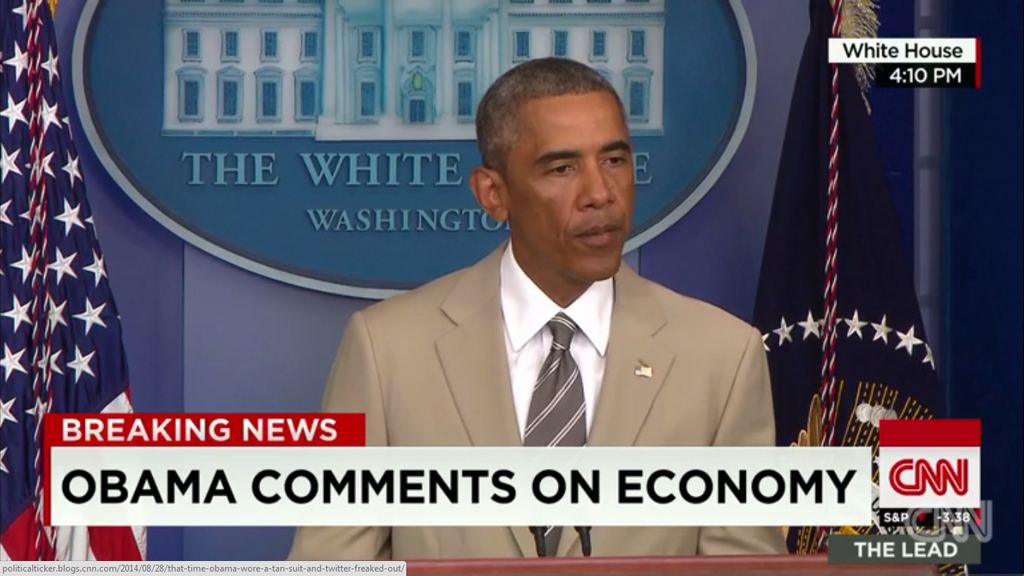
Obama Says War Powers Act Doesn’t Apply to Libya Mission

White House maintains that the president doesn’t need lawmakers’ permission for U.S. role in NATO-led effort.

The White House on Wednesday told skeptical lawmakers that President Obama doesn’t need their permission to continue the nation’s involvement in the NATO-led mission in Libya because U.S. forces are playing only a supporting role there.

Administration lawyers made their case as part of a larger report sent to Congress responding to complaints that the president had yet to provide a sufficient rationale for continuing the Libya campaign, the New York Times reports.

“We are not saying the president can take the country into war on his own,” State Department lawyer Harold Koh told the paper. “We are not saying the War Powers Resolution is unconstitutional or should be scrapped, or that we can refuse to consult Congress. We are saying the limited nature of this particular mission is not the kind of ‘hostilities’ envisioned by the War Powers Resolution.”…

OK, digest that. Here’s the NYT version, and here’s the WashPost. And then consider some of the other things I’ve been noticing lately:

  • The fact that, in the GOP debate the other night, we heard some Republicans moving more toward the “get out of Afghanistan ASAP” line. Ron Paul, treated as an outcast for saying such things four years ago, got cheered by the Fox News crowd.
  • The bold way Obama decided to go in and GET bin Laden, without any of that multilateral consult-the-allies (as in, tell the Pakistanis we’re attacking in the heart of their country) touchy-feely stuff. No fooling around.
  • The way the administration is playing on having stunned the world with the bin Laden thing to get its way elsewhere. That prompted me to write that the difference between Bush and Obama is that Bush was Sonny, while Obama is the far-deadlier (that is, more effective) Michael.
  • The way Obama is taking advantage of chaos in Yemen to just GO AFTER terrorists there, without asking Congress or the UN, or presenting arguments about the War Powers Act, or anything like that. Read this, and this.

This has been building ever since the election, with a lot of Obama’s antiwar base feeling pretty disoriented (wait — is this who we elected?), and people like me being reassured by his steady pragmatism.

But lately, the process has seemed to be accelerating. Obama still talks a good war-as-last-resort, multilateral, we-don’t-want-to-be-a-bully line for the base… but watch what happens. (And how about the way he threw everybody off-balance on Libya, letting the FRENCH of all people take the lead, while still managing to get in there and go after the bad guys? That enabled him to have it both ways. The allies couldn’t do it without us, but it came across looking like we were a reluctant junior partner, which bought Obama some support for the move among liberals.)

And I find myself wondering, is anyone else noticing? I mean, while the Republicans get more timid about the U.S. role abroad (in some ways) and obsess more and more about domestic issues (because that’s what the Tea Party cares about), Obama is out there going all JFK and LBJ. He’s going Old School. He’s defining Democratic presidential leadership back to where it was before Vietnam.

Are the parties moving toward switching places?

This is a fascinating development. I think it has the potential to completely realign the country politically, and on more than national security.

Anybody else noticing this?

Bush was Sonny; Obama is more like Michael

I said this as a comment back on a previous post, and liked it enough to say more prominently…

After reading that quote I cited in the WSJ about how the Obama administration is, ever so quietly, without saying anything overt, taking advantage of its stunning effectiveness in taking out bin Laden:

This month’s military strike deep inside Pakistan is already being used by U.S. officials as a negotiating tool — akin to, don’t make us do that again — with countries including Pakistan thought to harbor other terrorists. Yemen and Somalia are also potential venues, officials said, if local-government cooperation were found to be lacking…

… I got to thinking how this was similar to the effect that Bush’s invasion of Iraq had on thugs like Moamar Qaddafi — for a very brief time, before everybody around the world figured out that (given our internal dispute over that invasion) W. wasn’t likely to get the chance to do that ever again…

And then it hit me: In terms of the politics of projecting a credible threat that gets others to do what you want (an idea that I realize makes a lot of us squirm), George W. Bush was like Sonny Corleone. The blusterer, the guy you just know is going to jump in the car and come after you in a mad, blind rage if you touch his sister. The guy who doesn’t want to negotiate; he just wants Sollozzo dead. And ultimately, the guy who has trouble achieving all his goals.

Barack Obama, by contrast, is more like Michael. The clean-cut college kid who was never involved in the muscle end of the business, who held himself aloof from that, even expressed distaste for it. The guy who was supposed to be “Senator Corleone, President Corleone,” and not a wartime don. The guy who speaks softly and reasonably, and never utters a threat. The guy who takes out the heads of the other four New York families in one stunning stroke, right when you’ve forgotten about the bad blood. The guy who keeps on speaking reasonably after that, but nevertheless everybody respects him now, in the uomo di rispetto sense…

Not that, you know, I’m saying either president is a criminal. Far from it. I’m just using very familiar fictional characters in order to draw a comparison…

Some thoughts on the president’s Mideast speech

Coverage of President Obama’s speech today is concentrating on one big item related to the conflict between Israel and Palestinians: “Obama Sees ’67 Borders as Starting Point for Peace Deal.” Plenty is being said about that.

Setting that aside, here are my favorite parts of his speech today:

He didn’t sugarcoat the way people have been manipulated in the region for too long: “In the face of these challenges, too many leaders in the region tried to direct their people’s grievances elsewhere. The West was blamed as the source of all ills, a half century after the end of colonialism. Antagonism toward Israel became the only acceptable outlet for political expression. Divisions of tribe, ethnicity and religious sect were manipulated as a means of holding on to power, or taking it away from somebody else.”

He made sure no one could doubt where we stand on the change sweeping the region (while specific responses to specific situations may, and should, vary): “Not every country will follow our particular form of representative democracy, and there will be times when our short term interests do not align perfectly with our long term vision of the region. But we can – and will – speak out for a set of core principles – principles that have guided our response to the events over the past six months:

“The United States opposes the use of violence and repression against the people of the region.
“We support a set of universal rights. Those rights include free speech; the freedom of peaceful assembly; freedom of religion; equality for men and women under the rule of law; and the right to choose your own leaders – whether you live in Baghdad or Damascus; Sanaa or Tehran.
“And finally, we support political and economic reform in the Middle East and North Africa that can meet the legitimate aspirations of ordinary people throughout the region.”
When he WAS specific, he was generally right: “The Syrian people have shown their courage in demanding a transition to democracy. President Assad now has a choice: he can lead that transition, or get out of the way. The Syrian government must stop shooting demonstrators and allow peaceful protests; release political prisoners and stop unjust arrests; allow human rights monitors to have access to cities like Dara’a; and start a serious dialogue to advance a democratic transition. Otherwise, President Assad and his regime will continue to be challenged from within and isolated abroad.”
Finally, he committed us to the most empowering thing we can do for people in the region, and for ourselves — help them bring something other than oil to the world economy: “Fourth, the United States will launch a comprehensive Trade and Investment Partnership Initiative in the Middle East and North Africa. If you take out oil exports, this region of over 400 million people exports roughly the same amount as Switzerland. So we will work with the EU to facilitate more trade within the region, build on existing agreements to promote integration with U.S. and European markets, and open the door for those countries who adopt high standards of reform and trade liberalization to construct a regional trade arrangement. Just as EU membership served as an incentive for reform in Europe, so should the vision of a modern and prosperous economy create a powerful force for reform in the Middle East and North Africa.”

Were there weaknesses? Yes, from my perspective. I could have done without another ritualistic slap at our decision to go into Iraq, which took this form: “…we have learned from our experience in Iraq just how costly and difficult it is to impose regime change by force – no matter how well-intended it may be.”
But I don’t think he meant it quite as negatively as that sounded at first, as I determined upon rereading it. I realized that after I heard this strong endorsement of what has been achieved there: “In Iraq, we see the promise of a multi-ethnic, multi-sectarian democracy. There, the Iraqi people have rejected the perils of political violence for a democratic process, even as they have taken full responsibility for their own security. Like all new democracies, they will face setbacks. But Iraq is poised to play a key role in the region if it continues its peaceful progress. As they do, we will be proud to stand with them as a steadfast partner.” None of which would have happened, of course, with Saddam Hussein still in power.
On the whole, a speech that hit the right notes, and was a coherent and appropriate American response to a complex web of events and issues of critical importance to the world.
Good job.

How much do I actually NEED to know about the bin Laden raid?

How much of what THEY know do WE need to know?

Here’s a consideration I hadn’t though much about before now, and should have (given all those spy novels, and military history books, and Tom Clancy thrillers I’ve read):

Has the U.S. Said Too Much About the Bin Laden Raid?

Military officials fret that constant stream of leaks may hinder future missions, put Navy SEALs at risk.

By Josh Voorhees | Posted Friday, May. 13, 2011, at 11:09 AM EDT

In the nearly two weeks since the U.S. operation that killed Osama Bin Laden, a near-constant stream of detailed information about the raid’s specifics has seeped out from White House officials, lawmakers, and pretty much anyone else with security clearance.

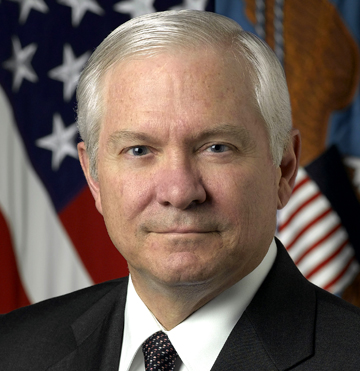
But that’s not how things were supposed to be, at least not according to Defense Secretary Robert Gates. “Frankly, a week ago Sunday, in the Situation Room, we all agreed that we would not release any operational details from the effort to take out Bin Laden,” Gates told Marines at a Wednesday town hall at Camp Lejeune. “That all fell apart on Monday—the next day.”…

The White House announced last week that it was done briefing reporters on the specifics of the mission, but that has done little to stop the ongoing flow of new details from being reported. The latest major leak came Thursday night, when CBS News gave a detailed play-by-play of what the Navy SEAL team’s helmet cameras captured during the raid….

There is the danger that the more we know about details of the raid, the greater potential for threatening our capability to do something like it in the future.

For instance, the lede story on The Washington Post‘s front page yesterday told us that a key element in preparing for the raid involved high-altitude drones flying WAY deeper into Pakistan than the Pakistanis suspected we were going. So that we could get higher-resolution photos than you get from satellites. And if you consider how high-resolution satellite photos can be, these images must have been pretty awesome. So… you have a revelation of greater technical capability than the world might have expected, and of a tactical deployment that no one knew about.

Of course, it’s a two-edged thing. Let enemies and potential enemies know what you can do, and it could intimidate them into deciding they don’t want the United States as their enemy after all. Or at least, it MIGHT work that way with some — say, your less fanatical foes. But let anyone know what measures you are capable of, and it empowers them to develop countermeasures. That’s a huge theme in military history — measures and countermeasures — and it never ends.

We may find all these details fascinating — I know I do. But how much of it do we really need to know?

Changing my mind — maybe we DID get Osama because of Obama

This is one of the problems with new media. Sometimes you spout off before you have taken in enough information and processed it. After the Obama administration analyzed intel for eight months, and STILL only had a little better than a 50-50 supposition that bin Laden was in the house, maybe I should have taken a little more time to pass judgment. After all, my original training was in a medium when I could take all day, or — in the case of my columns — all week to make up my mind. Consequently, I can only think of one or two columns ever that I later regretted writing.

Blogging is different. I try to make sure I really mean what I say here, too, but sometimes my interlocutors get my dander right up, as Professor Elemental would say, and I give ill-considered answers.

Such is the case with my reaction to a comment by our old friend Bud the other night. Here I was very pleased with President Obama’s performance in the bin Laden case, and saying so, when I read this by Bud:

Let’s not forget the tireless work the president did as commander in chief to bring this operation to a successful conclusion. It really does matter who our leader is. Thankfully we have someone competent in charge.

… it tapped me on a sore spot. The comment itself was pretty innocuous by Bud standards, but in it I read the ghosts of so many other comments by Bud along the lines of EVERYTHING George W. Bush ever did was wrong, especially invading Iraq, and so I responded:

Bud, we should all give President Obama full credit for playing his leadership role well. But don’t make the political mistake of thinking this happened because he is president. This is more about stellar work by nameless, ground-level people in our military and our much-maligned intelligence services.

There is one sense in which Obama was a critical factor, though. It’s complicated. I think I’ll do a separate post about it…

That separate post was the one in which I argued that it was Obama’s laudably bellicose attitude toward going after our enemies hiding in Pakistan that made a positive difference here….

And as I was writing that, my sense that Obama being president WAS critical to the way this happened started to take hold. Not that Bud was right or anything; I still object to the way he characterized it, especially later when he said, “I find it so refreshing to have a competent, bright, hard-working leader in charge. He’s not rashly going in to places like Iran and Libya. Not sure why we still have troops in Iraq but otherwise Obama is doing an outstanding job keeping our foreign involvements to a minimum.”

But that’s quibbling over personal quirks.

Bottom line is, the more I’ve thought about it the last couple of days, then more I have decided that on the MAIN, unadorned point, Bud’s right: There are elements to what happened that are uniquely Obama. Not that it wouldn’t have happened under other presidents — JFK, LBJ, Nixon, Ford, Carter, Reagan, Bush Sr. and Bush Jr. — but maybe not exactly this way, or this successfully.

I was thinking that this morning when reading The Wall Street Journal’s detailed story on how the raid unfolded, “U.S. Rolled Dice in bin Laden Raid:”

An early favorite: a bombing raid. That approach would minimize risk to American troops and maximize the likelihood of killing the residents of the compound. But it might also have destroyed any proof bin Laden was there.

A helicopter raid would be more complex, but more likely to deliver confirmation. Some officials were wary of repeating a fiasco like “Black Hawk Down” in Somalia, when U.S. forces were killed after a botched raid on a warlord… [By the way, one quibble on this story: That last sentence was inaccurate. The raid was NOT on the warlord, but to grab some of his lieutenants, and it was successful, not "botched." The lieutenants were neatly grabbed and the operation was essentially over when the militia managed to hit two helicopters with RPGs.]

On April 19, Mr. Panetta told the president the CIA believed bin Laden was there. Other advisers briefed Mr. Obama on preparations for an assault, including the outcomes of the dress rehearsals. Mr. Obama told them to “assume it’s a go for planning purposes and that we had to be ready,” an administration official said.

That same day, Mr. Obama gave provisional approval for the commando-style helicopter assault—which was launched from Jalalabad, Afghanistan—despite the added risk. Senior U.S. officials said the need to get a positive identification on bin Laden became the deciding factor.

You’ll notice that Bill Clinton wasn’t on my list above. That’s because I’m practically certain that he would have opted for the bombing. And the more I think about it, the less I’m positive about the other presidents.

Whereas Obama made exactly the right call. The Seal raid was the way to go. And the president was completely right not to tell the Pakistanis — another point where I have my doubts about some of those earlier presidents (for instance, Bush pere was all about some multilateralism). There is a certain confidence — something important in a leader — in Obama’s choosing the riskier option in the absence of certainty, and then, once HE was satisfied that this was bin Laden who was killed, having the body buried at sea. The president was saying, LET the conspiracy theorists claim it wasn’t him — I know it was, and I’ve eliminated his body or his grave becoming an object for our enemies to rally around.

The president may be a lousy bowler, but he makes good calls in a tough situation. That is my considered opinion — now that I’ve taken time to consider.

By the way, I might not have decided to write about this change of mind — it happened sort of organically the more I read, rather than in a “Eureka” moment — if I hadn’t read two other items in the WSJ this morning. As it happens, they were opinion pieces by people who are as firmly entrenched on the right as Bud is on the left. But whereas Bud’s reflexive anti-Bush rhetoric put me off from being convinced of his point (that, and the fact that I just didn’t have enough info yet to reach that conclusion), their unadulterated praise of someone they usually criticize really drove the point home in a way that not even I could miss it.

Bret Stephens’ piece was headlined, “Obama’s Finest Hour:”

Thane’s point isn’t that vengeance is better than justice. It’s that there can be no true justice without vengeance. Oddly enough, this is something Barack Obama, Chicago liberal, seems to better grasp than George W. Bush, Texas cowboy.

The former president was fond of dilating on the point, as he put it just after 9/11, that “ours is a nation that does not seek revenge, but we do seek justice.” What on Earth did that mean? Of course we sought revenge. “Ridding the world of evil,” Mr. Bush’s other oft-stated ambition, was nonsense if we didn’t make a credible go of ridding the world of the very specific evil named Osama bin Laden.

For all of Mr. Bush’s successes—and yes, there were a few, including the vengeance served that other specific evil known as Saddam Hussein and those Gitmo interrogations that yielded bin Laden’s location—you can trace the decline of his presidency from the moment he said, in March 2002, that “I really don’t care [where bin Laden is]. It’s not that important.”…

Good points, although I may not be totally with him on the virtue of “vengeance” alone. Note that he makes a point similar to one I made yesterday, as my mind was starting to change (sometimes, and this may be hard to understand, I change my mind as I’m writing something — on the blog, you can sometimes see it happen, as I argue with myself) — that when it comes to Pakistan, Obama is more of a go-it-alone cowboy than Bush. Which to me is a good thing.

Then there was William McGurn’s column, which was about how Republican candidates (obsessed as they are with fiscal matters) have a long way to go to catch up with Obama on foreign policy:

It’s not just that Barack Obama is looking strong. For the moment, at least, he is strong. In the nearly 10 years since our troops set foot in Afghanistan, a clear outcome remains far from sight, and many Americans have wearied of the effort. As President Obama reminded us Sunday night, getting bin Laden doesn’t mean our work there is done—but his success in bringing the world’s most hunted man to justice does reinvigorate that work.

It does so, moreover, in a way that few of Mr. Obama’s recent Democratic predecessors in the Oval Office have matched. The killing of bin Laden was no one-shot missile strike on a Sudanese pharmaceutical factory suspected of making chemical weapons, as ordered by Bill Clinton. Nor was it a failed hostage rescue in Iran à la Jimmy Carter. Instead, it was a potent combination of American force and presidential decisiveness.

First, Mr. Obama authorized a ground operation with Navy Seals far inside Pakistani territory. Second, he did not inform the Pakistanis.

These are the kinds of hard decisions that presidents have to make, where the outcome is likely to be either spectacular success or equally spectacular failure. For taking the risks that would paralyze others, and for succeeding where others have failed, the president and his team have earned the credit they are now getting.

Also good points. And hearing such good points made by people who don’t like the president nearly as much as I do made a big impression on me.

So in the end, I find myself agreeing with those guys, and with Bud, on this point: Having Obama as president made a big difference in this case.

The Obama Doctrine, and the end of the Kent State Syndrome

Back on the initial post about the death of bin Laden, I got into an argument with some of my liberal Democratic friends about the extent to which “credit” is due to President Obama for this development.

Don’t get me wrong — I thought the president performed superbly. I was in considerable suspense last night between the time we knew bin Laden was dead and the president’s speech, wondering how he would rise to the moment. I needn’t have worried. He met the test of this critical Leadership Moment very well indeed.

Also, he seems to have made the right calls along the way since this intel first came to light. That’s great, too.

Where I differed with my friends was in their assertion/implication that this success was due to Obama being president, as opposed to He Who Must Not Be Named Among Democrats. Which is inaccurate, and as offensive as if this had happened on Bush’s watch and the Republicans claimed it was all because we had a Republican in the White House.

ANY president in my memory (with the possible exception of Bill Clinton, who had a tendency to resist boots on the ground and go with cruise missiles, which would have been the wrong call in this case) would have made more or less the same calls on the way to yesterday’s mission, although few would have delivered the important speech last night as well. (Obama’s the best speaker to occupy the White House since JFK — some would say Ronald Reagan, but his delivery never appealed to me.)

That’s the thing — Obama, to his great credit, has generally been a responsible and pragmatic steward of national and collective security. As most people who actually get ELECTED president tend to be. The continuity that his tenure represents may frustrate some of his base, but I deeply appreciate it, and have from the start. (I first made this observation before he took office.)

But I hinted that I thought that maybe there was ONE way that they were right, although it was not for a reason they were suggesting…

Here is that one way: Obama has been far more aggressive toward going after the bad guys in Pakistan. Which I think is a good thing. I’ve always thought it was. In fact, I first wrote about that in August 2007. At the time, Obama was criticized by many — including Hillary Clinton — for this:

Democratic presidential candidate Barack Obamaissued a pointed warning yesterday to Pakistani President Pervez Musharraf, saying that as president he would be prepared to order U.S. troops into that country unilaterally if it failed to act on its own against Islamic extremists….

The muscular speech appeared aimed at inoculating him from criticism that he lacks the toughness to lead the country in a post-9/11 world, while attempting to show that an Obama presidency would herald an important shift in the United States’ approach to the world, particularly the Middle East and nearby Asian nations…

I applauded it.

And now we see that proposed doctrine translated into reality. Actually, we’ve seen it for some time. Pakistan has gotten pretty testy with us for our across-the-border strikes, which have been far more common under Obama than under his predecessor.

On Sunday, convinced that our most prominent individual enemy was “hiding” practically in the open in a Pakistan suburb, Obama sent in the troops and got him — and didn’t bother telling the Pakistanis until it was too late for them to interfere.

For THIS he deserves great praise. But folks, that’s not the sort of things that folks in his Democratic base praise him for (aside from some nodding that he was right to say Iraq was the “wrong war” — just before they demand we get out of what Obama terms the “right war” immediately).

This was not Obama being sensitive, or multilateral, or peaceful, or diplomatic, or anything of the kind. This was Obama being a cowboy, and going after the guy in the black hat no matter where he was. This was out-Bushing Bush, to those who engage in such simplistic caricatures.

This is not a surprise to anyone who has watched Obama carefully, or even halfway carefully. But it should be a HUGE shock to the portions of his base who are still fighting the Vietnam War, the ones who backed him because they thought he was an “antiwar” candidate.

I’m reminded of Kent State. First, don’t get me wrong — the killing of those students was a horrific tragedy, that was in no way justifiable. I, too, feel chills when I hear Neil Young’s song. Shooting unarmed civilians is never excusable. I felt the full outrage of my generation when that happened. But I’ve always thought the tragedy was deepened by the fact that the protest that led to the shootings was to an extent wrong-headed.

Folks in the antiwar movement were SO angry that Nixon had pursued the enemy into Cambodia. This, to them, was a war crime of extreme proportions.

Me, I always thought it was sensible and pragmatic. You don’t let people shoot at you and then “hide” by crossing a political barrier, not unless you like having your own people killed with impunity.

Yeah, I realize there are important differences in the two situations (the most obvious being that the Cambodian incursion was on a much larger scale). But I think it’s very interesting that some of my most antiwar friends here — antiwar in the anti-Vietnam sense — are even more congratulatory toward our president than I am, when he, too “violated sovereignty” to kill Osama bin Laden. What if Nixon had sent troops to a mansion outside Phnom Penh to kill Ho Chi Minh? The antiwar movement would have freaked out — more than usual. Again, not quite the same — but you get the idea.

One of my antiwar friends recently was arguing with me that the antiwar movement has, indeed, faded away. I had said it had not. But the more I think about this, the more I think Phillip was right. I try to imagine how the antiwar left would have reacted to such a move as this 40 years ago. And yes, we have changed. Then, college students rioted in outrage. Today, they gather outside the White House and party down with American flags. Both reactions seem to me inappropriate, but I’m hard to please.

One thing does please me, however: I do approve of President Obama’s performance on this (as I do, increasingly, on many things).

Sec. Clinton helps point way to what’s next

Of course, at such an emotion-packed historic moment as this, one encounters a lot of foolishness, from the behavior of those drunken college kids outside the White House last night to people who will actually say (and this I find stunning), OK, we got him, let’s leave Afghanistan

I thought Hillary Clinton’s remarks this morning addressed that rather nicely:

Here at the State Department, we have worked to forge a worldwide anti-terror network. We have drawn together the effort and energy of friends, partners, and allies on every continent. Our partnerships, including our close cooperation with Pakistan, have helped put unprecedented pressure on al-Qaida and its leadership. Continued cooperation will be just as important in the days ahead, because even as we mark this milestone, we should not forget that the battle to stop al-Qaida and its syndicate of terror will not end with the death of bin Ladin. Indeed, we must take this opportunity to renew our resolve and redouble our efforts.

In Afghanistan, we will continue taking the fight to al-Qaida and their Taliban allies, while working to support the Afghan people as they build a stronger government and begin to take responsibility for their own security. We are implementing the strategy for transition approved by NATO at the summit in Lisbon, and we supporting an Afghan-led political process that seeks to isolate al-Qaida and end the insurgency. Our message to the Taliban remains the same, but today it may have even greater resonance: You cannot wait us out. You cannot defeat us. But you can make the choice to abandon al-Qaida and participate in a peaceful political process….

Indeed, to the extent that the death of bin Laden sends a useful message to the world — to our friends and enemies — is that we will NOT give up. It’s about continuity and persistence. And it’s a powerful message. This is a time for following up the advantage provided by demoralization among the Taliban and al Qaeda at this moment, a moment created by the death of that movement’s chief symbol. Secretary Clinton explains it well.

Osama bin Laden is dead. So what happens now?

I originally wrote this BEFORE the president’s announcement. As you can see, I’ve now updated it with the video…

Waiting for President Obama to make the announcement that Osama bin Laden is dead.

And wondering what happens now. I’ve wondered that for 10 years: If bin Laden is dead, what does it change? Does the struggle end? Of course not. He’s now a martyr. But it’s still a huge moment.

And what will the president tell us it means, as he sees it? This is so un-Obama — Under my leadership, we have killed our enemy — what will he say? And what will he tell us to expect next? What will he say HE intends to do?

What does this mean NOW, against the context of the turmoil, the rise of democracy, sweeping through the region?

If I were the president, I’m not sure what I would say. So I’m preparing to watch, and listen.

I expect you are, too.

If you’d like to react, here’s a place to do it…

Welcome to the Energy Party, Mr. Obama (I hope)

Hope. Change. Energy Party... /2008 file photo

Heard an encouraging report on the radio this morning that I can’t seem to find now online, but there’s this from the WSJ:

WASHINGTON—President Barack Obama, under pressure to respond to rising gas prices, will outline Wednesday a series of initiatives to cut the nation’s reliance on foreign oil, including new initiatives to expand oil production, increase the use of natural gas to power vehicles and increase production of ethanol….

The political heat over energy policy is rising in tandem with the price of gasoline and diesel fuels at filling stations, in a ritual that has become familiar in Washington since the oil price shocks of the mid-1970s. “We’ve been having this conversation for nearly four decades now,” Mr. Obama said during a March 11 news conference. “Every few years, gas prices go up; politicians pull out the same old political playbook, and then nothing changes.”

The White House will cast the new effort, a combination of new ideas and previously announced initiatives, as an effort to deal with the nation’s long-term energy challenge, not just the high gas prices of the moment.

Mr. Obama will put forward an overall goal of reducing oil imports by one third over a decade, with half the reduction from decreasing consumption and half from increasing domestic supply, according to two people briefed by the White House…

And this from the NYT:

WASHINGTON — With gasoline prices rising, oil supplies from the Middle East pinched by political upheaval and growing calls in Congress for expanded domestic oil and gas production, President Obama on Wednesday will set a goal of a one-third reduction in oil imports over the next decade, aides said Tuesday.

The president, in a speech to be delivered at Georgetown University, will say that the United States needs, for geopolitical and economic reasons, to reduce its reliance on imported oil, according to White House officials who provided a preview of the speech on the condition that they not be identified. More than half of the oil burned in the United States today comes from overseas and from Mexico and Canada.

Mr. Obama will propose a mix of measures, none of them new, to help the nation cut down on its thirst for oil. He will point out the nation’s tendency, since the first Arab oil embargo in 1973, to panic when gas prices rise and then fall back into old gas-guzzling habits when they recede.

He will call for a consistent long-term fuel-savings strategy of producing more electric cars, converting trucks to run on natural gas, building new refineries to brew billions of gallons of biofuels and setting new fuel-efficiency standards for vehicles. Congress has been debating these measures for years.

The president will also repeat his assertion that despite the frightening situation at the Fukushima Daiichi reactor complex in Japan, nuclear power will remain an important source of electricity in the United States for decades to come, aides said.

He will respond to members of Congress and oil industry executives who have complained that the administration has choked off domestic oil and gas production by imposing costly new regulations and by blocking exploration on millions of acres of potentially oil-rich tracts both on shore and off.

The administration is not prepared to open new public lands and waters to drilling, officials said, but will use a new set of incentives and penalties to prod industry to develop resources on the lands they already have access to…

Wish I could find the radio report, because it pretty much painted what the president will have to say as being VERY Energy Party. As you may recall I took both Mr. Obama and John McCain to task in 2008 for being unworthy of Energy Party support, however many other virtues the two may have possessed (and as you know, I liked them both — it was the first time ever that both parties nominated my first choices in their respective fields).

But increasingly, Mr. Obama seems to GET IT — that it’s not about keeping gas prices low; it’s not about pleasing the left or the right. It’s about freeing this country from its dependence from foreign oil, for all sorts of economic and geopolitical reasons. Nothing we could do would be more likely to make the nation stronger and healthier.

It’s about being a grownup, and taking the long view.

Here’s why “left” and “right” are all one to me

Actually, what this is is ONE reason why the distinctions between left and right — which seem to mean so much (and of course, I would say far too much) to so many in this country — are of little concern, and NO appeal, to me:

The Few, the Proud, the Anti-Libya NFZ Republicans

Posted Monday, March 21, 2011 12:31 PM | By David Weigel

The Republicans who out-and-out oppose attacks on Libya without congressional authorization are few, and their names are not surprising anyone who follows debates over war funding. Here’s freshman Rep. Justin Amash, R-Mich, who was backed by Ron Paul last year.

It’s not enough for the President simply to explain military actions in Libya to the American people, after the fact, as though we are serfs. When there is no imminent threat to our country, he cannot launch strikes without authorization from the American people, through our elected Representatives in Congress. No United Nations resolution or congressional act permits the President to circumvent the Constitution.

I love that libertarian indignation in “as though we are serfs.” He means it, too. To people of certain ideological stripe, we are all right on the verge of serfdom, every minute.

Here’s the president’s letter ‘splaining things to Congress, by the way. The 119th such letter sent by a president.

Beyond the serf stuff, do some of those phrases sound exactly like the antiwar left to you? Yeah, to me, too. But there’s nothing surprising about it. I think I shared the story with you recently of one of my wife’s leftist professors who supported George Wallace because he’d never get us involved in a Vietnam.

Now, for you Paulistas: Do I not care about the Constitution? Of course I do. And before this nation actually goes to real WAR with an actual other NATION,  the kind of debate that leads to the declaration of war is a good thing, and the Framers were wise to include the requirement — particularly given how weak and vulnerable this nation was in those days, and how ruinous a war with one of the great powers could have been.

But of course, that very generation, and the first president of the limited-national-gummint party, Thomas Jefferson, did not see such a declaration as necessary to deal with the Barbary Pirates. You know, the shores of Tripoli?

They DID think it meet for Congress to authorize the president to act — as Congress did before the Iraq invasion, and before the Gulf War.

If anything, the issue here is whether Obama should have paused long enough to wait for such a formal authorization in this case. Did he act too soon? Did he cave too quickly to Hillary telling him to “man up” and act? I don’t think so, given the circumstances — the dire situation on the ground in Libya, the fact that the Brits and the French (yes, the French!) were ready to go. But frankly, I didn’t think about it before just now. Should we have had a big national debate between the UN resolution and action (regardless of whether it then would have been too late)?

What do y’all think?

Graham grateful for Obama’s “strong women”

Check out Political Wire’s Quote of the Day:

“I don’t know how many people have died as we wait to do something. Thank God for strong women in the Obama administration.”

– Sen. Lindsey Graham (R-SC), quoted by NBC News, on how it was President Obama’s female advisers that prevailed in arguments to take military action in Libya.

Here’s more from the item that came from:

NBC’s Andrea Mitchell reported Saturday night on the internal debate about the decision to go into Libya. “In the end, it became the women foreign policy advisers against the men. Although Hillary Clinton initially resisted the idea of a no-fly zone, she was persuaded at the beginning of this week by the Arab League’s endorsement of military action, and she had intense meetings with the Arab League leaders and a Libyan opposition leader this week. She actually joined U.N. ambassador Susan Rice and two other women in the National Security Council, who had been arguing for some time for more aggressive action in persuading the president on Tuesday. This is a rare instance, by the way, of Clinton going up against Defense Secretary Bob Gates and the National Security Adviser Tom Donilon among other men in the White House who were much more cautious about this.”

To that point, here was more Lindsey Graham on FOX: “I don’t know how many people have died as we wait to do something. Thank God for strong women in the Obama administration.”

Presumably, since he’s for strong women, Lindsey won’t get any overwrought letters from Eleanor Kitzman

Graham’s modest proposal: Let’s be as bold as the French

This just in from our senior U.S. senator:

Graham Presses Obama Administration to Establish Libyan No-Fly Zone

WASHINGTON – U.S. Senator Lindsey Graham (R-South Carolina) today made this statement on the establishment of a No-Fly zone over Libya and what United States inaction means for our own national security.  Graham is a member of the Senate Armed Services Committee.

“One test in foreign policy – at least be as bold as the French.  Unfortunately, when it comes to Libya we’re failing that test.

“The French and British are right to call for a no-fly zone over Libya, and they are correct to recognize the forces opposing Gaddafi.  I’m very disappointed by the indecisiveness of the Administration in the face of tyranny.  They are allowing the cries of the Libyan people to fall on deaf ears.

“Allowing Gaddafi to regain control over Libya through force – without any meaningful effort to support the Libyan people – will create grave consequences for our own national security.

“The biggest winner of an indecisive America refusing to stand up to dictators who kill their own people, will be the Iranian regime.  The Iranian regime has already used force against their own people when they demanded freedom.  If we allow Gaddafi to regain power through force of arms, it is inconceivable to me that the Iranians will ever take our efforts to control their nuclear desires seriously.

“The world is watching, and time is beginning to run short.  The Obama Administration should join with the international community to form a no-fly zone while it still matters.

“Then-Senator Obama relished the opportunity to label Iraq as President Bush’s war.  If he does not act decisively in Libya, I believe history will show that the Obama Administration owned the results of the Gaddafi regime from 2011 forward.

“Their refusal to act will go down as one of the great mistakes in American foreign policy history, and will have dire consequences for our own national security in the years to come.  I truly fear the decisions they are making today will come back to haunt us.”

#####

Yeah, that’s kind of what I thought the other day, when I saw that the French and the Brits were taking the lead on trying to coordinate an international response to try to stop Qaddafi from continuing to kick the stuffing out of the Libyan people who have risked their lives to fight our enemy for us (and, of course, for themselves and their country).

I don’t know what the right thing to do is — such things are complex — but the no-fly zone certainly seems like a measured response that would carry some likelihood of doing good. Unlike, say, boots on the ground, which Sen. Graham draws the line at.

Let’s get our money down, now: Who will be the first to criticize the senator’s common-sense assertion? An antiwar liberal Democrat, or one of those extremists in his own party who are pleased to trash the “RINO” at every opportunity. Cue the Jeopardy music…

Obama: Ready To Tap Oil Reserve If Needed — which it ISN’T, not by a long shot

The president at this afternoon's presser. (Official White House Photo by Lawrence Jackson)

Well, gasoline prices are rising toward levels that might, just might, cause some of us to face reality and acknowledge that it’s not a good idea at all to be so desperately dependent on cheap oil from crazy-dangerous parts of the world, and what are our elected leaders — Democrats and Republicans — doing?

Why, what they always do — pandering. But there’s pandering, and then there’s pandering.

The GOP is busily blaming Barack “Root of All Evil” Obama. The president himself is responding by saying, at a press conference today, that he’s prepared to tap the strategic oil reserve, if needed.

But that last part is key, and his way out as a rational man. It’s like his promise to “start” withdrawing troops from Afghanistan by a certain date, which in no way commits him to draw down dangerously before it’s wise to do so. Obama’s smart; he’s not going to pander so far that he commits himself to something irresponsible. This is a quality that he has demonstrated time and again, and which has greatly reassured me ever since he beat my (slightly) preferred candidate for the presidency. This is the quality — or one of them — that made me glad to say so often, back in 2008, that for the first time in my editorial career, both major-party candidates for president were ones I felt good about (and both of whom we endorsed, in their respective primaries).

It’s certainly more defensible than Mr. Boehner’s reflexive partisan bashing. And it’s WAY more defensible than Al “Friend of the Earth” Gore asking Bill Clinton to tap the reserve to help him win the 2000 election.

To quote from the report I just saw on the NPR site:

Obama said he’s prepared to tap the U.S. emergency oil reserve if needed. But as gas prices climbed toward $4 a gallon, the president said the U.S. must adopt a long-term strategy of conservation and domestic production to wean itself off foreign oil.

“We’ve been having this conversation for nearly four decades now. Every few years gas prices go up, politicians pull out the same political playbook, and nothing changes,” Obama said.

“I don’t want to leave this to the next president,” he said.

Some in Congress have been calling on Obama to tap the Strategic Petroleum Reserve. And the president made clear Friday that that was an option, although he indicated he wasn’t yet prepared to exercise it. He declined to specify the conditions that would trigger the step, but said it was teed up and could happen quickly if he chooses to call for it….

His threshold, based on what he said, is a Hurricane Katrina, or worse. Personally, I’d raise the bar a bit higher than that, but he’s on the right track, trying to set a high standard. (You make a disruption like Katrina the standard, then next thing you know, you’re tempted to lower it to, say, a BP oil spill — and that’s not the direction you want to go in.)

The key word here is “strategic,” a threshold that I would think wouldn’t be crossed until we have a sustained inability to GET oil to power our economy — something we came close to, in spots, in recent crises. But it seems to me one only turns to such “strategic” options as a last resort. The president should be “prepared to tap the U.S. emergency oil reserve if needed” in the same sense he is expected to be prepared to crack open the “football” and activate the codes for going nuclear. OK, maybe that’s a bit extreme, but you get where I’m going with this. It’s something we hope and pray never happens, and we do our best to pursue policies that avoid such an eventuality.

By the way, back to that excerpt above. I particularly love “the president said the U.S. must adopt a long-term strategy of conservation and domestic production to wean itself off foreign oil.” Earlier today, I disparaged the president for being no Energy Party man. (I was essentially repeating an observation I made about both him and McCain in a July 6, 2008, column.)

But maybe I was wrong. If he keeps saying things like that, he may deserve the Energy nomination in 2012 after all.

Some thoughts on Robert Gates’ recent remarks

I like that headline. Sort of 19th century-sounding in its plainness. Anyway, moving on…

Back on the previous post, Phillip said:

This is somewhat indirectly related to issues raised by #1, but I couldn’t help wondering what you made of Sec’y Gates’ remarkable speech at West Point last week:

http://www.nytimes.com/2011/02/26/world/26gates.html

And I responded in a comment that seems worth a separate post, to wit…

Phillip, I had several thoughts about Gates’ remark (which, for those who missed it, was “In my opinion, any future defense secretary who advises the president to again send a big American land army into Asia or into the Middle East or Africa should ‘have his head examined,’ as General MacArthur so delicately put it.”):

  • First, my facetious reaction — Asia? Africa? Middle East? So that leaves what? Europe? Australia? South America? Antarctica? Quite a sweeping set of eliminations. Next thing you know, we won’t be able to go war anywhere, and he’ll be out of a job. Golly, I wonder if the world will cooperate with us on that, and make sure, out of sympathy to our preferences, that the next crisis demanding a deployment of U.S. ground troops happens in, say, Sydney. MayBE, but it seems unlikely.
  • I like Robert Gates (here’s a column I did about him in 2006), have liked him ever since he became CIA director in the 80s (and especially liked him when he delivered us from the disaster of Rumsfeld), so he has my sympathy. And I fully understand why someone who’s had the challenges he’s had as SecDef.
  • From a pragmatic standpoint, what he says makes all the sense in the world. That’s why the option we’re looking at in Libya is a no-fly zone — you know, the mode we were in in Iraq for 12 years during the “cease-fire” in that war against Saddam that started in 1990 and ended in 2003. It’s manageable, we can do it easily enough (we and the Brits are the only ones with the demonstrated ability to provide this service to the people of Libya and the world). Air superiority is something we know how to assert, and use.
  • Ground forces are a huge commitment — a commitment that the United States in the 21st century appears politically unwilling to make. If you’re a pragmatist like Gates — and he is, the consummate professional — you consider that when you’re considering whether the goals are achievable. We’ve demonstrated back here on the home front that we’re unable to commit FULLY to a nation-building enterprise the way we did in 1945. It takes such a single-minded dedication on every level — military, economic, diplomatic — and that takes sustained commitment. One is tempted to say that there’s something particular about Americans today that prevents such a consensus — our 50-50, bitter political division, for instance — but really, this is the norm in U.S. history. The anomaly was 1945. It took two world wars for us to bring us to the point that we could make that kind of commitment.

So there you go. I had another bullet in mind, but was interrupted (blast that person from Porlock!), and it hasn’t come back to me yet. Please share your own thoughts…

Scotland Yard always gets its man, but sometimes has to let him go

At least, that was the word earlier today, although the actual release of Julian Assange, the accused sex offender and would-be saboteur of U.S. security, has now been delayed pending a hearing.

From the NYT:

LONDON — After a week in detention facing possible extradition, Julian Assange, the founder of the WikiLeaks antisecrecy group, was ordered released on $310,000 bail by a court on Tuesday as he challenges a Swedish prosecutor’s demand that he return to Stockholm for questioning about alleged sex offenses.

However, Mr. Assange remained in custody pending a hearing on an appeal by the prosecutor, which would take place within the next 48 hours.

In granting bail, Judge Howard Riddle ordered that Mr. Assange appear again in court on Jan. 11. He also said that between then and now he must reside at Ellingham Hall, a Georgian mansion in Bungay, in eastern England, owned by Vaughan Smith, the founder of a club for journalists. Mr. Assange must spend every night at the mansion and will be electronically tagged so the police can track his movements, the judge said…

So even when he DOES walk out, it’s sort of a tag-and-release situation. Which shows the Brits haven’t lost their minds. Good to know, since I’m about to go over there. If I DO run into the guy, though, I’ll let you know.

Oh, and about those sex charges — as muddled a mess as any he-said-she-said (and she said, too) you’re likely to run across. Whatever the facts, Mr. Assange seems to fall somewhat short of a paragon (even if you believe his defense):

Speaking about the case in recent weeks, Mr. Assange has said that he had consensual relations with two young Swedish women. He said he met them during a trip to Sweden in August that he made in a bid to establish a haven for himself and WikiLeaks under Sweden’s broad laws protecting press freedoms.

The charges relate to the question of whether these encounters ceased to be consensual when a condom was no longer being used. Sweden’s request for extradition is designed to enable prosecutors to question Mr. Assange about charges of “rape, sexual molestation and unlawful coercion.”…

In a packed courtroom hearing lasting nearly an hour a week ago, Gemma Lindfield, a lawyer acting for the Swedish government, outlined some of the detailed allegations against Mr. Assange made by the Swedish women, both WikiLeaks volunteers. They involved three incidents, including one in which Mr. Assange was alleged to have had unprotected sex with one of his accusers while she was asleep.

But that’s not why we’re talking about this guy, is it?

Oh, and about the NYT’s blithe assertion that WikiLeaks is an “antisecrecy group”… I read an interesting opinion piece the other day that argued it is pretty much the opposite of being a champion of transparency — and backed up the argument fairly well:

Whatever else WikiLeaks founder Julian Assange has accomplished, he’s ended the era of innocent optimism about the Web. As wiki innovator Larry Sanger put it in a message to WikiLeaks, “Speaking as Wikipedia’s co-founder, I consider you enemies of the U.S.—not just the government, but the people.”

The irony is that WikiLeaks’ use of technology to post confidential U.S. government documents will certainly result in a less free flow of information. The outrage is that this is Mr. Assange’s express intention….

Mr. Assange is misunderstood in the media and among digirati as an advocate of transparency. Instead, this battening down of the information hatches by the U.S. is precisely his goal. The reason he launched WikiLeaks is not that he’s a whistleblower—there’s no wrongdoing inherent in diplomatic cables—but because he hopes to hobble the U.S., which according to his underreported philosophy can best be done if officials lose access to a free flow of information.

In 2006, Mr. Assange wrote a pair of essays, “State and Terrorist Conspiracies” and “Conspiracy as Governance.” He sees the U.S. as an authoritarian conspiracy. “To radically shift regime behavior we must think clearly and boldly for if we have learned anything, it is that regimes do not want to be changed,” he writes. “Conspiracies take information about the world in which they operate,” he writes, and “pass it around the conspirators and then act on the result.”

His central plan is that leaks will restrict the flow of information among officials—”conspirators” in his view—making government less effective. Or, as Mr. Assange puts it, “We can marginalize a conspiracy’s ability to act by decreasing total conspiratorial power until it is no longer able to understand, and hence respond effectively to its environment. . . . An authoritarian conspiracy that cannot think efficiently cannot act to preserve itself.”

As I said earlier today to a friend over on Facebook:

Assange and his crowd are not journalists. They’re not the vaunted Fourth Estate, playing a role in stimulating political debate over a national issue. They are foreign political activists who intend to harm the security of the United States. Their goal is to shut down information-sharing among our agencies, from Defense to State to Homeland Security to CIA and so forth, so that they will be less effective. To return us to a pre-9/11 state — you know, back when one agency knew the 9/11 attackers were in the country, and another agency knew why they were dangerous, but they weren’t talking to each other. (An argument can be made on security grounds for keeping information in such silos, but it’s an argument that you can go around and around on — and Assange is not a legitimate participant in that debate.) The goal of WikiLeaks is not transparency, but the opposite — they want to shut down information-sharing.