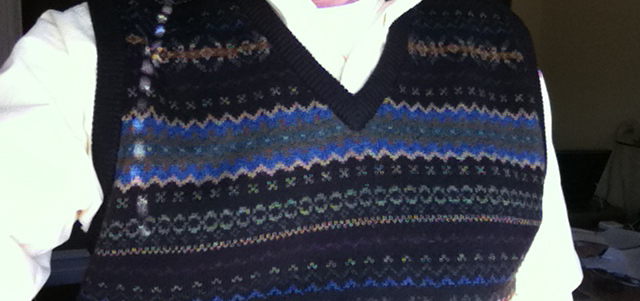
Some of y’all were advising me on a “look” for my band, once I start a band. That, of course, is a worthwhile consideration — yet another thing to settle before actually forming the band itself, along with the band name and playlist.
But y’all were a bit off with the platform shoes with goldfish in them and other suggestions. As I responded, my own concept of a “look” is somewhat different.
I tend to think back to when I saw Dylan with The Band in Memphis in 1974. Basically, they were casually dressed with dark sport coats over work shirts, and jeans or other casual pants. I seem to recall a scruffy old sofa on the stage. It was comfortable, homey, and vaguely old-fashioned. They were dressed sort of like Butch Cassidy and the Sundance kid, only without the guns and cowboy hats.
That’s the sort of look I’m comfortable with. It’s the way I dress. It’s more or less the way I’ve dressed since high school. There was once a sort of clearance/warehouse sale at the base exchange at Hickam Air Force Base back in 1970, and they were getting rid of all kinds of out-of-style items. I picked up a couple of sport coats for $5 each. One of them I really liked. It was wool, a sort of rough, tweedy wool. It was a dark, dark blue with other dark colors in it, vaguely seen, and a faint sort of reddish pinstripe running through the hard-to-see pattern. I wish I still had that jacket, even though it wouldn’t fit me now. It was very like what The Band would wear, or what a cowboy in a particularly cool western might wear, and have to pull out of the way to draw his sixgun.
Over the years, I got dressier than that, and took up such items as the bow tie. But nowadays, when I do wear a tie, I’m the only one at ADCO who does. And more and more often, I don’t wear one at all. So I’m drifting back more toward that look I had as a student. But part of that look is that I always, always wear a jacket.
How could I not? How would I get around? Where would I put my:
- Car keys (right outside pocket)
- Wallet (sorry, but I’m not going to deform my spine by sitting on a wallet in my hip pocket)
- notebook (my Moleskine fits perfectly in my inside pocket on the right
- flip-up shades (breast pocket)
- pills, tissues, etc. (antihistamines and such that I always carry — left outside pocket)
Where would all that stuff go without a jacket? And then there’s my iPhone, which I wear clipped to my belt — you want me to go around with my phone exposed to the weather?
The other day, on NPR, I heard an interview with British actor Bill Nighy, who among other things said the following:
SIEGEL: You have a look and bearing that says, at least to my American eyes: British gentleman. Is it true that you feel naked if you’re not wearing a suit?
NIGHY: Yeah. In fact, a jacket, really. I’m a jacket man. And if I’m without one, I am kind of seriously disabled. I don’t know how to operate in shirt sleeves.
SIEGEL: You don’t?
NIGHY: It makes me anxious and uneasy.
SIEGEL: Even to a reading for a part or something very informal?
NIGHY: Yeah. It’s ludicrous. People sometimes inquire why there’s a lack of classical work on my CV with the emphasis on Shakespeare and I have joked in the past that it’s because I can’t operate in those kind of trousers. But, in fact, it’s true. I can really only operate in a decent lounge – what we used to call a lounge suit. It is kind of my muse and I am ludicrously attached to the idea.
I did a play on Broadway here in New York and the director desperately tried to get a jacket off me. He said, you’re in the garden. It’s summertime in England. What would you be doing wearing a jacket? I said, I always wear a jacket in the garden. Anyway, he did get the jacket off me and he actually made me appear without socks, which was deeply unsettling.
SIEGEL: This was very difficult for you.
NIGHY: Yeah…
Exactly! How indeed does one get along with a jacket? I can’t imagine. I gathered that this was supposed to be heard as an expression of the actor’s eccentricity, but I thought he made perfect sense. No wonder I like Nighy in pretty much anything I see him in (“Page Eight,” “I Capture the Castle,” “Love Actually“).
As for going about without socks? Totally beyond the pale. Let’s not even go into that.

Like Butch and Sundance, but without the guns and hats.