Category Archives: Taxes

The truth about SC: Taxes are low and getting lower, and government is not ‘growing’

Cindi Scoppe struck another blow today in the lonely fight to base public policy in South Carolina on facts. It’s not only a lonely, but a losing battle, since the people who are driving things in the State House have contempt for facts, preferring to “govern” on the basis of extremist ideology, which holds that facts are bunk.

Basically, she was answering this kind of nonsense:

Consider this analysis from an Upstate anti-government activist, speaking recently to The Greenville News: “Every year our state budget continues to go up, up, up, far exceeding our growth. So we’re getting more government, we’re getting higher taxes.

“They tell us, ‘We cut taxes.’ That’s nonsense. How can you increase spending and cut taxes and yet you claim that we also are not running a deficit? The numbers don’t add up.”

That certainly sounds like a sensible analysis. And there are circumstances under which it could be accurate. If, say, our population were remaining stagnant, or declining. Or if people’s income or purchases remained flat, or declined. But of course none of that is happening.

What’s happening isn’t that complicated. It just isn’t necessarily intuitive…

And what is happening is that tax rates have been lowered over and over for the past two decades. What is also happening is that, while the total amount of state funds spent on government is greater because of our skyrocketing population growth, the amount spent per capita is less and less:

South Carolina’s tax collections are the lowest in the nation, at $1,476.50 per capita; they dropped 18 percent from 2001 to 2011 — more than they did in 48 states. Our combined state and local tax burden per capita was less than all but one state, at $2,742. Our 2012 Tax Freedom Day — the date when we’ve earned enough money to pay all of our federal, state and local taxes for the year — was earlier than all but three states, at April 3.

This is simply not a state in which we’re “getting higher taxes.”

Ah, but our government is growing, right? Well, if by “growing government,” you mean that the total amount spent on state government each year is generally more than it was the previous year, then yes, it’s growing. With the exception of two years during the recession, state general fund expenditures (the money over which the Legislature has the most control) are growing — although this year’s $6.1 billion general fund budget is still down from the $6.7 billion in 2008-09, just before the recession hit.

But remember: While the general fund grew by 12 percent over the past decade, our state’s population grew by 15 percent. That means the Legislature appropriated less general fund money per resident, even without considering inflation, in 2012 than in 2002…

Ah, but what about all those “other funds,” from the feds and fees? Hasn’t that increased the size of government? Consider:

What’s a little surprising is that even with all that federal and other money, the total number of state employees is actually down, from 63,000 in 2002 to 56,000 in 2012. In fact, the total number of state employees has decreased over just about any period you look at during the past two decades, except last year, when it rose slightly from 2011, but remained well below the 2010 level.

So if by “growing government” you mean government is increasing the number of people on the payroll, it’s not.

If you mean government is providing more services, it’s also not. Our state is providing services to more people — Medicaid and food stamps, both funded primarily by the federal government, are prime examples — but it’s not increasing the services to each person…

Actually, you should just go read the whole thing.

Patriotic Millionaires: ‘Raise our taxes. We can take it.’

I knew about Warren Buffett, but I hadn’t heard of the “Patriotic Millionaires” group until I got this release today:

Patriotic Millionaires Slam Congress on the Sequester Stall
“We did our part, now it is time to do yours!”

New York, NY –Today, Patriotic Millionaires for Fiscal Strength implore Congress to come to an agreement and stop the impending budget cuts from the sequester. “Your job in its most basic form is to keep the country running. We did our part, now it is time to do yours!”

Travel writer, TV host, Tour Organizer, and Patriotic Millionaire Rick Steves (WA) says: “It’s time for millionaires like me to step up to the plate and contribute our share. A millionaire south of our border would spend a small fortune for designer fortifications. He’d need armed guards on his street corner so his child could walk to the park. What’s it worth to be able to work hard and prosper in the USA. It’s worth being a patriotic supporter of a progressive tax system. What’s honest? To acknowledge that we are the least taxed wealthy class in the civilized world and we’d live nowhere else. Together, we can invest in the fabric of our society and together we can enjoy the peace and stability and opportunity that you can only find here in America. Yep, I’m a Patriotic Millionaire.”

Filmmaker and Patriotic Millionaire Abigail Disney (NY) says: “The fact is that I pay a lower effective rate on my income than my assistant does, and that is just plain stupid.  We need to address the most egregious outs millionaires have access to and bring the tax code back in sync with our values as a democracy and meritocracy.  Closing the carried interest loophole, to name one of many, will go a long way toward getting us there.”

CEO of NuCompass Mobility and Patriotic Millionaire Frank Patitucci (CA) says:  “If my paying a few more dollars in taxes helps close a deal that will maintain basic government services, count me in. The alternative, a depressed economy, will cost me a whole lot more.”

Former AOL Executive and Patriotic Millionaire Charlie Fink (VA) says: “These two things I know to be true: there is no problem in business that cannot be solved by more revenue AND no business can cut its way out of a budget crisis. With or without the sequester, our problem remains lack of revenue. This was only slightly addressed by higher taxes on the wealthy. We must end corporate welfare, and get back to a system where our businesses, along with the most wealthy, contribute to the general welfare that allows our society to thrive, and create opportunity for others.”

Patriotic Millionaire Woody Kaplan (MA) says: “In order to maintain tax loopholes which advantage only the wealthiest Americans, the Republicans are putting our economy at risk, disrupting government services, and putting middle class taxpayers on furlough.  This is an unconscionable combination of greed and arrogance.”

Attorney and Patriotic Millionaire Joel Kanter (VA) says: ”It is remarkable that we are days away from the latest chapter in ‘Hostage Politics First, Country & Policy Later’ where millions of families will pay an enormous price. One can only hope that the outcry from those seeking reason will become unbearable on those seeking purity of purpose at all costs, and that Americans themselves will become ever more vigil about allowing their government to be hijacked and held hostage. I daresay an airliner facing these circumstances would become the focus of the world, and yet the millions that will be impacted here are seemingly noticed by none.”

Founder of Student Financial Aid Services, Inc. and Patriotic Millionaire Michael Alexander (CA) says: “Everyone who has reviewed the tax code agrees that it is past time to eliminate tax loopholes that benefit the wealthiest. We are better than that. It is time that the GOP act like grown-ups, show compassion, and do what is best for the country and those less fortunate.”

Angel Investor and Patriotic Millionaire Ron Garret, PhD. (CA) says: “Republicans say they want to shrink the deficit, but they refuse to raise taxes, which leaves draconian cuts as the only possible option.  But instead of owning this conclusion they instead try to blame the president for the inevitable results of their own policies and the laws that they voted for.  Apparently Republicans understand that if they stood by the results of their policies, the American people would run them and their gerrymandered obstructionist hypocrisy out of town on a rail.”

Patriotic Millionaire Emanuel Stern (NY) says: “For the good of the country, politics and partisanship must be put aside and our national interest set first. Any rational person would understand that both cuts and revenues are needed to achieve fiscal responsibility. It is time for cuts and they should be substantial. But they also must be accompanied by revenue. Loopholes must be closed. Please stop playing politics with our Country’s national interest.”…

The Patriotic Millionaires for Fiscal Strength was formed in Fall 2010 by some of the country’s most financially successful citizens who came together to urge the President to let the Bush tax cuts expire for people making more than $1 million per year. Now, Patriotic Millionaires for Fiscal Strength consists of more than 220 members, including:  more than a dozen current and former Google employees, actress Edie Falco of Showtime’s Nurse Jackie, the founder of Esprit, the founder of the Princeton Review, travel writer Rick Steves, the founder of Ask.com, legendary philanthropist Michael Steinhardt, famed economist Nouriel Roubini, financial guru Andrew Tobias, top executives from Warburg, Pincus, and other major financial firms, filmmaker Abigail Disney, and many others.

Here’s a list of the millionaires. By the way, these aren’t just folks who have a million dollars (which is what I thought “millionaire” meant). These are people who make a million or more a year.

SC delegation as useless as ever on ‘cliff’ vote

scvote

To the extent that anyone is inclined to congratulate the Congress for voting at the 13th hour to avert the “fiscal cliff,” they should carefully avoid directing any positive vibes at the SC delegation.

They were predictably petulant, recalcitrant and useless. Far be it from them to be part of anything that might be construed by anyone as getting anything done.

As you can see on this nifty interactive map provided by The New York Times, Joe Wilson and the Four Freshmen all voted “nay.” One would be tempted to pat Jim Clyburn on the back for being the grownup in the room, but the fact is that he is as wedded to his own rigid partisan attitudes as they are to theirs, so his vote was just as predictable.

But at least he voted to do something.

Here, by the way, is what Clyburn had to say about the vote last night:

Mr. Speaker, it is tempting to say it’s about time the House put aside extreme partisanship and work together on compromise to address the nation’s most pressing issues.  But in reality, it is far past time that we put aside its extreme partisanship.  Throughout the entirety of the 112th Congress, the Republican Leadership repeatedly put its own narrow political interests ahead of the public interest.


So here we are on New Year’s night, with the clock running out on the very existence of this Congress, finally considering bipartisan legislation to provide middle class tax cuts, require the wealthiest to once again pay their fair share so we can grow the economy, create jobs and protect the most vulnerable in our society.  It is indeed well past time we got about the people’s business.


Mr. Speaker, in 2011, I served on the Biden group of both Republican and Democratic Representatives and Senators who worked with the Vice President on our nation’s fiscal issues.  We made good progress in those talks until our Republican friends walked away, fearing the wrath of the Tea Party Caucus here in the House.


I also served on the bipartisan Joint Select Committee on Deficit Reduction, the so-called supercommittee that spent countless hours discussing these issues in detail.  It was very clear that the elements of a fair and balanced fiscal plan were achievable.  But at the end of the process, the Republican leaders refused to compromise and the supercommittee failed.


So here we are.  While this bill is not perfect, and I have serious concerns about some of the cuts it contains, it does contain the element of fairness.  This bill protects the middle class and working people with a more progressive tax code than we’ve had in a very long time.  And this bill prevents the meat axe approach of budget cuts that could do severe damage to our national defense and important domestic priorities.


Mr. Speaker, I hope that the partisanship of the 112th Congress will end this week with the end of the 112th Congress.  And I am hopeful that the 113th Congress can work together toward honorable compromises that get the people’s business done.  I urge a Yes vote.


-30-

I have not yet received any releases on the subject from the GOP members.


Here we go over the cliff, y’all!

This just came over the wire a few minutes ago:

WASHINGTON (AP) – The House will miss the midnight Monday deadline lawmakers set for voting to avoid the “fiscal cliff.”

House Republicans notified lawmakers that the chamber will vote Monday evening on other bills. They say that will be their only votes of the day.

President Barack Obama and Senate Republican leader Mitch McConnell said Monday they are near a deal to avoid wide-ranging tax increases and spending cuts – the fiscal cliff – that take effect with the new year.

Both men said they were still bargaining over whether – and how – to avoid $109 billion in cuts to defense and domestic programs that take effect on Wednesday…

OK, so there could still be a deal by Wednesday. And truth be told, the “cliff” is more like a steep incline, with various painful measures being enacted as we move into the new year. There is time, even after tonight, to undo much that the cliff entails.

But still. They’ve known this was coming a year and several months. Pretty much everyone wanted to avoid it. But Washington is so pathetic, they couldn’t get it done.

These are the times we live in.

These voices of reassurance don’t soothe me

This morning, there was an op-ed piece by Rand Paul (not Paul Ryan; the other one with very similar name and identical ideas) suggesting that we need not necessarily “wring our hands in despair at the possible fiscal cliff.”

Then later today, I get this from Gary Johnson, the guy who ran for president this year as a Libertarian:

Since the election, I’ve been able to spend some time at home in New Mexico, recharge my batteries a bit, and most important, watch what’s going on in Washington, DC – which is really nothing good.

Gary Johnson

The news is filled with stories about the “looming fiscal cliff”.  Of course, in Washington, their definition of a “cliff” is that government spending will be cut next year by slightly more than $100 billion – IF Congress and the President don’t come to an agreement to cut spending by LESS than that. With a $16 trillion debt and trillion dollar deficits as far as the eye can see, only in Washington would cutting $100 billion be viewed as an impending disaster.

The real disaster – the real “fiscal cliff” – is the one we face if spending ISN’T cut by far more than $100 billion…  There are talking heads on TV saying, with a straight face, that cutting spending by a few small percentage points will devastate the economy. Where were those talking heads when the Democrats and Republicans were conspiring to run up an unsustainable $16 TRILLION national debt.  Who is pointing out the obvious:  That ridiculous levels of spending have already devastated the economy – and that the so-called fiscal cliff is a pothole compared to the real cliff that our Thelma and Louise government is driving us over.

And so forth. Somehow, I am not consoled by these assertions. Nor am I pacified when some of our friends on the left (and more libertarian elements of the right) say it’s just fine if military spending is eviscerated.

Call me wacky, but count me among those hoping that the Dems and Repubs will work out a way to avert this booby-trap they set during their last major failure to be reasonable on fiscal matters — you know, the one that let to the downgrade of the nation’s credit rating.

The Onion turns to straight reporting

Don’t know if you saw this at The Onion. What grabbed me about it is that it is in no way an exaggeration. There are hundreds of Republicans across the nation who are actually, sincerely torn by the horns of this very “dilemma,” even though they wouldn’t describe it in the same words:

Congressman Torn Between Meaningless Pledge To Anti-Tax Zealot, Well-Being Of Nation

WASHINGTON—Amid ongoing negotiations in Congress over the looming “fiscal cliff,” Rep. Tom Reed (R-NY) told reporters Wednesday he is “completely torn” between his commitment to conservative activist Grover Norquist’s meaningless anti-tax pledge and the general welfare of the entire country. “On the one hand, you have a nonsensical promise to blindly oppose tax increases regardless of circumstances, but on the other, you have the well-being of more than 300 million people and the long-term stability of the entire U.S. economy,” said Reed, adding that he is “really stuck between a rock and a hard place” now that he must decide between his loyalty to a dogmatic political lobbyist and his responsibility to serve the best interests of his constituents. “At the end of the day, it’s a question of whether a nonbinding signature on an outdated and worthless pledge written 26 years ago is more important than preventing the nation from completely going to hell. I just don’t know what to do here.” When reached for comment, Norquist urged the pledge’s signatories in Congress to “remember what’s really important” before sacrificing utterly irrational principles for the sake of the country’s future.

Graham, others break with Norquist

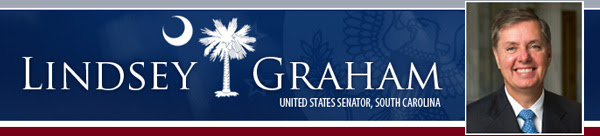
With most Americans pessimistic about the chances for a compromise that could avert the “fiscal cliff” — and inclined to blame Republicans for the failure — it’s worth noting that our own Lindsey Graham is among those trying to lead the GOP away from Grover Norquist and toward a somewhat more rational course:

A pair of congressional Republicans reiterated their willingness Sunday to violate an anti-tax pledge in order to strike a deal on the “fiscal cliff,” echoing Sen. Saxby Chambliss, the Georgia Republican who suggested last week that the oath may be outdated.

Sen. Lindsey O. Graham (R-S.C.) said he was prepared to set aside Grover Norquist’s Taxpayer Protection Pledge if Democrats will make an effort to reform entitlements, and Rep. Peter T. King (R-N.Y.) suggested the pledge may be out of step in the present economy.

“I agree with Grover — we shouldn’t raise rates — but I think Grover is wrong when it comes to we can’t cap deductions and buy down debt,” Graham said on ABC’s “This Week With George Stephanopoulos.” “What do you do with the money? I want to buy down debt and cut rates to create jobs, but I will violate the pledge, long story short, for the good of the country, only if Democrats will do entitlement reform.”…

Hey, Lindsey, I’ve got your entitlement reform right here: Eliminate the income cap on contributions to Social Security, and raise retirement age slightly. That would save that benefit, and would be a good place to start. Then, bada-bing, go raise some revenue for the general fund…

Did YOU think Romney was a ‘poopy-head’?

That’s what Grover Norquist says President Obama portrayed him as:

Grover Norquist, founder and president of Americans For Tax Reform, has a new theory about why President Barack Obama won — he portrayed Mitt Romney as a “poopy head.”

“The president was committed; elected on the basis that he was not Romney and Romney was a poopy head and you should vote against Romney and he won by two points,” Norquist said on CBS’ “This Morning” Monday. “But he didn’t make the case that we should have higher taxes and higher spending, he kind of sounded like the opposite.”…

This was a neat way, for Mr. Norquist, of distracting us from the fact that exit polls show that most voters last Tuesday want to raise taxes on higher-income individuals.

The transportation penny passes

This email just in:

Friends and Leaders,

THE PENNY PASSED!

Just left 2020 Hampton with final numbers including absentee and precincts:

Question 1  YES    74,029                NO  64,684’

QUESTION 2  YES  69,391               NO  62,884

This is gratifying. Congratulations to all those who worked hard to make this happen, and to the people of Richland County for making this decision. The community has decided to build a better future for itself, and that’s a very good thing.

I look forward to seeing the improvements, in our bus system and in the county’s roads…

Stepping back from the fiscal cliff?

Well, here’s an encouraging post-election development:

Quickly pivoting the political conversation from President Obama’s reelection to Washington’s looming budget battles, House Speaker John A. Boehner on Wednesday offered a potential path to compromise, saying Republicans are “willing to accept new revenue” to tame the soaring national debt and avert an ugly battle over the approaching “fiscal cliff.”

With Obama’s decisive electoral victory and Republicans’ hold on the House, with a slightly smaller majority, Boehner (R-Ohio) said Tuesday’s election amounted to a plea from voters for the parties to lay down their weapons of the past two years and “do what’s best for our country.”

“That is the will of the people. And we answer to them,” Boehner said at an afternoon news conference at the Capitol. “For purposes of forging a bipartisan agreement that begins to solve the problem, we’re willing to accept new revenue, under the right conditions.”…

Last night, I was hearing that it appeared unlikely that House Republicans,  having held onto their power, would be any more willing to talk compromise than they have since 2010.

So this is good news. We may be able to arrive at a reasonable solution — although I’m sure the end product won’t be pleasant or fun for anyone involved, including us, the people.

But here’s the tough question: Can Boehner back this up, or will Eric Cantor be explaining to him right about now that he’s not allowed to do this?

The Richland County voting debacle

Early this morning, Doug Ross expressed his displeasure that the sales tax referendum for transportation had passed in Richland County.

Well, maybe and maybe not.

I got an email from the campaign pushing for a “yes” vote at 12:54 this afternoon, saying:

Friends and Leaders,

Some of you have asked about the results of the penny referendum from yesterday’s vote.  As you may know, we are still waiting on the count from 20 boxes across the county and the absentee ballot.

You all will be the first to know as soon as we hear!

Which brings me to my topic. If Richland County leaders are ever to hope to win any trust from the people who voted “no” on that referendum purely because they don’t trust the effectiveness of the aforementioned Richland County leaders, then they need to get to the bottom of what caused the outrageousness of people — including Mayor Steve Benjamin — still standing in line to vote into the middle of the night. As the mayor said on the telly last night (or was it in the wee hours of this morning? I forget), if this were a statewide problem, that would be one thing. But this stands out as an utter failure in Richland County.

Who was responsible? Whose job was it to carry out the simple, obvious task of making sure the machines worked at some time before 7 a.m. Tuesday? What will be done going forward to make sure this never, ever happens again.

I hope to learn some answers soon.

In case you happen to be, or own, a business…

Because, as Mitt Romney says, corporations are people, too, I pass on this advisory from Randy Halfacre at the Greater Lexington Chamber for my friends out there who may be corporations. Or at least own or operate businesses:

It was recently announced that tax information for as many as 657,000 S.C. businesses was compromised as part of the recent cyber attack at the S.C. Department of Revenue.
The State of South Carolina has arranged through Dun & Bradstreet Credibility Corp for free credit monitoring services for all S.C. businesses for the life of the business.
Starting Friday, Nov. 2 at 8 a.m., businesses can register at www.dandb.com/sc/ or by calling 800.279.9881 to receive the credit monitoring service.  After signing up, businesses will be notified of any changes to their accounts.

The Governor’s press conference yesterday regarding the breach is available here.

Lott, others endorse ‘yes’ vote on the penny

Nicole Curtis from the Columbia Chamber just saved me a heap o’ typing by sending out this from the presser I attended at the Clarion Townhouse this morning:

Richland County Sheriff Leon Lott officially endorsed the Transportation Penny Plan on Tuesday at a Unity Rally to demonstrate the strong and broad base of support for the countywide plan to improve roadways in the Midlands and save the area’s vital bus system.

“Passage of the penny will help protect public safety in Richland County,” Lott said in his endorsement of The Penny. “The penny will provide infrastructure that can be life-saving. It will pave hundreds of dirt roads across the country. This is about far more than convenience. When sheriff’s deputies and ambulances can’t get down a dirt road because it’s turned to mud, people can die.”

Other local leaders, including Columbia Mayor Steve Benjamin joined Lott at the Rally, which was held at the Clarion Townhouse in downtown Columbia exactly one week before the crucial Nov. 6 vote on The Penny.

“Those who oppose this initiative say it costs too much. But it’s a no vote that costs too much,” said Benjamin. “It would mean the loss of over 16,500 new jobs and billions in new investments. It would mean continuing to pay the terrible cost of having the second most dangerous roads in the state. It would cost our community millions in federal matching funds for transforming our bus system. It would lead to fees that would cost our families twice as much as The Penny. It would put the entire burden of transportation costs on Richland County residents, rather than letting folks from outside share the load.”

The event represented a diverse cross-section of individuals, including business, community and faith leaders, elected officials and various activist organizations.

Others on hand at the rally included members of the Richland County Legislative Delegation, Columbia City Council and Richland County Council, representatives from the United Way of the Midlands, Sustainable Midlands, Greater Irmo Chamber of Commerce, Greater Columbia Chamber of Commerce, Eau Claire Community Council, River Alliance, League of Women Voters, Conservation Voters of South Carolina and the Midlands Business Leadership Group, and additional neighborhood, faith and community leaders.

“Today our answer is a resounding YES – YES we want more jobs, YES we want local control, YES we want a first class public transit system and YES we want safer roads,” said Bunnie Ward of the United Way of the Midlands. ”By investing today and saying YES, we will ensure a successful future for our community for generations to come.”

The Penny is on the Nov. 6 General Election ballot as two separate “Sales and Use Tax” questions. If approved by voters, it would add one cent to the Richland County sales tax for a period of 22 years to raise funds for vital roadway improvements and to provide long-term support for the local bus system.

Citizens for a Greater Midlands, the group pushing passage of this referendum, has done quite a job of assembling a broad coalition, as evidenced in the third paragraph from the end.

Of course, as I’ve noted before, the other side has a lot of passion going for it. Or at least, I thought it did. I was a bit surprised that, unlike at the last one of these events I attended in the same location, there wasn’t a single “no” counterdemonstrator outside. And this event was publicized in advance. I don’t know what happened to them today…

Last night’s CRC forum on the penny

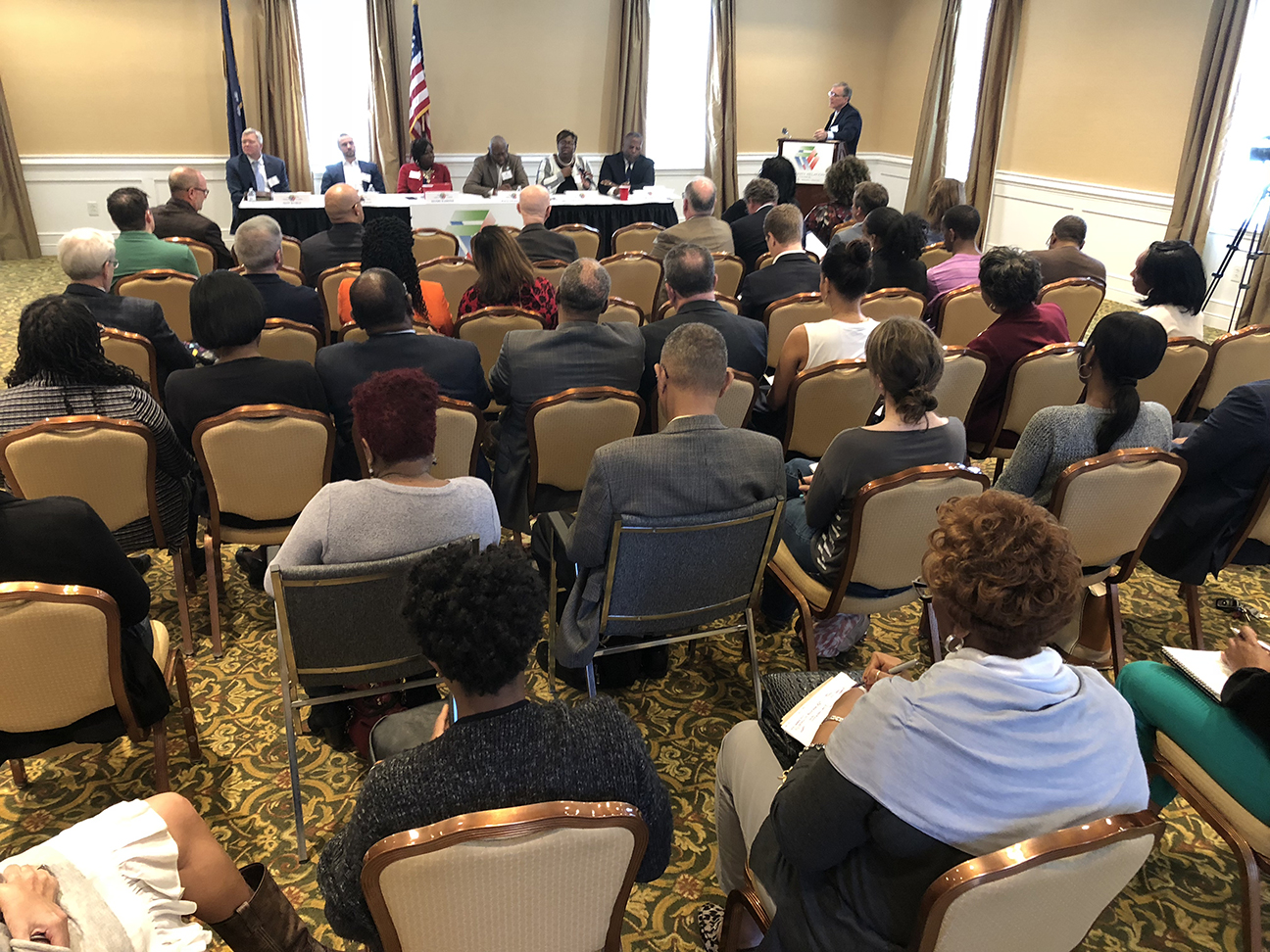
Before I head out to go moderate this forum at the library about the presidential election, I’ll share a few words about the Community Relations Council’s forum last night on the transportation sales tax referendum.

On the whole, it was a success I think, in terms of providing a civil place for folks on opposite sides of a local issue to share their views. Although sometimes the civility did seem to wear a bit thin. Redfern II has a somewhat loud, bombastic delivery style that can make it sound like things are getting out of hand, even when they are not. Michael Letts seemed to have quite a chip on his shoulder on the issue, but controlled himself. While on the “yes” side, I thought County Councilman Paul Livingston was going to lose his temper at the “no” folks once or twice.

Fortunately, things stayed in the realm of merely “lively,” which is a good thing. Moderator David Stanton did a good job.

One thing that made me glad, since I was on the committee, and since I tell anyone who wants to know that I’m for the referendum — I don’t think anyone can legitimately complain that the “no” side got short shrift in this forum. While the reasoning was better on the “yes” side — in my opinion, of course — there was more passion on the side of the “nos.” And I don’t say that to denigrate their arguments — they presented plenty of points that I’m sure were effective among a lot of the audience.

A quick summary of the positions presented by the panelists:

  • Lee Bussell, Yes: This referendum presents an opportunity for this community to come together and address its real challenges together, such as the fact that Richland County has the 2nd-deadliest roads in the state.
  • Daniel Rickenmann, No: It’s not a penny; it’s a billion dollars.
  • Paul Livingston, Yes: This is a community plan, not a county council plan.
  • Don Weaver, No: Stressed the impact on the poor of an additional penny on every dollar spent.
  • Jennifer Harding, Yes: Expressed concern about congestion and traffic safety in her party of the county (the Northeast).
  • Redfern, No: The white leadership of the community has given black citizens the short shrift up to now; why should it be trusted this time? (He had a lot of zingers and crowd-pleasers, such as “If you want to get nowhere fast, take the bus.” But his overall theme was distrust.)
  • Brian DeQuincey Newman, Yes: The penny is the answer to the challenge Redfern poses — it will bring in the funds CMRTA needs to provide decent service.
  • Michael Letts, No: “Local control” sounds great, but he doesn’t want to pay this local tax for roads on top of the ones he already pays at state and federal level. Also, wants the bus part separated from the capital, roads part.

I take those mostly from the participants’ opening remarks, but they also give you an idea what went on the rest of the time.

As I said, a lot of energy on the “no” side. Three times, “yes” panelists were asked to speak up or get closer to their microphones. No one had to ask the “no” folks to do that.

And to the extent that minds were changed, it was in the “no” direction. The audience was asked to turn in ballots “voting” on the matter both before and after the event. Not everyone did, but here are the results from the ones who took part, according to CRC Executive Director Henri Etta Baskins:

  • BEFORE: 32 Yes; 31 No; 11 Undecided
  • AFTER: 32 Yes; 34 No; 8 Undecided

NOTE — those numbers were just updated (the number of undecided AFTER was wrong previously)…

Words from another time, another universe

Back in the days of typewriters, dictionaries were a great obstacle to my developing what my detractors call “time-management skills.” I couldn’t look up one word without running across another that fascinated me, which in turn caused me to look up another, then three more, and one and on, each word opening the floodgates of dopamine in my brain as I utterly forgot what I had set out to do.

The Web is a dictionary taken to the nth power.

Today, I stuck up for our Founders’ vision of a republic rather than a democracy, which caused Bud to say fine, if that’s what you want, then let’s return to precisely their vision. That caused me to say that I was for repealing the 17th Amendment. Then, when I went for a link to explain to readers which amendment that was, I started reading about the debate at the time over this “reform.” I saw that William Jennings Bryan (you know, the guy Clarence Darrow took apart at the Monkey Trial) was for the change, and Elihu Root opposed it. Thinking Mr. Root was perhaps a man after my own mind, I went and looked him up.

And I read on Wikipedia this excerpt from a letter he wrote to The New York Times in 1910, while serving as a U.S. senator from New York:

It is said that a very large part of any income tax under the amendment would be paid by citizens of New York….

Elihu Root

The reason why the citizens of New York will pay so large a part of the tax is New York City is the chief financial and commercial centre of a great country with vast resources and industrial activity. For many years Americans engaged in developing the wealth of all parts of the country have been going to New York to secure capital and market their securities and to buy their supplies. Thousands of men who have amassed fortunes in all sorts of enterprises in other states have gone to New York to live because they like the life of the city or because their distant enterprises require representation at the financial centre. The incomes of New York are in a great measure derived from the country at large. A continual stream of wealth sets toward the great city from the mines and manufactories and railroads outside of New York.

Wow. Wow. Wow. Imagine that. A serving politician who actually wrote not only in favor of an income tax when there wasn’t one, but told his own constituents why they should shoulder a particularly large portion of that burden. Now there’s a man of principle for you.

You will ask now whether he was re-elected. Well, he didn’t run again.

But it’s not like he retired. He went on to serve in several prominent capacities. In 1912, he was awarded the Nobel Peace Prize, for “his work to bring nations together through arbitration and cooperation.” Nevertheless, he would later oppose Woodrow Wilson’s initial position of neutrality as WWI broke out. He believed German militarism must be opposed.

He was a reluctant candidate for the Republican nomination for president in 1916. Charles Evans Hughes won the nomination, and went on to lose to Wilson.

I think I might have voted for Root, given the chance.

The transportation referendum campaign kickoff

Should have posted about this yesterday and didn’t get to it. Of course, the advantage to waiting is that I can save myself a lot of typing by quoting from the news stories. From Columbia Regional Business Report:

Supporters of a one-penny increase in the sales tax in Richland County kicked off a campaign this week to win voter approval of a plan they said would raise $1 billion over 22 years, address critical transportation needs and create an estimated 17,000 new jobs.

The issue will be on the Nov. 6 general election ballot for all Richland County voters.

The transportation penny, according to the county’s proposal, would increase sales tax in Richland County to 8 cents on the dollar on proceeds of sales, with the funds going to improve roads, support the bus system and increase bike and pedestrian greenways. The transportation penny would increase the sales tax to 2 cents on the dollar on groceries, except for purchases made with food stamps, which are exempt from the transportation penny.

The transportation plan that would be funded by the penny sales tax has a major economic development component, supporters say. One of the projects that it would fund is the Shop Road extension, a new section of road in southern Richland County that could open up large new industrial sites that are attractive to manufacturers and allow water and sewer utilities to be extended into the area…

And from The State:

Touting “more jobs, safer roads, local control,” about 80 people gathered Wednesday to roll out a campaign for a Richland County sales tax for transportation.

Citizens for a Greater Midlands, organized by business leaders making a second effort to pass the penny-on-the-dollar tax, were countered by a dozen sign-carrying protesters on the sidewalk along Gervais Street, outside the Clarion Hotel Downtown. Voters rejected the referendum by about 2,200 votes two years ago.

Richland County Councilman Paul Livingston said the tax to fund roads, buses, sidewalks and bike lanes was the single most important issue to arise in his 22-year tenure in county government.

“Some say we can wait on the state and federal governments,” Livingston said. “Folks, we’ve got to do it ourselves.”

He said there were “no viable alternatives” to a local sales tax to address what he characterized as a crisis in the county’s transportation system. Major roads are congested and in poor repair, funding for the bus system is tenuous and pedestrian and bicycle accidents are common, he said later…

I’m going to take Dawn’s word for it that there were a dozen protesters outside, although when I walked through them on my way in and out — the kickoff was conveniently right around the corner from my ADCO office — it didn’t seem like that many. Of course, I would imagine that relatively few people who will vote “no” are so passionate about it that they want to stand on a curb with a sign. One of them who did was longtime antitax activist Don Weaver, who greeted me pleasantly when he saw me come out.

What I do know is that the room with the supporters inside was fairly packed, and consisted largely of people who devote themselves to working for the advancement of the community, from business leaders to elected officials.

Aside from Councilman Livingston (who, like other elected officials, stressed he was there as a private citizen), we heard from a Midlands Tech student who depends on the bus to get her to school so that someday she can have a job that will enable her to afford a car, two or three other bus riders, my good friend Jennifer Harding (former ad director for The State, now in real estate), Steve Benjamin, Brian DeQuincey Newman, and Cameron Runyan. Rival adman Lee Bussell spoke for the Chamber — he was the one who stressed how the Shop Road extension would help open up prime locations for industrial recruitment.

The most compelling argument for this plan came from Mr. Livingston. He charted the path of this process, from the 39-member citizens group six years ago that drafted the plan that has changed little since then, and made the salient point — this is it, the only viable vehicle for both saving our bus system and funding other transportation priorities.

People who don’t want these things for our community will of course vote against it, which is their right. But people who do want any of these things, and vote against this plan because everything about it isn’t perfect, are fooling themselves and doing their community a disservice. Because this is it. It took a long time to get to this point with a lot of people working hard to do so, and there has been NO effort by anyone I’ve seen to put an alternative plan on the tracks.

SC DOT: One example of how SC constantly underfunds basic functions of government

This post should be seen as the background to this little drama over the governor’s vetoes, to provide some perspective. What seems to have been missing on most, but not all, of Nikki Haley’s vetoes has been a clear explanation of what she would spend the money on instead.

Her ideology prevents her from setting out powerful arguments for alternative spending plans, because she, like the governor before her, lives in a fantasy land in which the government of South Carolina simply spends too much in the aggregate. That South Carolina bears no resemblance to the one in this universe.

The truth is that South Carolina appropriates far too little for some of the most fundamental functions for which we rightly look to the public sector. And the deficit between what we spend on those functions and what we should in order to have the quality of service other states take for granted is sometimes quite vast, involving sums that dwarf the amounts involved in these vetoes that you hear so much fuss about.

What is needed is a fundamental reassessment of what state government does and what it needs to do, to be followed by the drafting of a completely new system of taxation to pay for those things. Our elected officials never come close to undertaking these admittedly Herculean tasks. But they should. The way we fund state government needs a complete overhaul, and spending time arguing about, say, the “Darlington Watershed Project” doesn’t get us there.

This is something I’ve long understood, and often tried to communicate. I was reminded of it again at the Columbia Rotary Club meeting on Monday.

Our speaker was SC Secretary of Transportation Robert C. St. Onge Jr. He’s a former Army major general, having retired in 2003 — until Nikki Haley asked him to take on DOT in January 2011. Some of his friends congratulated him at the time. Those were the naive ones. The savvy would have offered condolences.

Normally, public speakers like to inspire with phrases such as “From Good to Great.” Sec. St. Onge’s talk was far more down-to-Earth, far more realistic. He entitled it “Getting to Good.” And once he laid out what it would take for SC to get to “good enough” — to get all of the roads we have NOW up to snuff, much less building any roads we don’t have but may need for our economy to grow — it was obvious that we aren’t likely to get there any time soon.

The secretary started out with some background on how we have the fourth-largest state-maintained highway system in the country, after Texas, North Carolina and Virginia. He didn’t have time to explain why that is, but I will: It’s because until 1975, county government did not exist in South Carolina. Local needs were seen to by the county legislative delegation, one of the more stunning examples of how our Legislature has appropriated to itself functions that are not properly those of a state legislature. When we got Home Rule, supposedly, in 1975 and county councils were formed, many functions that had been done on the state level stayed there. So it is that roads that would have been maintained by county road departments in other states are handled by the state here. It’s not that we have more roads, you see — it’s that more of them are the state’s responsibility.

He also noted how woefully underfunded our system is. Georgia, for instance, has less road surface to maintain, but twice the funding to get the job done — and three times as many employees per mile. He alluded to why that is, and I’ll explain: We have the most penny-pinching state government I’ve ever seen, with lawmakers who (contrary to the fantasies you hear from the likes of Mark Sanford and Nikki Haley) would rather be tortured than raise adequate money to fund a decent state government. OK, so the retired general didn’t explain it that way. He just mentioned the fact that we haven’t raised the inadequate gasoline tax that funds his department since 1987 (the year I arrived back in SC to work at The State). Add to that the fact that the tax is levied per gallon rather than per dollar spent, and you have a recipe for a crumbling road system.

Here’s the secretary’s full PowerPoint presentation if you want to look at it. If you don’t, at least look these representative slides, which sketch out the basic challenges…

Above compares us to neighboring states. Note that only North Carolina has our bizarre problem owning responsibility for most of the roads.

This is a breakdown of the categories of roads SC maintains at the state level. Note that almost half are secondary roads for which the state gets no federal funds. This is where the state is squeezed the hardest.

Above is what it would take to get just the interstates in SC up to “good” condition, and keep them there.

This is what it would cost to fix up and maintain all those secondary roads, which make up most of the state’s responsibility.

This is the most important slide. This is what South Carolina needs to spend, and has no plans to spend, to get the roads it has NOW up to good condition, and maintain them in that condition.

Gov. Haley could arguably justify ALL of her vetoes by saying, “We need to put it all into our crumbling roads.” Then, after she had eviscerated all of those agencies as being less important than our basic infrastructure, she would have to turn around and call for a significant increase in the state gasoline tax, to come up with the rest of what is needed.

But our elected state leaders never go there. They either don’t understand this state’s basic needs, or aren’t honest enough to level with us about them. They’d rather truckle to populist, unfocused, unthinking resentment of taxes, and government in general, than be responsible stewards of our state’s basic resources.

That’s the money picture. Beyond that, here are some small things that in the aggregate add up to a big problem. If our governor won’t take on fully funding our state roads system, maybe she could work with the Legislature to get rid of some of the worst white elephants that DOT is saddled with:

This is a parking lot in Fairfield County that DOT is required to maintain. Sec. St. Onge would like to get rid of it, but can’t.

Ignore the dirt road, and look at the cemetery that DOT is required to maintain in Saluda County. Sec. St. Onge would like to get rid of that, too, but he can’t.

Here’s a road leading to a church in Florence County, which DOT is also required to maintain. The church is the only thing that the road leads to. Sec. St. Onge would like to give it to the church, and the church’s pastor would like to have it. But guess what? They can’t make it happen.

So… I’ve given you examples here from but ONE agency illustrating how we tolerate the intolerable, and refuse to fund the necessary, in our state government. THIS is the sort of thing we should be discussing, instead of having unnecessary culture wars over the Arts Commission.

A couple of last thoughts: Before any of you who think like Nikki Haley’s base start trying to dismiss all this by quibbling about what “good” means, or going on a rant about how these government bureaucrats just always exaggerate the need for funds in order to pad their fiefdoms, consider the following:

  1. This is Nikki Haley’s chosen guy to run DOT, not some “career bureaucrat” she inherited.
  2. This is a retired general officer — a guy with a very comfortable, generous retirement package — who did not have to take this job, and does not need it to improve his lot or to define himself. He’s about as objective and practical a source you can find for leveling with you about such things as this.

Silly me, for thinking DeMint cared what I thought

Couldn’t help responding to Jim DeMint today when he Tweeted,

My response was in two parts. First, I answered his question: Yes!

I had read with interest the top story in The Wall Street Journal this morning, which said that the long logjam on national legislation to require online businesses to pay sales taxes just like their bricks-and-mortar competitors may finally have broken:

Republican governors, eager for new revenue to ease budget strains, are dropping their longtime opposition to imposing sales taxes on online purchases, a significant political shift that could soon bring an end to tax-free sales on the Internet.

Conservative governors, joining their Democratic counterparts, have been making deals with online retail giant Amazon.com AMZN -1.09% to collect state sales taxes. The movement picked up an important ally when New Jersey Gov. Chris Christie—widely mentioned as a potential vice-presidential candidate—recently reached an agreement under which Amazon would collect sales taxes on his state’s online purchases in exchange for locating distribution facilities there.

Mr. Christie called taxation of online sales “an important issue to all the nation’s governors” and endorsed federal legislation giving all states taxing authority.

This should lead to quick resolution, in a rational universe, since Amazon has said they support a national solution. And that’s very good news for states like South Carolina, which have unwisely shifted so much of their tax burdens to sales taxes just as conventional, “analog” store sales have been drying up.

I was particularly interested because the change that had come about was that Republican governors, such as Chris Christie, saw the need to do something about the fact that their states’ coffers had been depleted by the shift of our economy to online shopping.

It caused me to wonder what it would be like to have a real conservative Republican governor, rather than a darling of the Tea Party or the Club for Growth, one who — like any real conservative — believes in responsible governance, one who sees his or her role as a steward of the state’s public sector.

And then I remembered, that I did experience that, for years, when Lamar Alexander was governor in Tennessee. And so it is fitting that Lamar is the senator pushing this legislation:

Seizing on the recent political shift, Sen. Lamar Alexander, a Tennessee Republican, and co-sponsors from both parties are attempting to speed up action on a bill they wrote to give states authority to compel online companies to collect sales taxes.

One of the co-sponsors, Sen. Dick Durbin (D., Ill.,) said, “It gets down to a basic issue…of simple fairness for small businesses that create jobs and opportunities all across America. And with the sales taxes they collect, they provide for local police and firemen, for the sewers and streets.”…

Oh, but wait… as soon as I said, Yes!, I realized that Sen. DeMint’s question was purely rhetorical, meant only to set up his announcement that he’s leaping into the fray to fight against common sense.

You can always rely on Jim DeMint. Unfortunately.

Silly me, for thinking Jim DeMint cared what I thought.

What, Me Worry about what YOU think?/File photo from an editorial board meeting in 2007.

Romney: No, wait — TODAY it’s a tax…

photo by Adam Glanzman, Flickr

Wait a minute… I see he said this yesterday, which means, I suppose, we might hear something else today. But in the meantime, here’s what he said yesterday:

UPDATE: And now we’ve come full circle in all the “penalty” vs “tax” talk. Mitt Romney has spoken and clearly affirmed that the Affordable Care Act’s individual mandate is a tax, directly contradicting his senior adviser, Eric Fehrnstrom, who had said earlier this week that it was a penalty. Romney tried to explain the contradiction by noting in an interview with CBS News that it was all about the Supreme Court’s majority opinion. “While I agreed with the dissent, that’s taken over by the fact that the majority of the court said it’s a tax, and therefore it is a tax. They have spoken. There’s no way around that,” Romney said.

When Romney was asked whether the fact that he was unequivocally calling the mandate a tax meant he had changed positions on the issue, the Republican focused on President Obama, saying he “has broken the pledge he made” because “it’s now clear that his mandate, as described by the Supreme Court, is a tax.”

Obama’s campaign, however, quickly seized the opportunity to say that Romney “contradicted his own campaign, and himself,” reports the Washington Post

You ever see such a case of somebody trying to have it every which way?

Roughly, here’s the timeline:

  1. Romney pushes through health care reform as governor, and it includes a mandate that everyone have insurance. He goes around bragging about it for years, as well he might…
  2. But then, President Obama pays him the complement of pushing health care reform that does the very same thing, and suddenly Mitt’s not so proud of what he’d done, because he wants the votes of people who spit on the ground every time Obama’s name gets mentioned. If Obama did it, the thinking goes, it’s evil. So Romney quits bragging.
  3. Then, the court says it’s not a mandate; it’s a tax. And the GOP seizes on that, because if there’s anything nearly as evil as Barack Obama in their book, it’s a tax.
  4. But then Romney’s aide says the court’s wrong, because Romney, having created just such a mandate, ought to know a mandate when he sees one. Which stands to reason.
  5. But then Romney adopts a position of Hey, what do I know? It may look like a mandate to me and this other fella, but the court says it’s a tax, so it’s a tax. And taxes are bad, harrumph, harrumph.

At this point, is there anyone left in the country, of any philosophical bent, who’s enthusiastic about voting for Mitt Romney in the fall? Oh, some are eager to vote against Obama; that hasn’t changed. But are they pumped about voting for Romney? I doubt it…

New GOP meme: attacking Obamacare as a tax

Recovering from the blow to their position on Obamacare, Republicans (except Mitt Romney, whose signature achievement as governor was just vindicated, although you won’t hear him say so in this bizarre political climate) have already shifted tactics.

They are genetically compelled to attack, attack, attack the president. So their new means of doing so is to seize upon the court’s assertion that Obamacare constitutes taxation, and attack it accordingly (all taxes being, according to their ideology, bad). Lindsey Graham, being the smartest Republican in Washington, was among the first to make this shift:

To our Democrat colleagues, stand by your tax increase or stand with us to Repeal and Replace Obamacare.

(Note the way he says “Democrat colleagues.” This is a subtle ruse on his part to hide from his base the fact that he is as smart as he is: Look at me! I don’t know the difference between a noun and an adjective any more than you do! But then, he hurts himself with that same base by calling the enemy “colleagues.”)

Democrats, being partisans, will probably not respond any more intelligently.

But here’s how I wish they would respond: By saying, OK, it’s a tax. So let’s stop fooling around. Let’s replace this with single-payer, which of course we would all support through our taxes.

I’d like to see that, but I’m not holding my breath. I’d done enough of that, waiting on the Supremes to make up their minds.