Did you feel the earthquake? Did you HEAR it?

Screenshot

I’m talking about the apparent seismic disturbance that went BOOM for a second at 17:17:26 Zulu time today. Apparently, the epicenter was 5 klicks WSW of Irmo.

It shook the house in a way that made me think a tree, or at least a large branch, had fallen on the roof. I checked to make sure my wife and son, who were both here, were OK, and ran outside with dread of what I might see.

I saw nothing.

I checked with a neighbor on the phone, and he said he’d received several reports from people in the community, and according to USGS, it was an earthquake. I went to the webpage about the incident, and took advantage of the opportunity to leave a personal report. I objected this was unlike any earthquake that I’ve ever experienced.

I experienced a few earthquakes when I was a kid down in Ecuador. They were fairly routine, but disturbing — and really freaked out the local folks each time, which intensified the sense of alarm. But those were NOTHING like this.

First, I don’t remember a sound of any kind. Just motion. The building would shake. Small items that were stacked up would fall over. Furniture would shake enough that it would start shimmying across the floor. Most of all, it would last for several seconds — maybe five or 10.

This was like a tree falling. Crash, and it was over.

But the authorities say it was an earthquake, and in the absence of evidence of what I thought it was, I have to accept that.

What was your experience, if any?

Top Five Actresses ever in film history

Listen for the family whistle… and don’t take drugs!

OK, I hurried up a little too much on the Top Five Actors post — so much that I left off Gene Hackman! — but I confess I’m going to hurry even more on this one, because it’s already been a couple of days…

I limited the men’s list to the last 60 years because I was doing it in the context of thinking about Duvall. I’m going all-time on this one. Well, all-out regarding the history of film (and TV), which is not all that much longer. But I have no means of making an informed judgment of the acting skills of, say, Lillie Langtry. (Although she appeared on film once, in 1913, I never saw “His Neighbor’s Wife.” And even if I saw it, I couldn’t hear her voice — which is kind of key in assessing acting skill.)

Finally, I’m doing my best to make sure this is about acting ability, and not about how attractive these women were or are. Which is not easy to do. Hollywood undermines such a merit-based goal at every step, and has done so since the beginning. It does the same to men — think Clark Gable, Cary Grant, Robert Redford, Brad Pitt. But that’s nothing compared to how the principle (or lack of principle) is applied in the case of women.

Why does this happen? Butts in the seats. The casting directors look for people the slobs out here will pay to look at. American casting directors take it to ridiculous levels. You want to see at least some normal-looking people? Check out British film and TV.

Anyway, I promise you won’t find Marilyn Monroe on the list. But whatever I do, a lot of these women will be more attractive than average.

Back to the subject of actual acting…

Top Five

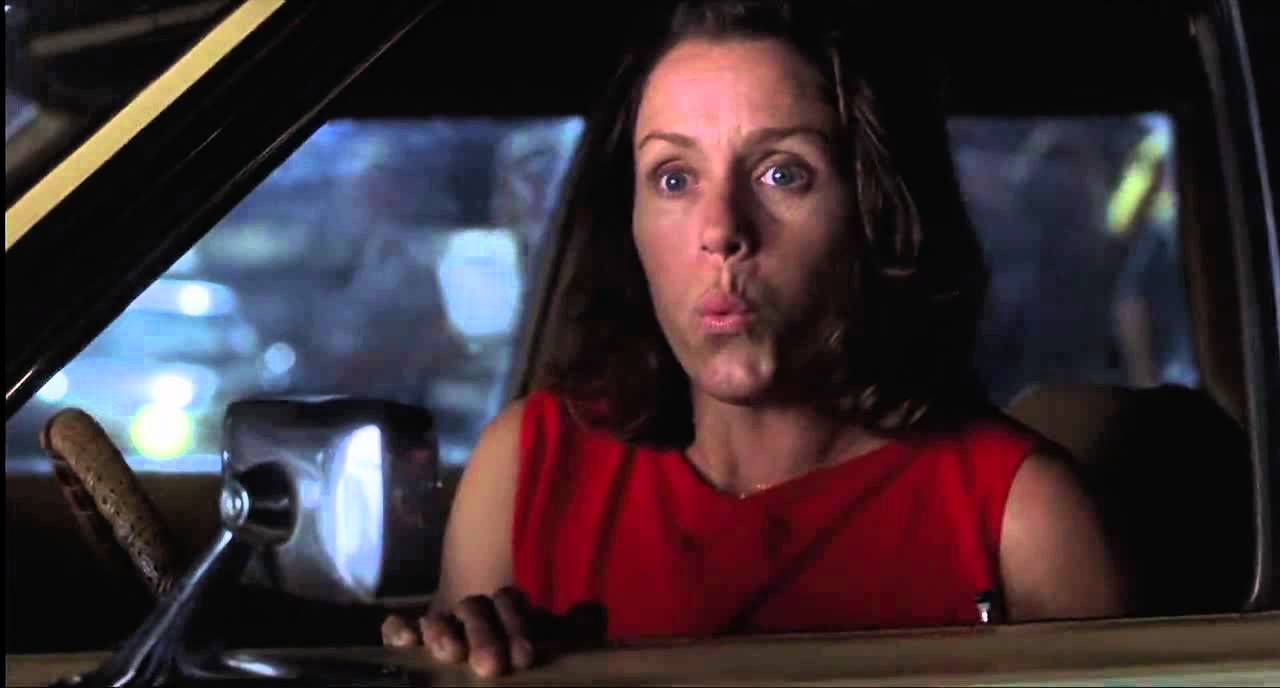
  1. Frances McDormand — Every time I see her, I think, “Greatest actress,” or at least “Greatest American actress.” My favorite role? The mom in “Almost Famous.” See photo above. But let’s not forget “Fargo.”
  2. Marisa Tomei — Great in everything. Who doesn’t love her in “My Cousin Vinny?” Of course, I think my fave might be her leading role in “The Perez Family.”
  3. Rosalind Russell — I’m sort of breaking my rule here of not basing my judgment on a single movie. I’m putting her here purely for her performance in my favorite comedy, “His Girl Friday.” Anyone who’s as good as good as she was in that is simply that good.
  4. Emma Thompson — Good in everything, of course, but I think my favorite three are the wife who is wronged by that scrub Alan Rickman in “Love Actually;” the lead in “Sense and Sensibility,” as my own 15th-great grandmother in “Henry V.” (Yeah, I’m still that crazy about genealogy.)
  5. Olivia Coleman — I’ve really come to appreciate her over the past decade or so. I could pick almost any of her roles as an example, but I’ll go with an unusual bit of casting. She was cast as the case officer of the title character in Le Carre’s “The Night Manager.” The character in the book was a man. But while there were some bad changes from the book in that show, this one improved the story. Oh, and remember — recently, she was the Queen! (I thought about the other Olivia — de Havilland — but I like this one better.)
  6. Jean Arthur — I’m just always so glad to see her pop up in any of those flicks from the 30s and 40s. If you wonder why, go watch “Mr. Smith Goes to Washington.”

OK, I’m running out of time (gotta go to school today), so I’m going to have to really hurry through the…

Honorable Mentions

  1. Katharine Hepburn — Can you believe I left her out of the Top Five? Hey, I’m a rebel. But I place her here with all respect. Certainly go watch “The African Queen” again. But then be sure to check out “Bringing Up Baby.” Very silly, and nowhere near as good as Rosalind Russell’s masterpiece, but I like an occasional screwball comedy.
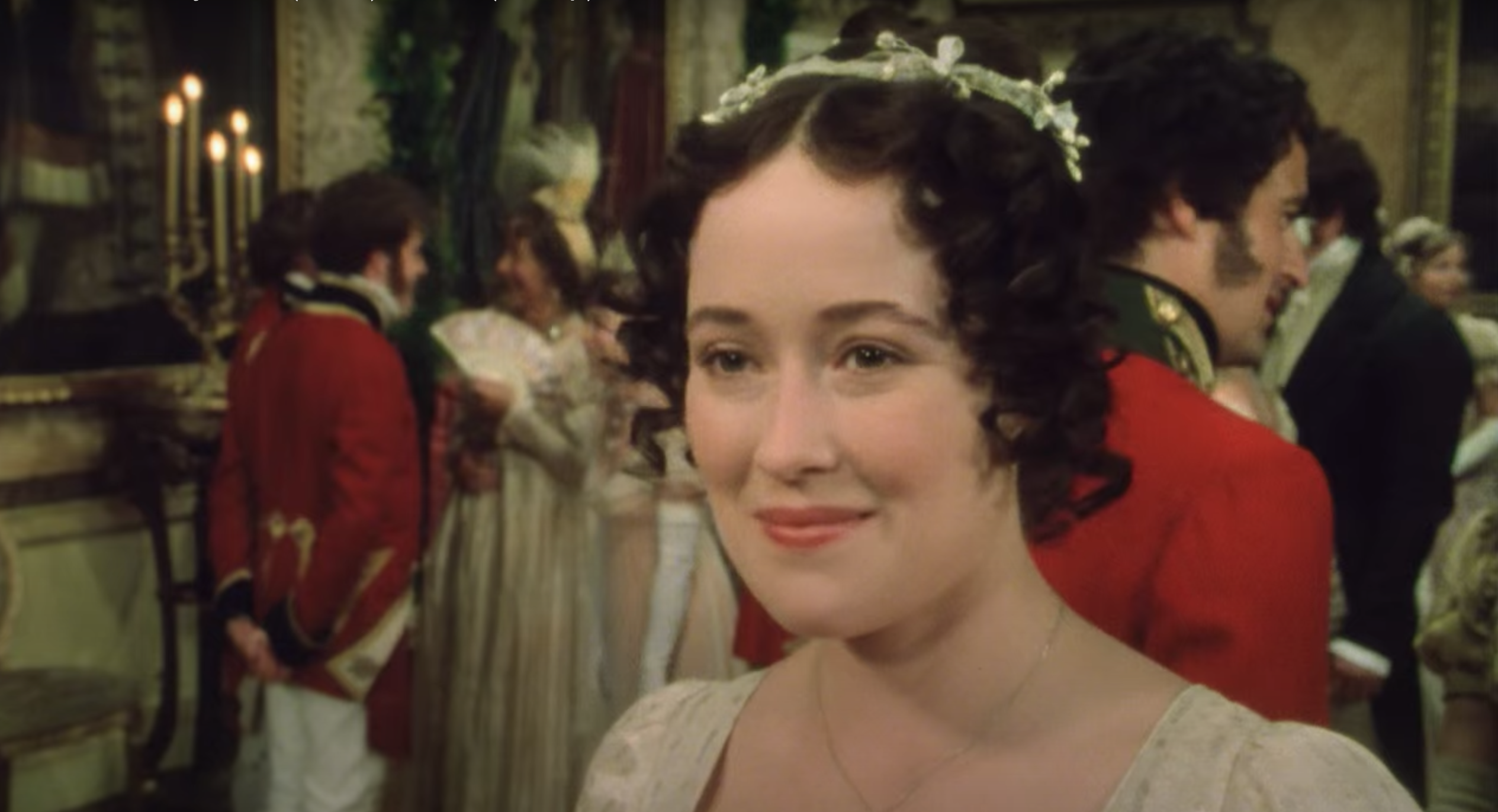
  2. Jennifer Ehle — Another based on a single role (she was born to star in “Pride and Prejudice“), although I enjoy her in every role — I just don’t see her enough. And before you gripe about too many Brit actresses, remember that this one was actually born in North Carolina.
  3. Emma Stone — In recent years, she’s become an A-lister who can do anything. But I especially like her first big film role, in “Superbad.” Who can blame Jonah Hill for obsessing about her? (And no, that’s not just a beauty thing; it was the kind of kid she came across as…)
  4. Sigourney Weaver — Sure, I liked her in “Alien” and “Alien 2, (speaking of which, guess who I saw at the comic-con at the Fairgrounds last month — Michael Biehn!)” but her all-time best was “The Year of Living Dangerously.” That was also Mel Gibson’s best, and Linda Hunt’s.
  5. Ingrid Bergman — I could say “It’s not because she was beautiful!,” but who would believe me? Seriously, “Casablana” is No. 3 on my all-time films list, and she was perfect in it. So there.

So there you go. I did that too fast, and I’m sure I left out somebody as great as Gene Hackman on the other list, but I’m sure y’all will let me know. (And no, I don’t mean Meryl Streep. She’s good but didn’t make my list. Nor did Cate Blanchett, but I thought about it.)

A single role earned Jennifer Ehle an Honorable Mention.

Top Five Best Actors of the Past 60 years

Consider this a sidebar to the Robert Duvall obit. My headline said he was “The best actor of his generation,” and wishing to be more generous, I added “or since.” We can argue later whether that was grammatical.

But was he? And who are the others in the Top Five — to employ the Nick Hornby standard? Here’s the list. (And remember ladies, you have your own category. I’ll start thinking about a Top Five Actresses list.):

Top Five

  1. Robert Duvall — For reasons already stated. Although now that I make this list, I’m worrying that maybe he should be second to the next fellow in this lineup. But Duvall is the one we’re mourning, and he deserves it, so here he stays.
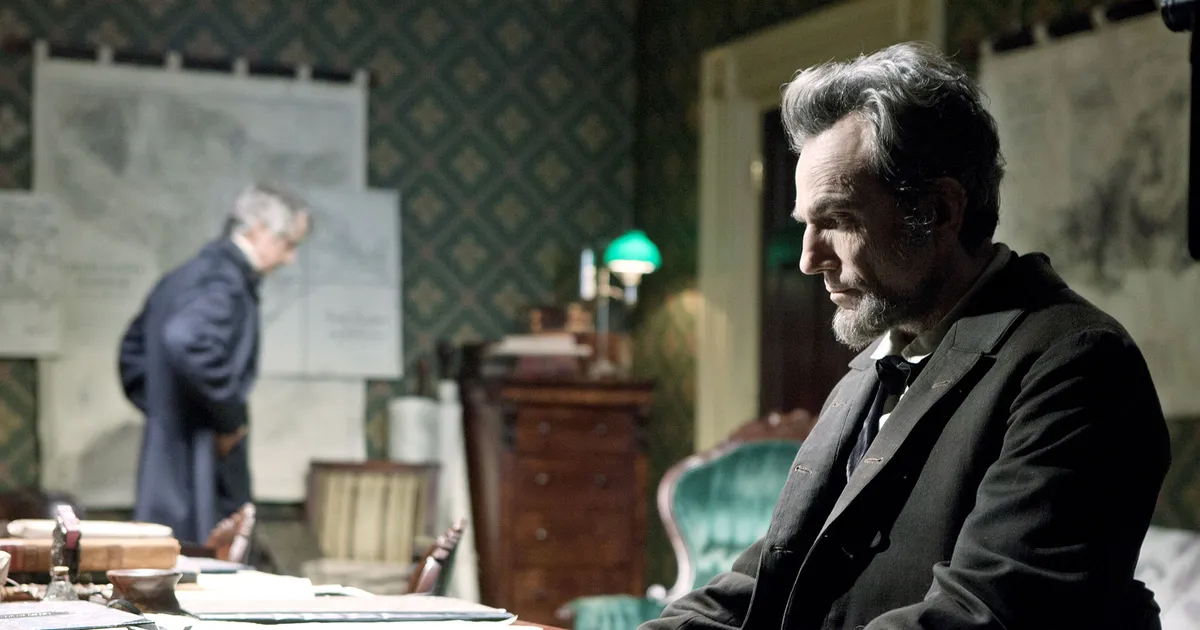
  2. Daniel Day-Lewis — I no longer need a time machine to go back and meet, or at least see and hear in person, our greatest president. I’ve seen him in the Spielberg movie, and I’m convinced that’s what Abe looked and sounded like. (This scene alone does that for me.) He was great in another movie in which he outdid our countrymen in portraying an archetypical American character — Natty Bumppo (although they didn’t call him that in the movie). Favorite line: When a British officer asks “How is it you are heading west?” at a time when the King needs him to stay and help fight the French, Nathaniel (as they called him in the film) replies, “Well, we kind of face to the north, and real sudden-like, turn left.”
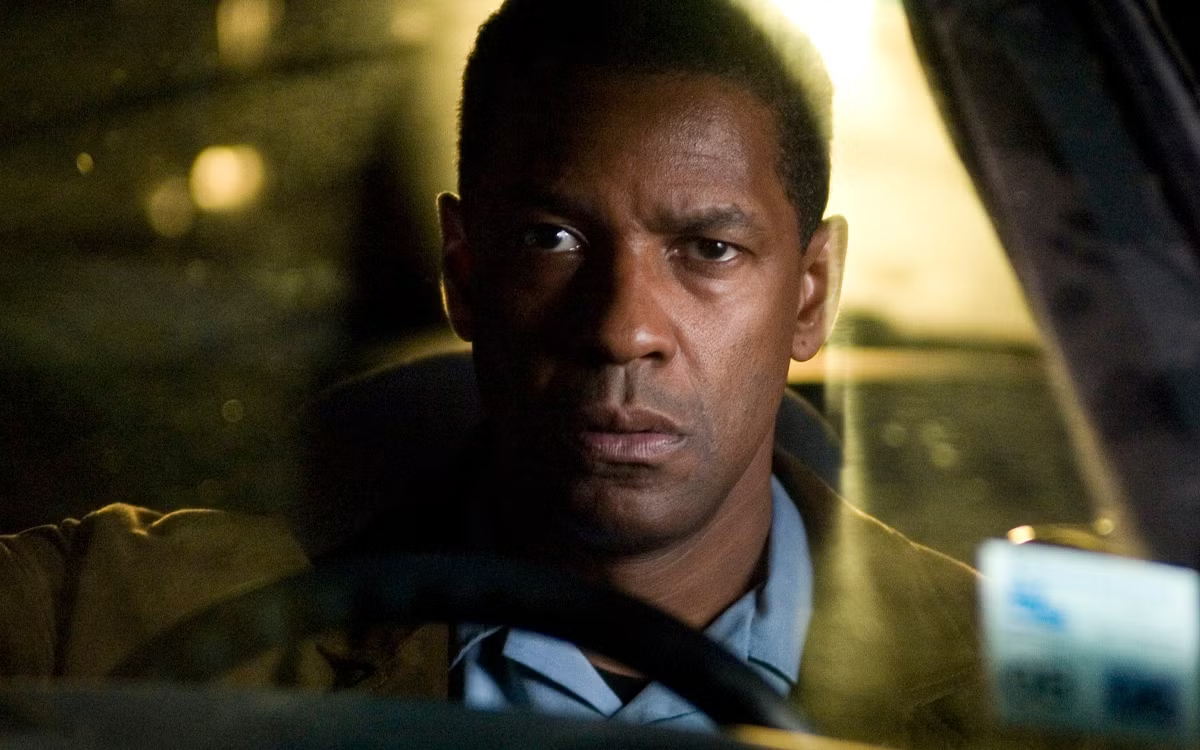
  3. Denzel Washington — You might not think of him because he fits better into the leading-man movie star category that your great actors seldom enter. But he is a leading man with extraordinary depth. The first time I remember seeing him was in “Glory,” and I just thought, where did they get this guy? He would crack that odd, off-kilter smile that’s hard to read, and you’d realize there’s more to this character than just a bitter man with an attitude. Add to that his deeply flawed hero in “Flight.” Who else could have played that drugged-out pilot? No one, including the others on this list. Perfect fit, without being at all typecast.
  4. Jack Nicholson — How could I put this wiseass on the list? Because he’s a wiseass with depth and range. Consider “As Good As It Gets,” “Carnal Knowledge,” “The Departed.” And then think how his colonel in “A Few Good Men” stands up next to Duvall’s in “Apocalyse Now.” But we haven’t gotten to his best, which you seldom hear about any more. Behold Signalman 1st Class Billy L. “Badass” Buddusky in “The Last Detail.” My dad the sailor was amazed. He felt he knew that guy and served with him on numerous ships.
  5. Robert De Niro — It’s kind of a cliche to put him on such a list and crown him No. 1. Well, he has been great, especially in the first part of his career, in “Bang the Drum Slowly,” “Mean Streets,” “The Godfather Part 2” (people are wrong to say the sequel was better than the first one, but I forgive them because his brilliance blinded them) and “Raging Bull.” But after that, he started moving toward a formula that was still fun to watch, but he wasn’t growing as an actor. Eventually, we get “Analyze This,” which I loved, but he was doing the formula, with lots of this expression. He deserves to be on the list, but not first.

Honorable Mention

I add this category not because I couldn’t stop myself at five. That would be undisciplined and lazy. I think there’s a pretty clear line between those above and those below. But as the title suggests, I thought them worth mentioning.

  1. Edward Norton — He was a Top Five contender with “Primal Fear,”  “American History X” and “Fight Club.” But then what happened? Sure, I enjoyed seeing him in “A Complete Unknown,” but come on — what had he been doing since “Fight Club?”
  2. Morgan Freeman — Great in everything, but as with Norton (and de Niro), the best stuff was awhile back. He was great in “Glory,” but not as great as Denzel Washington. Great also in “Driving Miss Daisy.” I was impressed by him in “Unforgiven.” I loved him as the Lord in “Bruce Almighty,” but it wasn’t something that puts you in the Top Five.
  3. Colin Firth — Always good, and always entertaining — and he has more range than you might think. I recently enjoyed him in an early film that I had never heard of and ran across by accident — “A Month in the Country” from 1987. He was best in the BBC production of “Pride and Prejudice,” of course. No actor should even try to play Darcy after he did. Next best thing after that? “The King’s Speech,” which also featured a fine performance by the wonderful Geoffrey Rush.
  4. Michael Shannon — This is a guy who has Top Five chops, and I just need to keep watching him, in things like “Elvis and Nixon,” “Boardwalk Empire,” and the recent remake of “The Little Drummer Girl.” His agent needs to make sure he doesn’t do any more turkeys like “Pearl Harbor.”
  5. Wes Studi — I would never have thought of this guy, and maybe you don’t even know who he is. But he’s been good whenever I’ve seen him, and he was bloodcurdling amazing in a film mentioned above: “The Last of the Mohicans.” He was Magua, the truly scary guy (not that some of those palefaces didn’t have it coming). And he made him real.

OK, after thinking how scary Studi was as Magua, I started remembering how terrifying Javier Bardem was in “No Country for Old Men.” And then I remembered “Biutiful,” and that turn he did as Desi Arnaz. But I made myself stop. That’s enough for now.

You ever see his time-travel flick, “Déjà Vu?” You should.

The best actor of his generation, or since

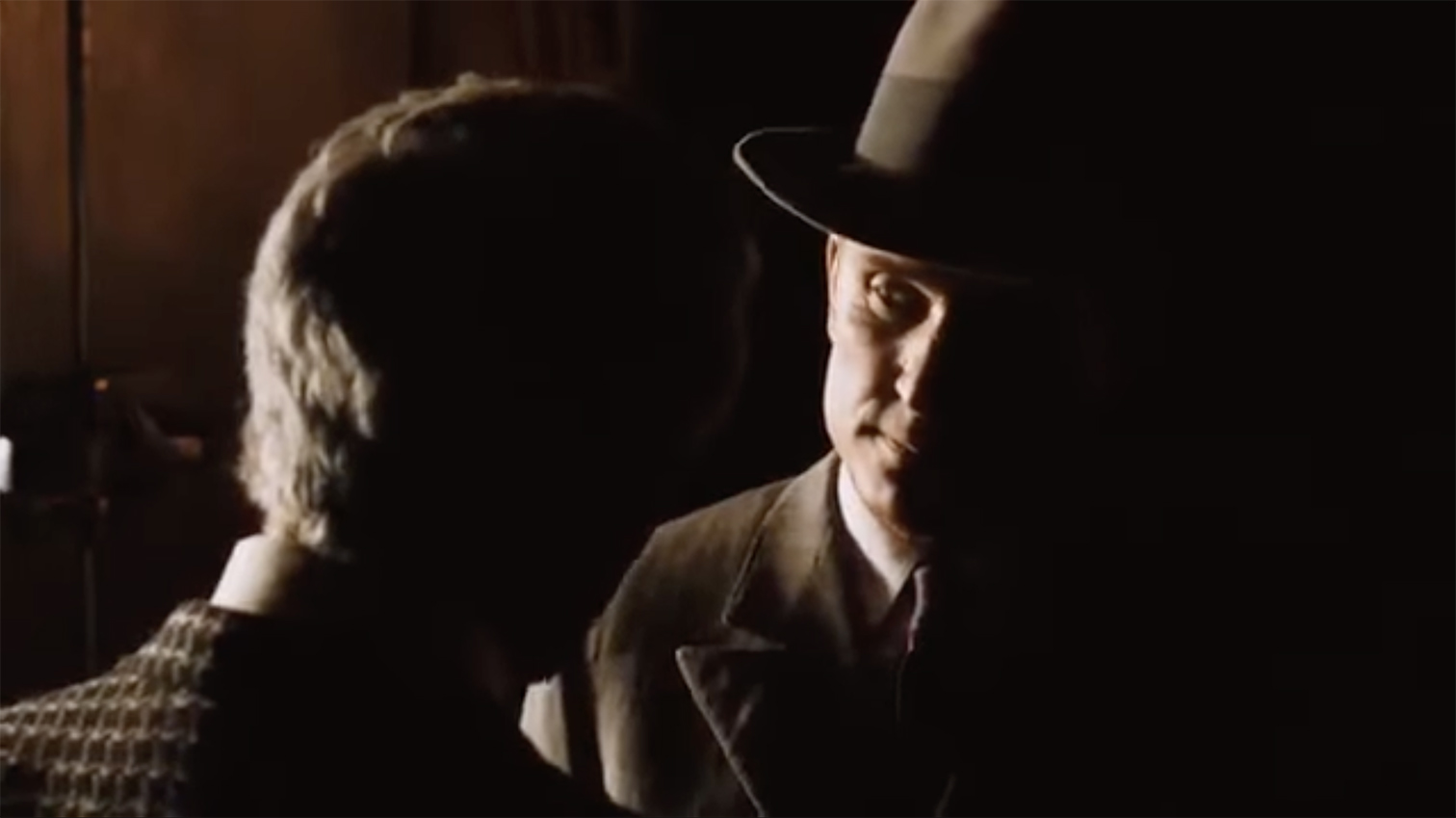
Tom Hagen dealing oh-so-patiently with the blowhard Jack Woltz in “The Godfather.”

Sadly, this is a week for obituaries. In fact, we received word of the passing of both Jesse Jackson and Robert Duvall in the same news cycle. It’s just taken me a few days to get to both of them.

The loss of Duvall is hard to take because he projects (still, in his films) a depth of humanity that is too often missing, or hidden, today. Not just in film and other arts, but in other aspects of modern life — especially politics. Fortunately, we still have those films. Tragically, he won’t be making more of them.

The best way I can sum him up is that as soon as I learned that would play a part in a “coming attraction,” I would think this is going to be good, and start looking forward to it. (Of course, directors and fellow performers had their own good or bad effects on the production, but having Duvall on board gave the picture a running start.)

My favorite Duvall roles are not always the most popular ones. He was celebrated for his role in “Apocalypse Now,” and loads of fans who thought they were unique could come up to him and say that they loved the smell of napalm in the morning. But while his performance in that was bright and gripping and entertaining — he occupied the screen fully in every frame in which he appeared, eclipsing the other actors — that’s not my favorite. It’s too cartoonish, and I found it distracting in a film that, after all, was a modernized retelling of Conrad’s Heart of Darkness. At that stage of his career, Marlon Brando wasn’t nearly the actor Duvall was. But his character was far more meaningful to the story overall, and more in keeping with the tone.

What was his most impressive performance? I might think of something else the minute after I post this, but off the top of my head, it would be Tom Hagen in “The Godfather.” He creates a supremely self-controlled man. If you read the book, you know why Hagen was this way. He had learned it from his foster father Vito Corleone. Always keep your cool. Never issue a threat. Never let your enemy see what you’re feeling or thinking. Project yourself as the very model of reasonableness.

That screenshot at the top of this post is from his best scene — when he goes to Hollywood to ask a cartoonish blowhard of a producer to give a movie role to the Don’s godson Johnny Fontane. See that calm, deferential look on his face. That’s all Jack Woltz — the very model of weak man who thinks he’s something special — would ever see of him, until he woke up with a horse’s head in his bed.

It’s hard to project that quality, even when you’re paid to and you’re not personally feeling what the character would feel. Sure, he was a bad guy, but at least a bad guy with admirable qualities.

I also liked his fading country music star in “Tender Mercies,” a beautiful film about redemption. My favorite scene is this one: A woman comes up to him on the street and asks, “Were you really Mac Sledge?” He sort of half-laughs (as I remember; I haven’t seen it in a while), and admits, “Yes ma’am, I guess I was.”

I was never in my life nearly as famous as his character was supposed to be, but I still experience that sort of thing when people recognize me or my name from my newspaper days. I’m no star, but it happens. It last happened just over a week ago. I still haven’t fully figured out how to handle it, beyond saying thanks, but I like the way he did it. (At least the lady didn’t say, “I love the smell of napalm…”)

Duvall traveled around East Texas with a friend preparing for that role. Finally, the friend asked what they were doing and he explained, “We’re looking for accents.”

Again, though I wasn’t a professional actor, I had enough in common with Duvall to identify. Reports The New York Times:

Across a film career that took flight in the early 1960s, he stood out for an intense studiousness that shaped his every role. Even as a boy, in a Navy family that moved around the country, he had an ear for people’s speech patterns and an eye for their mannerisms. “I hang around a guy’s memories,” he once said. Insights that he gleaned were routinely tucked away in his head for potential future use…

I did the same, growing up. I was never fully a part of the communities in which I lived, but I grew up observing them closely and with interest. I suspect that’s a reason why so many military brats become journalists. As for accents — they are a lifelong source of fascination (and imitation, although I’m not as good at them as when I was young). I’ve been meaning to write one of my too-long-to-get-around-to posts on that subject for years. Maybe I’ll get to it soon.

I look at Duvall on the screen, and I see another guy like that.

I’ll close with a mention in that NYT article of his first film role, which foreshadowed the unique power he would bring to the screen:

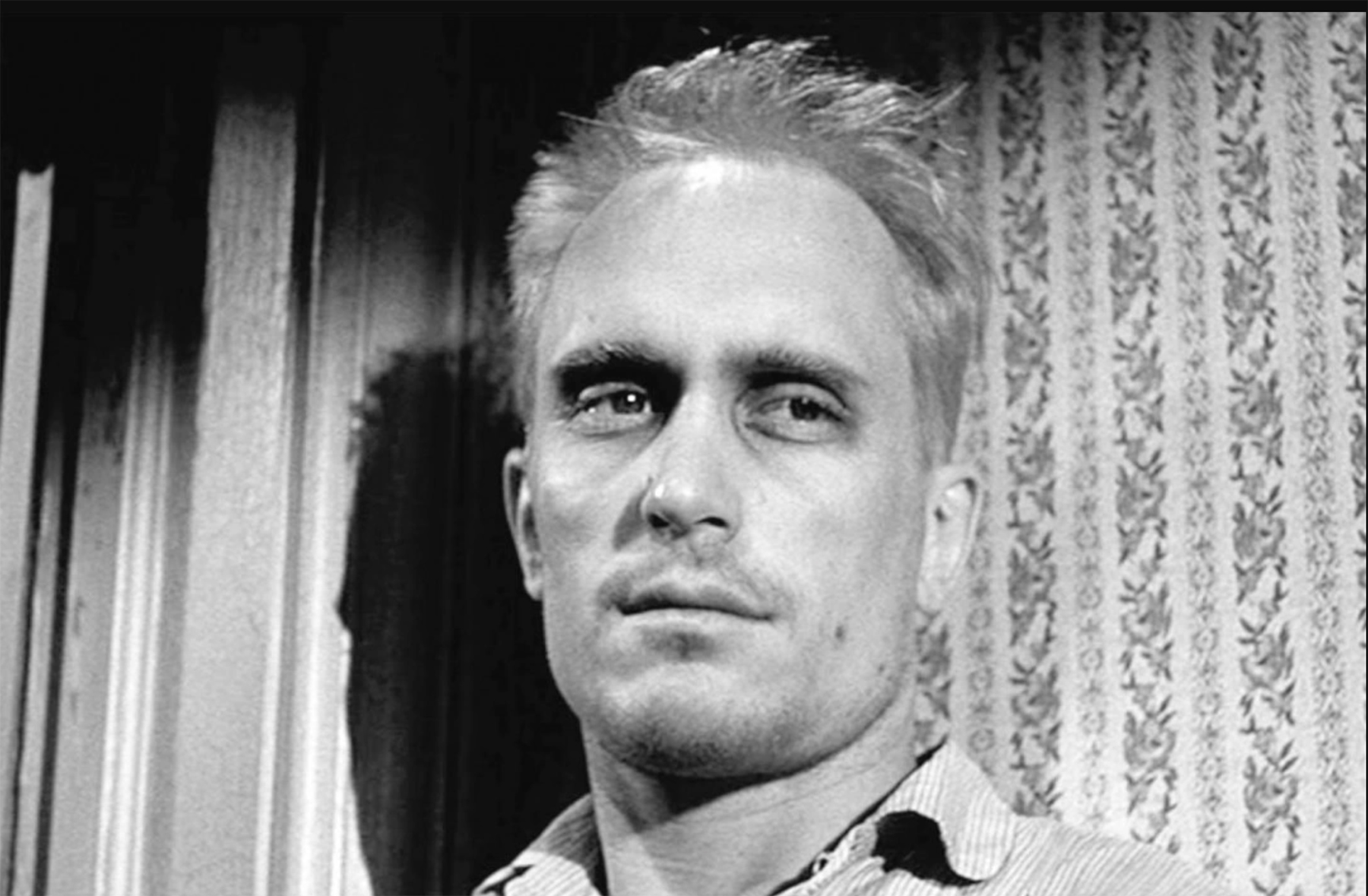
That Mr. Duvall could become practically whomever he chose was foreshadowed in his first film, “To Kill a Mockingbird,” a 1962 classic based on Harper Lee’s novel about racial prejudice in a Southern town. He played Boo Radley, the reclusive, hollow-eyed neighbor who fascinates and ultimately rescues the two small children of the defense lawyer Atticus Finch (Gregory Peck).

As Mr. Duvall’s career flourished in the 1970s and ’80s, it surprised many of his fans, on looking back, to discover him in that film. One person apparently not surprised was Harper Lee. When Mr. Duvall landed the part, she sent him a congratulatory telegram. “Hey, Boo,” she wrote. It was, he said later, his only contact with her.

I love that story. That was a very cool thing for “Scout” to have done. And it’s a congratulatory telegram I would certainly frame and put on the wall…

“Boo” Radley at the moment Scout first sees him…

Thanks for caring and leading, Jesse Jackson

I just thought, in light of his passing this week, it would be good to revisit the last time I spoke to Jesse Jackson. It was back in 2015.

It was at an important moment for South Carolina — his state and mine. The S.C. Senate had just voted to unconditionally remove that imitation Confederate battle flag from the State House grounds. As senators emerged from the chamber, I saw him among them. Here’s how I wrote about it at the time:

I was also a little surprised that I was the only media type to call out, “Rev. Jackson,” which brought him over to speak with me. Maybe some of those young media folks don’t know who he is.

Of course, I was more interested in what the senators had to say, but they were all occupied at the moment and, after all, Jesse Jackson is, like me, a South Carolina native. I was curious how he felt about his state today — or at least the SC Senate….

So he came over and started talking. You can hear what he said above. I’m glad I called out to him.

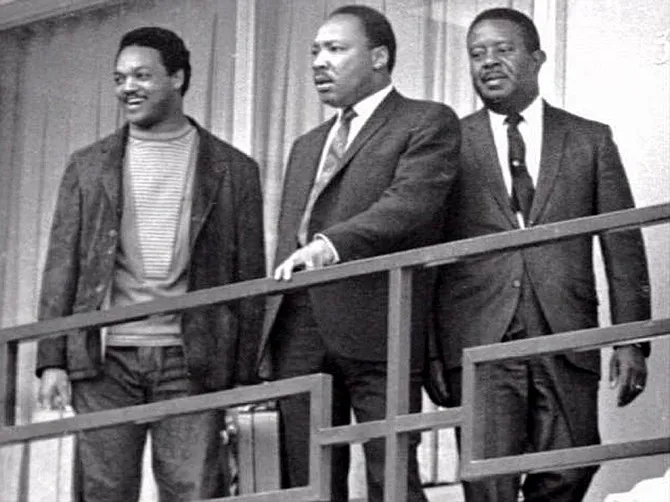
And I’m glad he spent those 84 years on this Earth, doing the best he could to make a positive difference for us all. He wasn’t Martin Luther King, but he was there with him when it mattered, and had been for years, and he was committed to justice and compassion, and he stayed that way.

And I thank him for that.

A little bit of something good

Just thought I’d share this with you because I haven’t posted lately. Occasionally I write something, but then I’m not sure I like it, so it just sits there in draft mode — sometimes for days; sometimes much longer. This happened just yesterday.

And today’s so busy, and tomorrow likely to be more so.

So I just thought I’d share this, which I ran across last night while I was looking for a completely different clip.

And it drew a smile. A brief one. It’s not the whole song — it runs just slightly over a minute. But hey, you’re having a busy Monday, too, right? You don’t need the whole thing. I just thought you’d like seeing Johnny, looking all young and healthy and saying generous things about Bob.

So enjoy this before you move on to the next thing you do. Just give Johnny a nod and continue with you necessaries. You don’t have to thank me or anything. Don’t think twice; it’s alright…

Top Five books I should have read by now

If written before 1931, it’s yours for free, anytime.

There is no longer any excuse for any of us not to have read the books we’ve always known we should read.

Of course, there have been free libraries since generations before I was born. But that still left me with an excuse. Not an excuse that most people would stoop to, but it worked for me: If the book is good, I don’t want to read it unless I can keep it. First, I like to read things over and over if I like them. Second, I like to quote from them when I write, which means I want them handy — and I want the very same editions that I first read, because I can usually — or at least, I could usually, when I was younger — go straight to the passage I want within a moment. I’d flip back and forth a few times, realizing it was before this or after that. Then, I’d have a rough picture in my mind of what the page where the passage was looked like, and pretty much precisely where it was on the page.

So it had to be the same edition of the book, and preferably the same, physical book, because books awaken acquisitiveness in me.

But over time, I’ve been reading more and more on my iPad, so that excuse doesn’t work as well.

Most of the books on my list — the things I’ve always known I should read — are now in the public domain, and completely, immediately free to anyone with a computer, a tablet or a smartphone. No trek to the library or a bookstore. Not even a wait of a couple of days while Amazon delivers.

Just tap the button, and bingo! The literary treasures of all time are in your hands, and belong to you permanently.

So what haven’t I read? There are too many even to sort through my mind and recite a reliable Top Five. If you choose to share your own list, I might even replace my list with yours. Even without your suggestion, I might give you a different five on another day. This is just to gig myself to act, and stimulate some discussion, if you’re interested. And I’m limiting myself to a Top Five just to force myself to keep it brief, because I have other things to do.

So here’s my list of Top Five… well, not books in the broad sense. Here are the Top Five books of fiction I should have read by now:

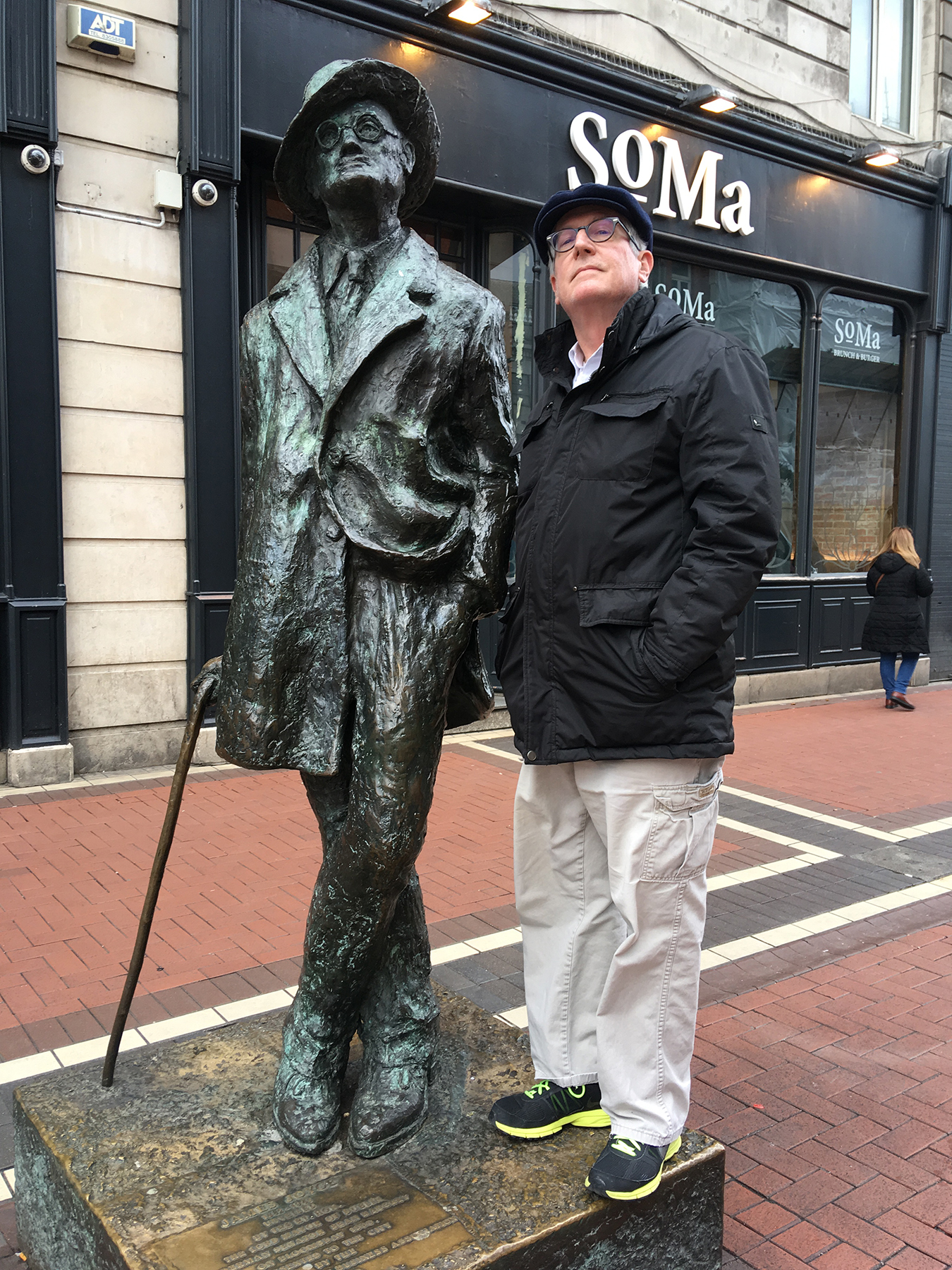
Ran into Joyce in Dublin. Couldn’t admit to him I hadn’t read Ulysses.

Ulysses, by James Joyce. Big embarrassment here. I downloaded it a few weeks before we left for Ireland in 2019. But it turns out that the word on the streets about this book is accurate. It was interesting, but just too dense for me to get very far into it. I’ve read and enjoyed Portrait of the Artist, and of course Dubliners. To make myself feel better, I downloaded Dubliners and read it again on the plane to Dublin. The best story in the book, as I’ve said before, is the longest and last one: “The Dead.” It was as good as ever, and we spent a good part of a day in Dublin looking for the house where most of the story plays out. I had intended to do the same with sites in Ulysses, but it was not to be.

The Grapes of Wrath, by John Steinbeck. I really feel obligated to finish this sometime, and maybe I will. But it hasn’t happened yet. Several years ago, I got maybe halfway through. But there’s so much misery, and, well, I know how it ends. I know what becomes of the slim hopes these poor folks manage to cling to for most of the book. For me, that makes for a high wall to climb. I sort of have to be in a mood for being slapped down to finish this.

The Iliad, Homer. I’ve touched on this before. Until about a millennium ago in the Western world, there was one story that gripped the imagination of the literate, and probably a lot of the illiterate crowd as well. Think you’re tired of Hollywood’s lack of imagination, and repetition of the same stories over and over? Hey, at least they offer some variety (comic book heroes, Tolkien, George RR Martin, Dune, Harry Potter, etc.). Imagine being a Greek or a Roman in ancient times. They had the Trojan War, and that was about it. Sure, there was the classical mythology, but even that gets mixed up into the sage of Troy. As for the Romans, they were so lacking in originality that they based their own mythological founding on the children of a Trojan War veteran. So, you know, I feel like I ought to read the Iliad. Really, I should read it in the original Greek, but that’s not going to happen. Because I lack a basic skill of any educated person a couple of centuries ago.

The Odyssey, Homer. The sequel. I’m actually more familiar with this, thanks in large part to an Italian movie with Spanish subtitles that I saw at the Variedades theater in Guayaquil, Ecuador when I was about 10. I’d kind of like to see that movie again. But I also should read a good translation of the poem. Untill I do that, all I’ve got is my favorite Cream song. And yeah, I’m pretty sure that’s what Spinal Tap was mocking with the ridiculous “Stonehenge.” But I kinda love “Stonehenge,” too.

Moby Dick, Herman Melville. Ultimate embarrassment. Trouble is, it starts out so well — I love the first chapters. But the middle part is horrible. Why couldn’t Melville just stick to the story, instead of wandering off on chapters that read like an encyclopedia entry about whales? I swear I’m going to finish it, and dive in, and after two or three of those tedious distractions I quit again. Call me whatever you like. Call me Ishmael. Just know that I am deeply ashamed, although it’s hard to avoid the temptation to blame Melville.

As I say, I could give you a different five on another day. Don Quixote, anyone? Robinson Crusoe? But I think that before I go, I should give you a separate list of nonfiction.

When I was young, I wasn’t a big fan of nonfiction. “Good book” meant, to me, a novel — or a collection of short stories. But over the years my tastes have grown up enough that I’ve developed more patience, particularly in the realm of history. But if anything, I’m much more sadly behind in that category than in fiction.

Just a very quick list:

The Second World War, Churchill. The author certainly knew the subject, and the subject is possibly THE historical period that has fascinated me more than any other — after all, it put the finishing touches on the world I grew up in. But talk about an intimidating work.

Summa Theologiae, Thomas Aquinas. How can I be Catholic and not have read any work by Aquinas, ever?

Decline and Fall of the Roman Empire, Edward Gibbon. Another one of my favorite historical periods. Seems like this would be the best one that I haven’t read on the subject. Either that, or Suetonius’ greatest hit.

The Diary of a Young Girl, by Anne Frank. I know the story. My wife and I spent our last evening in Amsterdam a couple of years ago visiting the house where she and her family hid from the Nazis. I believe I’ve absorbed the lessons to be learned from the book, and can apply them going forward. But I haven’t been able to force myself to witness the horror of it, page after page, knowing that there’s nothing I can do to stop it from happening to this girl, in that time. It’s just too painful. But I still don’t excuse myself.

The Holy Bible (and those of you who think this is all fiction, including the New Testament — just go make your own list). To paraphrase myself, how can I be a Christian and not have read this through? Maybe on some subconscious level, this is another reason why I converted to Catholicism (the main reason is suggested within that Joyce story, “The Dead”). Baptists are expected to have read it all the way through. Catholics have long been content with those three years of mass readings, repeated over and over. I mean, I’ve read and read the Bible, and read it and read it, but not straight through all the way. Maybe it’s unnecessary, since it’s not one book — it’s a bunch of books. But it’s one of those things to a Christian, like crossing the English channel to a swimmer. I feel the need to accomplish the feat.

That’s it for now.

Inside the Anne Frank House. I really have to read this one.
Here comes Santa Squirrel, here comes Santa Squirrel…

As you can tell by the sunlight, the above photo was taken a couple of days ago. I shot it out our kitchen window because the squirrel seemed to want me to. He was posing. He seems to say, “Look! Who am I?”

Rather brazen of him, because he’s been stealing the fluff out of a chaise lounge cushion on our deck for some time. Which is OK. Once it got that hole in it, might as well let the critters make what use they can of it.

We assume they’re using it for a nest or something. If not, it’s just malicious destruction. Again this morning, my wife saw him out there and said yet again, “I hope they’re building a nest…”

My response? I don’t think they’re dumb enough to run back and forth through the snow if they don’t have a practical purpose for it. I certainly wouldn’t do that to amuse myself.

Of course, I’m not a squirrel. Or a naturalist.  have no idea what kind of domiciles they have. But whatever their homes are like, they could probably use some insulation this weekend…

On displacement, and what it says about humans

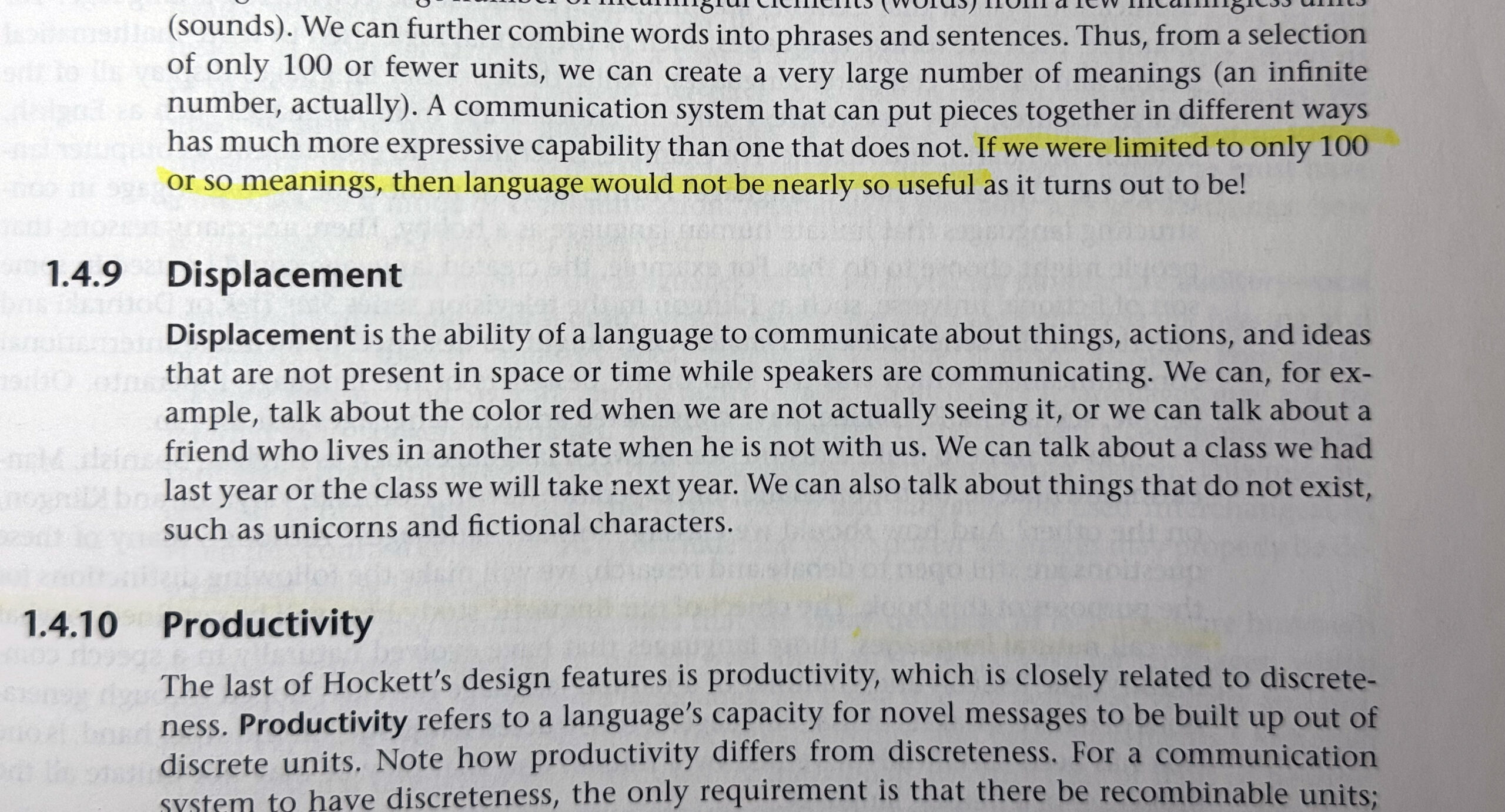
Some more of my notes from linguistics class. The readings last week in our Language Files textbook were in part about Charles Hockett‘s list of characteristics that distinguish a system of communication as an actual language. They are:

  1. Mode of communication
  2. Semanticity
  3. Pragmatic function
  4. Interchangeability
  5. Cuntural transmission
  6. Arbitrariness
  7. Discreteness
  8. Displacement
  9. Productivity

All communication systems possess the first three of those design features, while only human language exhibit the last two. I’d give you definitions of all of them (here’s a link), but really my own attention was drawn completely to the penultimate one, and that’s what I wrote about in my reading notes:

In both this reading and the one from ULTH, we are told that animals other than Homo sapiens do not possess or employ language, as defined by Hockett, because they lack displacement.

Of everything I read for this week, that was the point that made the greatest impression on me.

It speaks clearly to the most important quality that many humans in different times and places, employing different modes of thought and belief, have cited in asserting their belief that Homo sapiens is not an animal, but a distinct creature on a higher level.

Frequently over the millennia since modern humans developed sophisticated (from the human self-flattering perspective) language and other distinct cognitive abilities (about 70,000 years ago), sapiens have expressed this through belief systems that we refer to as religion. A well-known way of expressing this is that Man was made in the image of God (Genesis 1:27). Therefore we are able to think (and speak and write) about things and events and ideas that we cannot see or touch. This quality is in fact essential to the very existence of religion. We are unable to prove (to the satisfaction of an unbeliever) the existence of God or gods through empirical means.

From the perspective of my own religion, this can tempt me to embrace the sin of pride, since it suggests that unbelievers are inexplicably limiting themselves intellectually to the material, here-and-now perspective of animals (or lesser animals, or simply other animals, depending on the way you choose to frame it).

But unbelievers also perceive the ability to employ displacement in a communication system as an important, defining difference between our species and others.

In Sapiens, A Brief History of Humankind, Yuval Noah Harari stresses repeatedly that the quality that not only took Homo sapiens to the top of the food chain, but also caused our species to outlive Neanderthals and Denisovans, is the ability to perceive that which is not immediately, obviously and materially present or detectable.

The book for which Harari is best known begins in a remarkable way for students of linguistics, particularly for those who study written language. The first page is essentially an atheist’s, or at least materialist’s, take on the beginning of the book of Genesis.

He considers religion to be a myth. But he considers such myths essential to why sapiens have come to dominate the Earth, and survive while other Homo species have faded away. To him, “myths” include belief in gods and spirits, but also such abstract concepts as money, laws, liberalism, communism and many others. He asserts that none of these things exist outside shared human imagination. (If I were writing the Sapiens book, I would tend to use the term “abstraction” when Harari uses words such as “myth” and “imagination.”)

Unlike some other atheists (those tempted to their own sort of pride), he doesn’t see belief in such “imaginary” things as a weakness. In fact, it is the main quality responsible for modern humans’ success over other species, including other humans such as Neanderthals.

Such shared beliefs (and the modifier “shared” is key here) have enabled our species to cooperate in immensely larger social groups. Neanderthals just couldn’t compete with that.

Of course, to be clear. While I embrace such “imaginary” concepts as Christianity, liberalism (meaning the word in terms of the actual approach to government in most of the West until 2016, not today’s popular misunderstanding), and the rule of law, I don’t do so because it’s a nifty strategy for our species’ survival and domination. I embrace them because I believe in them.

And it’s nice to see it brought up in my new field of study…

No, you don’t need a little watermelon right now

I was at Walmart last night to pick up a couple of things, and noticed this as I got into the self-serve line.

I thought I would share it as a public service. To save you a trip.

You might think you want one of those nice, seedless watermelons right now, but trust me — you can wait a few months. In June, the price should be close to that of the cantelopes in the background…

I’m not the only one who can see this! Hallelujah!

Yes, it’s been awhile since I’ve posted, I know. I’m busier than usual, partly because I’m in my third week of classes at USC.

But my assignments include writing commentary on our assigned readings, and these tend to take a form similar to blog posts. And one that I wrote a couple of weeks back is nearly identical to one I’ve meant to write here for at least a year or two. I haven’t written it because it was one of my long, involved posts like this one or this one. I was going to call it something like, “A Hierarchy of Communications.” Too involved. Too easy (for me) to keep putting it off.

But last week, I had occasion to write a brief summary of one of the ideas that would have been included in that tome. It went sort of like this…

Here’s something that’s long been very obvious to me, possibly because I started regularly using a keyboard to send instant messages directly to other people at some point in 1980. That’s when our newspaper in Tennessee abandoned the IBM Selectric and started generating and editing copy on the screens of dumb computer terminals linked to a mainframe. The system had this wonderful little, almost entirely superfluous, feature: You could, using this same system, generate and send a brief written message directly to anyone else in the newsroom.

I could tell you some horror stories about the trouble this caused, but I’m trying to be brief. I’ll simply say that eventually I learned that that there are things you should never try to communicate using this medium. You should instead get out of your chair, walk over and say it face-to-face.

There are all sorts of reasons for this. But mainly, it’s because when someone’s looking at you and listening, you can communicate more clearly not only emotional content (and emotions fly wildly about in a newsroom near deadlines), but the person can immediately, in a matter of seconds, ask questions that wouldn’t have occurred to you as the writer of the text – usually because you didn’t realize such questions existed.

You save a lot of time this way, and maybe even avoid a fistfight under certain awkward conditions.

Today I live in a world in which most of the billions on this planet (as opposed to the 40 in that small newsroom) possess the ability to send text to anyone else whose mobile numbers they happen to possess. And they can do a lot more with those texts, which means they can cause trouble unimagined back in 1980. (This is a central problem with social media, but let’s stick to texts at the moment.)

I’m constantly begging friends, family and sometimes mere acquaintances NOT to send that important text, but to use another convenient application, the telephone feature. (After all, we do call the thing a “phone,” right?) It would save a lot of time, often a half hour or so of multiple, imperfectly typed and even less perfectly understood texts back and forth. Time and again, these matters could be handled more fully and efficiently with a 30-second conversation.

Evidently, I’ve seldom explained this well, because I don’t often succeed in convincing anyone.

So I refer you to the text in the box. The author tells us that spoken language:

  • allows confusion and ambiguity to be resolved directly by repair and confirmation procedures
  • is used in a social and temporal context, and thus brings with it a great deal of background information; draws on context to complement meaning and fill in ellipses

Absolutely. Written communications don’t offer these same valuable features.

Anyway, that’s the end of what I said — on that one subject — in my notes on the reading. It would have been just one point among many in my treatise on the full range of options in daily interpersonal communications.

Here’s the aforementioned box, from page 20 of English with an Accent, by Rosina Lippi-Green.

No, not THAT St. Hillary…

Depiction of St. Hilary’s ordination, painted 1,000 years after he lived.

I’m studying the USCCB’s daily scripture readings, and I see that the alternative reading for today is dedicated to Saint Hilary, Bishop and Doctor of the Church.

This Hilary, by the way, was a man. He lived in the 4th century AD. Interesting fact: He was married, because that was allowed in those days, and he had a daughter who was also a saint.

I mention this because every time I see a mention of this saint, I’m reminded of a certain other person who was called “Saint Hillary” in a satirical manner. Below is the image that appeared with that headline in The New York Times Magazine on May 23, 1993:

When I saw that, only four months after Bill’s inauguration, I knew that this administration’s honeymoon with the press was pretty much over.

Here’s the article, if you want to read it. Here’s an excerpt:

Since she discovered, at the age of 14, that for people less fortunate than herself the world could be very cruel, Hillary Rodham Clinton has harbored an ambition so large that it can scarcely be grasped.

She would like to make things right.

She is 45 now and she knows that the earnest idealisms of a child of the 1960’s may strike some people as naive or trite or grandiose. But she holds to them without any apparent sense of irony or inadequacy. She would like people to live in a way that more closely follows the Golden Rule. She would like to do good, on a grand scale, and she would like others to do good as well. She would like to make the world a better place — as she defines better.

While an encompassing compassion is the routine mode of public existence for every First Lady, there are two great differences in the case of Mrs. Clinton: She is serious and she has power….

Back to the real saint. To lift the tone of this post, here’s an excerpt from the readings offered in his name:

Matthew 5:13-19

Jesus said to his disciples:
… “Do not think that I have come to abolish the law or the prophets.
I have come not to abolish but to fulfill.
Amen, I say to you, until heaven and earth pass away,
not the smallest letter or the smallest part of a letter
will pass from the law,
until all things have taken place.
Therefore, whoever breaks one of the least of these commandments
and teaches others to do so
will be called least in the Kingdom of heaven.
But whoever obeys and teaches these commandments
will be called greatest in the Kingdom of heaven.”

Watch out; here comes the surge!

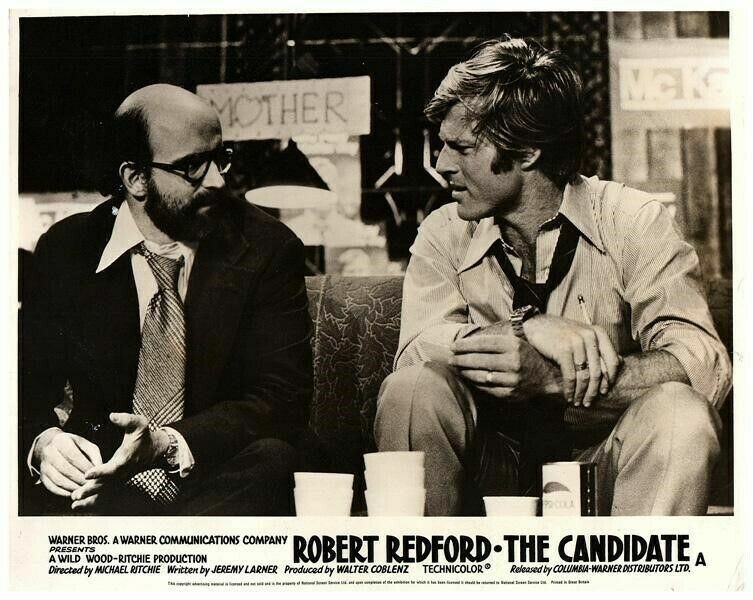
You could be like one of my fave depictions of a politcal pro — Peter Boyle in ‘The Candidate.’

Just a heads-up…

You know that job posting site I’ve mentioned a few times before, called Daybook? It lists a lot of political and governmental openings, and I’ve been getting the notices daily ever since I worked with James Smith’s campaign. I have zero interest now in applying for any of the jobs (you know those stress dreams I keep mentioning — even as recently as two days ago? — one of the recurring plots is that once again, this time against my better judgment, I’m involved in a campaign), but I sometimes find the jobs interesting, or even entertaining.

Anyway, yesterday they posted this, under the heading “Surge of political campaign positions:”

For those who haven’t been to Daybook lately, we have exciting news!

Over the past week, there has been a surge in job and internship listings to work on political campaigns. With the primary elections approaching in the coming months and the midterm elections in November, campaigns are staffing up right now! Currently, there are more than 700 open campaign jobs on Daybook with over 100 posted in the past week…

Here’s the list, if you’re interested. If you end up being hired for one, don’t blame me. I’m just warning you that the surge of madness is rolling your way. For political professionals, this may be exciting. For the rest of us, it’s a reason to dive into a bomb shelter, or at least duck…

Just tell me how much, OK?

I’ve complained here a couple of times about the obscene current practice on news sites of teasing readers rather than informing them.

Now I’ll deliver a swift kick to folks attempting to do business online.

You’re familiar with the practice. You see something on, say, social media about some product that stirs your curiosity. I say, “stirs your curiosity” because you don’t have enough information to know whether you would ever consider buying it.

What’s the one thing you want and need to know? The price, of course.

So you click on the offered link, and what’s the ONE piece of information that they NEVER provide on the landing page?

You’ve got it. Or rather, you don’t…

Oh, the price is usually just another click away, although I find that, often as not, you have to scroll to the bottom of an unnaturally long landing page to get to that link.

Yeah, I know why they do it — to give themselves a chance of holding onto your attention just a BIT longer before scaring you away with the price. Maybe, they think, you’ll be charmed just enough by what you see on that landing page that you won’t mind the price.

Maybe it will work. But in the meantime, you’re royally ticking me off. I don’t like being stiff-armed…

By the way, here’s the page with the prices on this one…

It was good to see the monks pass through town

Technically, I didn’t see them, although a number of people I know did (such as the pastor of my church). But you might say I felt their presence.

I was on my way to Lowe’s Saturday morning between 9:30 and 10, and had some trouble getting there. My elder son and I were aiming to pick up some more lumber for a project, and Highway 1 was jammed because the monks were on their way from Lexington toward downtown. But we eventually got what we needed, and I shot the pictures you see above and at the bottom while on the way to my son’s house, of the people waiting for the monks.

What monks? Well, these monks. Not your Mepkin Abbey kind of monks, but the kind I ran into in Thailand. They were hard to miss there, because they were everywhere. My daughter who was then serving in the Peace Corps lived across her country road in Khorat province from one of their wats. You also run into them on public transportation, where they have preferred seating.

Speaking of preferred seating. On a bus to Kanchanaburi, I met a retired roofer from England who had settled in Thailand with a Thai wife and kids (a lot of farangs do that, it seems. He and I had a high old time sitting and chatting on the back seat. The very back seat is of course the coolest seat on any bus, as I had learned in school. (You’re too far back for the teacher on bus duty to see you, and it bounces more than the forward seats, which is cool when you’re a kid.)

Alas, my wife and daughter were forced to sit farther to the front, because women are not allowed to sit on the coolest seat in those parts. (I think the reason why is because monks sit there.)  I felt bad for them, but Mark (I think that was the retired roofer’s name) and I had a good time anyway, bouncing along, and at one point I took a selfie that included the monk sitting next to us, also enjoying himself. I’m sorry I didn’t manage to get the monk beyond that one into the picture, but you can see his robe:

But I digress….

Anyway… I can’t say I’m fully hip as to the details about the monks’ walk across the South in the cause of peace and mindfulness, but for what little I know, I’m for it. Y’all know I’m not on the whole very fond of public demonstrations, but this is the kind that seems to have its head in a good place. They’re not out to bother anybody (except for maybe slowing down traffic, and what are we in such a hurry for, anyway?).

And you know what? I really liked seeing my fellow Lexington Countians turn out to stand along the road and wait to see them. Some of y’all across the river don’t think we’re cool enough to get into something like this, but we are.

And now you know that…

Old School in the real world

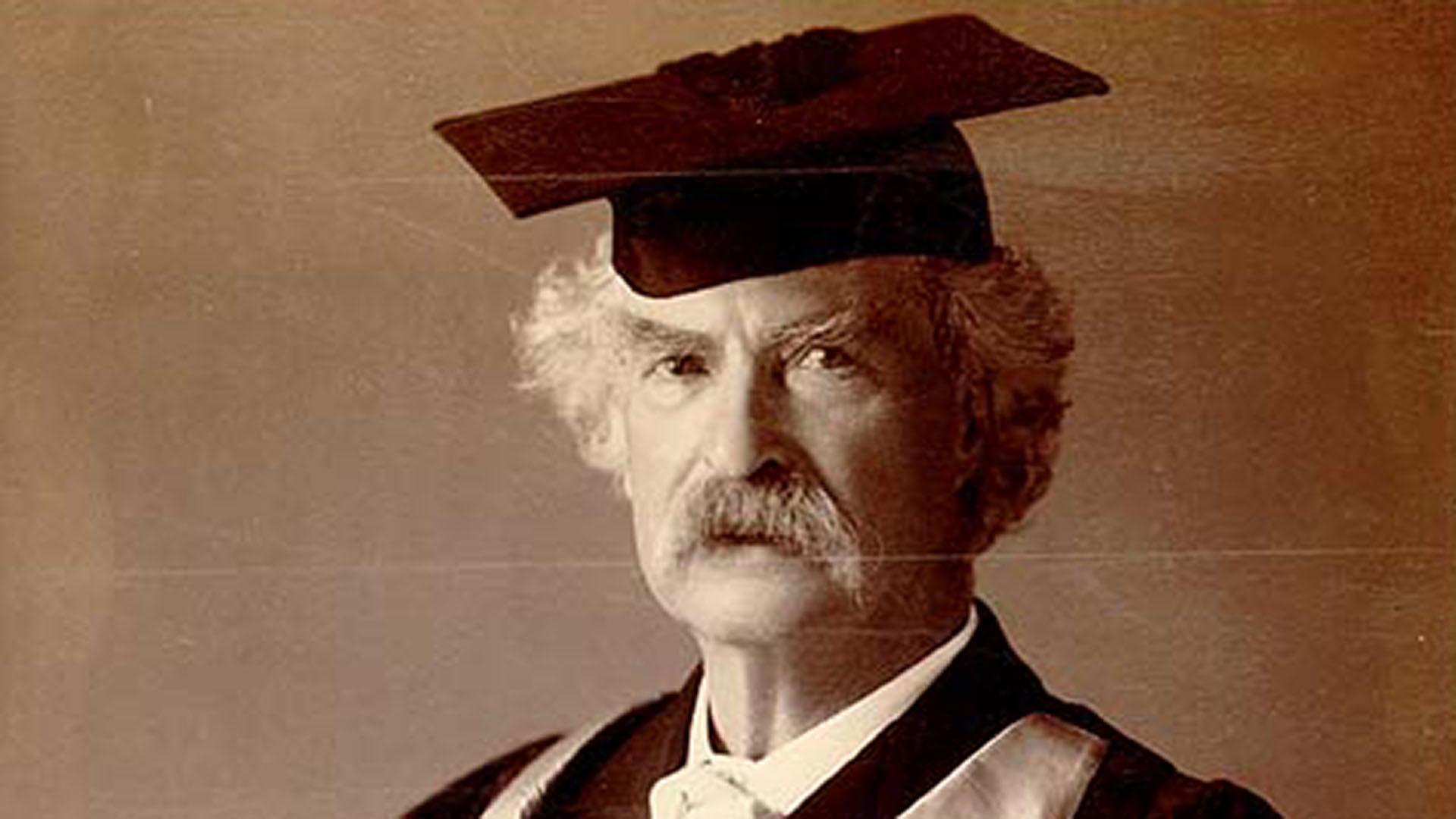
Oxford and other universities awarded honorary degrees to Mark Twain. He adored the fancy duds, and went away happy…

For the next several months, I’ll have yet another excuse for not blogging very often:

I’m going back to school — tomorrow. I’ve enrolled in a course at USC designated LING 300, Introduction to Language Sciences. And yes, I’m taking advantage of the deal that offers free tuition to SC residents over the age of 65. Which makes me feel like I’m sort of throwing money down the drain if I don’t take something.

The reason I’m taking this particular course is that many times over the last 50 years (I last attended school in 1975), I’ve thought that maybe I should have studied philology. Or etymology. Or something else in that general realm. Words have been my profession, but my interest in them extends beyond using them the way a mason uses bricks. My exposure to various languages — the years I spoke Spanish as a kid in Ecuador, my two years of high school Latin, my very brief study of German, my recent dalliances with Dutch and Italian via Duolingo — has fascinated me to what most would regard a ridiculous extent. I’m interested in the relationships between various modern and ancient languages (at least, those of the Indo-European sort), as well as how human languages developed both before and after our ancestors gave up hunting and gathering.

I’m signed up as a nondegree-seeking graduate student, which apparently allows me to take undergrad courses as well. And that’s good because I’ve never taken anything in this area before, so I need to start on an introductory level.

Depending on how this course goes, I may continue this line of study. Or, since these doors are now opened, I may branch out. I might return to my second major from undergrad days, history — if I see courses that grab me. Or maybe I’ll dig into some specific language or other. I dunno. The options seem fairly unlimited.

But first I’ve got to get through this one. I opted to take this for a grade rather than simply auditiing. I figured I would slack off too much if there were no grade to work for. Here’s hoping I don’t come to regret that decision.

My plan is to do much better than I did my one previous semester as a student at this university, in Fall 1971. That should be achievable, as long as I don’t lapse into a long-lasting coma.

Perhaps I can even do well enough to put an end to those dreams. You know, the ones in which you have to go take your exam at the end of a term, and you suddenly realize that you have no idea where the class meets, because you haven’t attended it even once. You’d meant to, but somehow never got around to it.

There are variations on that dream. For instance, the Superintendent of Dreams decided at some point to use that same template, but transfer the anxiety to the more frequent (in my life, anyway) challenge of trying to get a newspaper out when everything is going wrong. But still, for old times’ sake, I occasionally experience the college version. Seems like I had one of those just a week or two ago.

Frankly, I suspect that such dreams are a lifelong affliction, so I’m not going to hold my breath in expectation of them going away. Maybe I’ll just have to settle for learning a bit about linguistics.

Oh, and before someone mentions “Old School.” Well, I love that movie. (In fact, I may have to go back to my Top Ten Comedies list and bump something off to make room for it.) But I don’t intend to emulate it. I’ve never at any time had the slightest interest in the Greek life. You can be almost certain you won’t see me at a football game, even if I continue into the fall. And streaking? Admittedly, I was an undergrad during that madness in the ’70s, but I did not partake then, and do not have plans to do so this time around. Much to everyone’s relief.

A few words regarding this Venezuela thing…

Hey! Whatever happened to U.S. determination to deal with THIS guy?

Last week, I referred to my recent lack of interest in the sort of news that used to fascinate me, and as an example mentioned my unsettling (to me) failure to keep up with what the U.S. was doing in and near Venezuela.

And then, BANG! My eldest granddaughter woke me on Saturday morning with a text that asked me to call her because “I don’t understand what happened in Venezuela.”

I took it something new had happened there overnight, and I was able to confirm that immediately. But if I was to explain it, I had to do a bit of scrambling. Knowing how good The New York Times is (or at least has been in the past) at providing overall perspective on events and the background behind them, I looked there. Unfortunately, I encountered one of those “live update” stories, which provide no easily accessible perspective at all.

So I turned to the editorial page, and found what I needed in this lengthy editorial the board had put together while I was sleeping. “Trump’s Attack on Venezuela Is Illegal and Unwise.”

It’s a pretty good piece, especially for something thrown together quickly. But it has its flaws. For instance, it asserts that “If there is an overriding lesson of American foreign affairs in the past century, however, it is that attempting to oust even the most deplorable regime can make matters worse.”

Well, yes, it can. But that doesn’t mean it must, as so many in our country — on the left and the right — now believe. Many of you believe it. So the NYT has used a convenient post-Vietnam lever here — We know intervention is always a bad idea! — as an easy device to persuade us that this foray into another country is a bad idea as well.

Which really doesn’t explain what’s wrong with this latest action. In making its easy point, the board of course mentions Afghanistan. As though it was a similar situation. It was not. As the Times and a huge proportion of America seem to have forgotten, we had an ironclad reason to go into Afghanistan — we needed to make sure it would never again be a haven for Al Qaeda. You know, that group that had just deliberately murdered almost three thousand Americans in their own country.

We’ll discuss later, if you wish, what happened later. The point here is that Venezuela does not in any way offer such a justification. Mumbling about “narcoterrorists” and the like does not constitute a viable explanation. Nor does mention of the Monroe Doctrine. I wonder who told him about the Monroe Doctrine? Well, no matter. The fact is, it doesn’t apply.

But on the whole, the NYT piece did a good job of explaining the situation, and condemning this unwarranted action by Mr. Look-at-me-now-I’m-suddenly-a-neocon.

To appreciate how good the piece was, you have only to look at the mad raving that was published in The Washington Post under the headline — and I’m not making this up — “Justice in Venezuela.”

The Post, which was once a great newspaper, seems unable to see past the happy fact that Nicolás Maduro is now out of power. And it is a happy fact, as the NYT acknowledges:

Few people will feel any sympathy for Mr. Maduro. He is undemocratic and repressive, and has destabilized the Western Hemisphere in recent years. The United Nations recently issued a report detailing more than a decade of killings, torture, sexual violence and arbitrary detention by henchmen against his political opponents. He stole Venezuela’s presidential election in 2024. He has fueled economic and political disruption throughout the region by instigating an exodus of nearly eight million migrants…

But that’s not the point. The thing is, if the man in the ruins of the White House is in a mood to pull on his big-boy pants and throw his nation’s weight around, there are more urgent needs in this world.

You want to take bold action? International priorities indicate the place to demonstrate your strength and determination would be Ukraine, or the Near East. But no, not the same kind of action. No, no, no, no, no.

Since the adversary in Ukraine possesses — you may have heard about this — nuclear weapons, a far more subtle approach is called for. Something like what we saw the Biden administration doing — exercising soft power where we could, and gradually beefing up Ukraine’s ability to defend itself. This was working,, before an off-and-on Putin admirer took over.

Or you could concentrate your efforts on trying to sort out the mess in the Mideast. Don’t expect overnight success, but we need to continue to try — as American leaders have tried since about 1967 — to keep the peace and realistically reassure our ally Israel of its survival. And if you’ve decided regime change is your new thing, try doing it the hard way — by convincing Israelis, via diplomatic means, that they can survive without Netanyahu.

But, you say, why can’t we get rid of Maduro and then do that more important, harder stuff?

Because… as I acknowledged in response to the NYT’s simplistic condemnation of interventionism, attempting to oust even the most deplorable regime can make matters worse. Every such venture is a risk, often in ways we’re unable to anticipate.

There can be far-reaching negative effects, even horrific effects, from this action in Venezuela. And I’m not just talking about the straightforward, housekeeping considerations such as answering the question, “So what happens now in Venezuela?”

Let me pull one such consequence out of left field: For more than thirty years, China has very effectively been buying friends all over the planet, particularly in the Third World. (I’ve occasionally written about this since my first week on the editorial board of The State in 1994. Here’s an update from the NYT.) Building airports and local economies, it has promoted an image of itself as poor countries’ kindly, helpful friend. This action in Venezuela can play right into China’s hands as it tries to become the next America (in hegemonic terms). We’re the Bully Boys; they’re the ones in the white hats. Maybe you don’t think that and I don’t think that, but we’re not the only people in this world.

For that reason (and many others), you don’t do things such as this unless you have an extremely good reason — as we did in Afghanistan, before we all forgot what it was.

Digression: Of course, we can’t do what China does because we are not run by leaders who spend money as they like in pursuit of their careful plans. Try spending a few extra bucks on a needy country, and the folks who currently run our democracy will holler, “America First!”

America First. Speaking of that… we could talk all day about Trump’s inconsistency in this instance, but what’s the point? What are we going to say — that he’s not following his own doctrine? The power he currently possesses is not the result of philosophy of any kind. How could it be? Philosophy means “love of wisdom.” It’s hard to imagine a word less at home in TrumpWorld.

Trump does what makes him, personally, feel good. And that may be the most dangerous thing about this venture in Venezuela — it has greatly expanded his own sense of what he can do, and get away with, and feel good about.

So going into Venezuela was a bad thing. But it wasn’t the worst thing Trump has ever done. It’s not even the worst thing he’s done this week.

I’ve written about 1,200 words so far on this, and I need to move on to some other things. So I’ll just mention in passing my nomination for worst thing of the week: Withdrawing the U.S. from 66 more international organizations, and making America more of a pariah in the world. That was not as noticed the way removing Maduro was, but it was way worse…

Musicians we lost in 2025

I almost skipped over my email about “The Musicians We Lost in 2025,” figuring it would be about people I’d never heard of. But no. It turns out that at my age, the people I remember are the ones dying. Which makes a sober sort of sense, I suppose.

The NYT’s Amplifier feature does a good job with these kinds of things. Here’s the whole article, with playlist. I’ll just share below some of those that meant most to me…

  • Sly Stone. The Amplifier chose “Dance to the Music,” which I suppose is fine. I chose to share “Everyday People.” That’s just me. It’s odd the things you remember about people. What I remember is something a psychology professor said to our class about him at Memphis State. This prof was an Indian woman, who seemed mature and sensible enough. But she was talking about drugs — the kinds kids like us tended to stray toward — and telling us that being a drug addict wasn’t a problem, as long as you had enough money to feed the habit. Look at Sly Stone, she said — he’s high-functioning. She also told us at about that time that cocaine wasn’t addictive. (And what was Sly addicted to? Crack. Ahem.) So enjoy yourselves, kids, as long as you can pay the bills! I had some good instructors in college, but some were wanting in perspicacity.
  • Roberta Flack. I’ll go with the one they picked: “The First Time Ever I Saw Your Face.” My random memory, which you will share if you’re the right age, is about hearing it for the first time in the Clint Eastwood change-of-pace film, “Play Misty for Me.” It made more of an impression than the song mentioned in the title. Unfortunately, that hauntingly beautiful song is permanently tied in my mind to the image of a sleeping man suddenly opening his eyes to see above him a murderous madwoman with a butcher knife. But it’s still beautiful.
  • Sam Moore and Steve Cropper. Wow, I didn’t know we’d lost not only the tenor half of Sam & Dave, but the legendary rhythm guitarist who played on their greatest hit. The Amplifier notes that “Moore famously immortalizes Cropper’s playing on “Soul Man” with the exclamation, ‘Play it, Steve!’
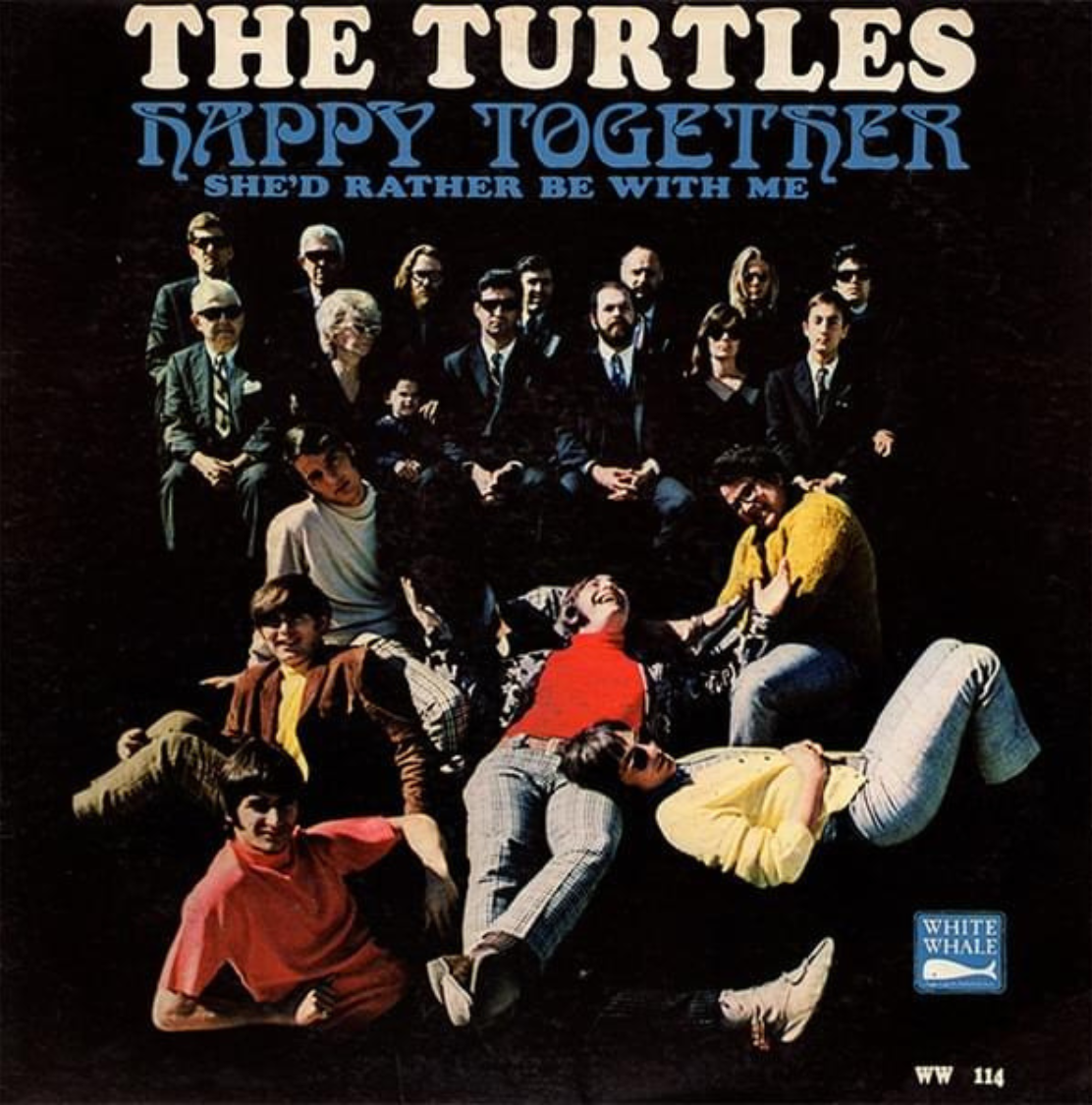
  • Mark Volman. Volman and the other Turtles were embarrassed by their first and biggest hit, “Happy Together.” They didn’t think it was cool enough. They were wrong. It’s one of the finest pop songs of the 1960s.
  • Marianne Faithfull. This is not possible, because Marianne is 17 years old and always will be. And you can’t see her picture without your heart melting, just a bit. I don’t know whether Mick Jagger was the melting sort, but he was certainly open to her appeal at one point. Of course he was. The NYT chose “The Ballad of Lucy Jordan,” but I’ll go with “As Tears Go By.”
  • Brian Wilson. They saved the biggest for last, and so will I. And while I was afraid they’d miss on the song, they didn’t. Good for them. They chose “God Only Knows.” If you doubt the choice, I refer you to this scene from “Love and Mercy,” in which Paul Dano, as the young Wilson, shares the song for the first time with his heartless creep of a father. It’s painful to watch, but the beauty of the song comes through. The Amplifier notes that “that Paul McCartney once called the greatest ever written.” Paul was on the right track.

May they all rest in peace. They gave us what they could while there were here.

‘Ten, nine, eight, seven, six, five, four, three…’

In this first day of the year, I thought briefly about diving back into politics, global affairs, etc., which I’ve generally ignored (by my usual standards) since last January. I mean really ignored, to the point of not knowing enough about recent events to comment. Occasionally I’ll tell myself I really should look into why the honor of the U.S. Navy is being fouled by the task of blowing up small boats coming out of Venezuela, but what good would it do?

And now I’ve seen that almost everything being offered by the various papers I peruse — items in the subject areas I had always assumed were most important — are as absurd and dispiriting as as they’ve been for awhile now. So much for that re-engagement resolution.

But… I did find one bright spot. It’s this item from the NYT:

Your Wait for These Space Events Is About to Pay Off

This is encouraging. Homo Sapiens actually trying to stretch itself forward again, the way we used to do. Rather than sitting about stewing in our little obsessions.

For awhile, I’ve had to look backwards to get a glimpse of what it’s like to look forward. Remember when I wrote about my recent interest in the Gilded Age and the Progressive Era? Well, I think a lot of that was because that was a time when this country saw its possibilities as unlimited, and had a positive view of its future. America had survived the Civil War and overcome slavery, the issue that had inhibited the national spirit since our founding. Americans believed they could to anything, and they went out and proved it in a variety of fields.

Which means it was a lot like the time in which I grew up, when we had whipped the Nazis and the Japanese imperialists and were leading the free world in the advancement of liberal values — and the advancement of everything else: Technology, exploration, high and low culture, etc.

It was the Space Age, a term that excited us then, but has seemed so quaint in recent decades.

And now we have this one encouraging news story telling us:

NASA is sending astronauts back toward the moon. No, for real this time.

It has been more than 50 years since humans exited low-Earth orbit and traveled around the moon. In the time since, space agencies have built space shuttles and space stations, but their crews have remained within our planet’s close embrace.

Early in 2026, astronauts from NASA and the Canadian Space Agency will again travel around the moon and back….

And that’s not all. We can also look forward to:

  • More great pics — fancy, high-tech pics — from the Vera C. Rubin Observatory. Yeah, I know: That sounds kind of like the name of a house of fashion design, but it fits. This is an stunningly beautifully designed universe, and we’re just getting started at admiring it.
  • More trips to Mars and its moons — by us, by the Chinese, and Japan’s getting in on the act, too.
  • Another solar eclipse, in August. OK, this isn’t mankind doing stuff, but it’s fun to watch, if you can get there. This one won’t be local.

And more. Things to look forward to. This is a good start to the year…

I want to go to there! Or to then…

I say “then” because what I need to reach my destination is a Time Machine.

What does it take to make me post again after a week? This:

Science girl is apparently not making this up. Remember when Volkswagens were cool? Well, I didn’t even know how cool until I ran across that on social media.

The best part is — or would be, if I had the Time Machine (why am I capitalizing Time Machine? because that’s what H.G. did) — is that I could actually buy one of these babies, new, for less than $1,000 if I could bring it back with me. Coffeemaker included. Because, you know, that was another of the coolest things about the People’s Car back in the day. Chic cheapness.

Sure, there are several things we haven’t worked out yet:

  1. How to build a working Time Machine.
  2. How to make it big enough to bring back a then-new Beetle. This one wouldn’t work, although I admit it’s got plenty of style. (Doc Brown thought his machine had style. Huh. It wasn’t as ugly as a Cybertruck, but it was almost as boxy.)
  3. How to — and this is the hard one, for someone as financially challenged as myself — how to take the money back with me in a form that would transfer to a spendable grand in the desired time and place. I mean, you don’t want to try to go back and earn it, because that wasn’t the easiest thing to do in 1959. It was like coming up with more than $11,000 today. It might take you a couple of hours.

Which I suppose is why we mostly just drive our cars to a Starbucks now.